
Written by: Anish Rao, Head of Growth, Listen Labs
Key Takeaways: How Listen Labs Transforms Qualitative Research
- AI turns vague research prompts into structured, targeted objectives and probing question paths in seconds, replacing weeks of manual iteration.
- Listen Labs’ 30 million verified respondents support representative sampling for hard-to-reach segments, reducing bias from inadequate sampling.
- AI-moderated interviews remove interviewer bias and leading questions while preserving conversational depth across hundreds of parallel sessions.
- Qual-at-scale technology delivers both rich qualitative depth and statistical power, resolving the traditional small sample size tradeoff.
- Listen Labs addresses all 12 common mistakes with fraud-resistant quality controls, unbiased analysis, and automated deliverables. See how it works and modernize your research workflow.
Mistake #1: Vague Research Questions That Block Clear Insights
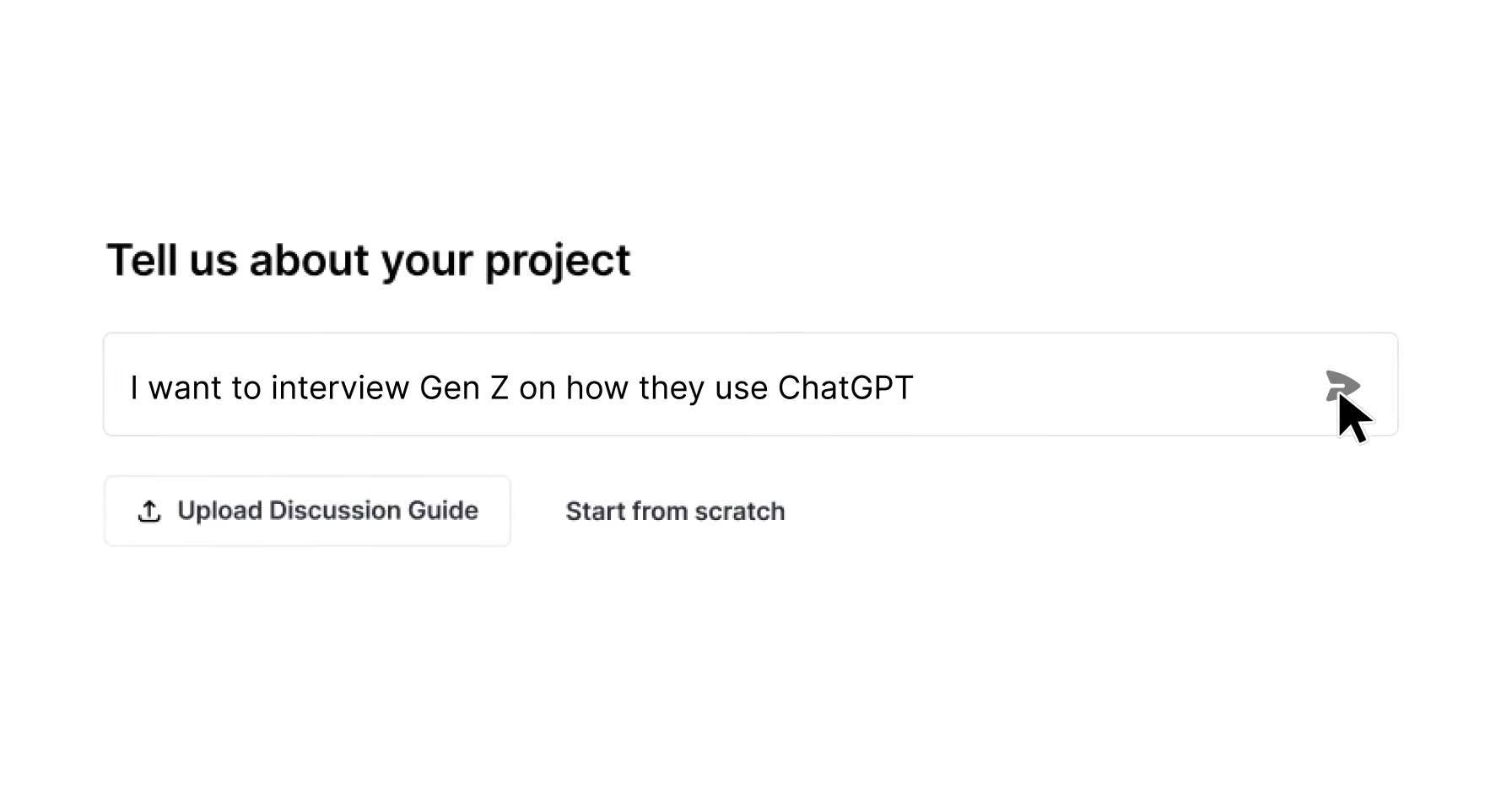
Poorly defined or leading research questions undermine qualitative studies from the start. Research design depends on clear objectives and structured question frameworks to produce actionable findings. Broad prompts such as “What do you think about our product?” lack the precision needed to reveal motivations, pain points, or behavioral drivers.
Traditional teams refine questions through slow back-and-forth between researchers and stakeholders, often over several weeks. Listen Labs’ AI-assisted study co-design shortens this cycle by interpreting research goals in natural language. The system then generates structured objectives, targeted questions, and strategic probing contexts within seconds. Microsoft relies on Listen Labs for customer research and interviews, demonstrating how AI-driven design supports enterprise-grade studies.
Mistake #2: Inadequate Sampling That Skews Your Findings
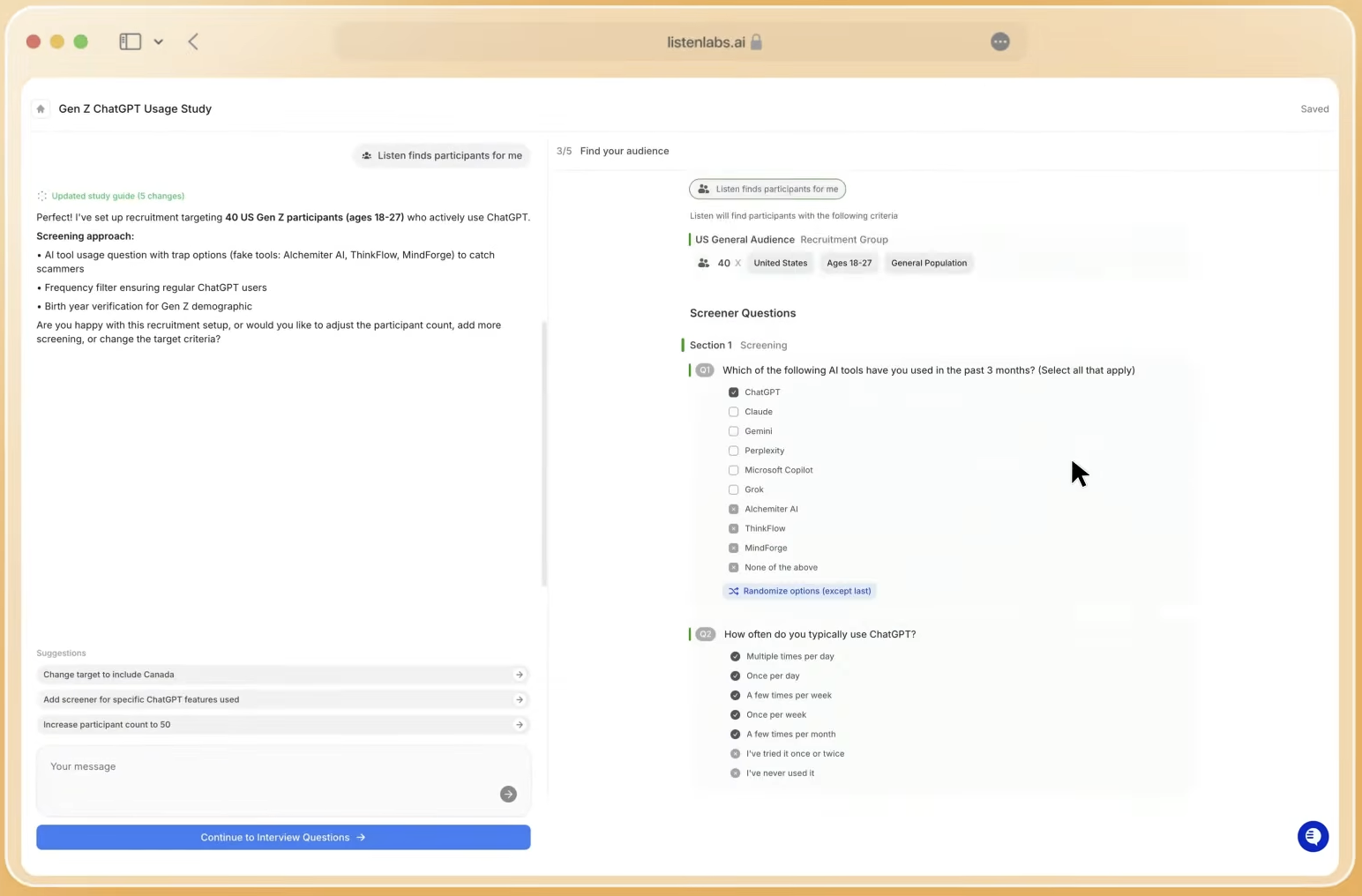
Even strong research questions fail when they reach the wrong participants. Non-probability sampling methods such as convenience and purposive sampling lack known selection probabilities, which limits generalizability and demands careful justification. Many qualitative projects rely on small, non-representative samples that introduce systematic bias and weaken confidence in results.
Listen Labs’ Listen Atlas tackles these sampling gaps with a network of 30 million verified respondents across more than 45 countries. AI orchestration matches participants using behavioral and intent data, not just demographics. Dedicated recruitment operations teams then source niche audiences such as enterprise decision-makers, healthcare workers, and consumers with incidence rates below 1 percent.
Mistake #3: Leading Questions and Interviewer Bias That Distort Responses
Human interviewers often introduce bias through suggestive wording, social desirability pressures, and inconsistent probing. Classic research shows that approximately 75 percent of participants conformed at least once in Asch’s conformity experiments, highlighting how easily people adjust answers under perceived pressure.
AI-moderated interviews reduce these distortions while keeping conversations natural and deep. Listen Labs’ AI conducts personalized video interviews with dynamic follow-up questions and consistent methodology across hundreds of simultaneous sessions. Participants report feeling less judged with AI moderation, especially when discussing sensitive topics such as personal finances, mental health, or political views.
Ready to remove interviewer bias from your research process? See AI moderation in action and learn how it delivers unbiased insights at scale.
Mistake #4: Small Samples That Force a Depth-versus-Scale Tradeoff
Traditional qualitative research forces a choice between deep conversations with a few people and broad surveys with limited nuance. Qualitative methods often lack speed and sample size but excel at revealing complexity in human decision-making. This tradeoff restricts teams to a small number of studies each quarter and slows decision cycles.
Listen Labs removes this constraint with qual-at-scale technology that runs hundreds of AI-moderated interviews at the same time. Each conversation remains adaptive and personalized, similar to a one-on-one expert interview. At the same time, the combined dataset reaches sample sizes that support robust statistical analysis.
Mistake #5: Low Participant Quality and Fraud That Waste Budget
Commodity research panels often include professional survey-takers, fake profiles, and repeat respondents who focus on incentives instead of honest feedback. These issues drain research budgets and reduce trust in the resulting insights.
Listen Labs’ Quality Guard system monitors every interview in real time across video, voice, content, and device signals to flag fraud, low-effort responses, and mismatched profiles. The platform removes professional survey-takers and builds reputation scores for each participant interaction. These reputation scores create a self-reinforcing quality filter. As more enterprises run studies, the system becomes better at identifying high-quality participants, which attracts more organizations seeking reliable insights and strengthens the network over time.
Mistake #6: Weak Interview Probing That Stays at the Surface
Many interviewers miss chances to explore surprising or incomplete answers, which leaves underlying motivations and emotions hidden. Inconsistent follow-up questions across sessions also make it harder to compare themes reliably.
Listen Labs’ AI interviewer generates smart follow-ups based on each response. The system probes short or vague answers and explores unexpected insights with the consistency of a trained researcher. Questioning strategies adapt in real time while still following a rigorous, repeatable methodology across all interviews.
Mistake #7: Analysis Bias and Coding Errors That Skew Results
Manual qualitative analysis often introduces subjective interpretation, confirmation bias, and inconsistent coding. These issues can tilt findings toward what researchers expect to see. Researchers spend most of their time on analysis tasks such as pattern finding, quantification, significance testing, and formatting results for stakeholders.
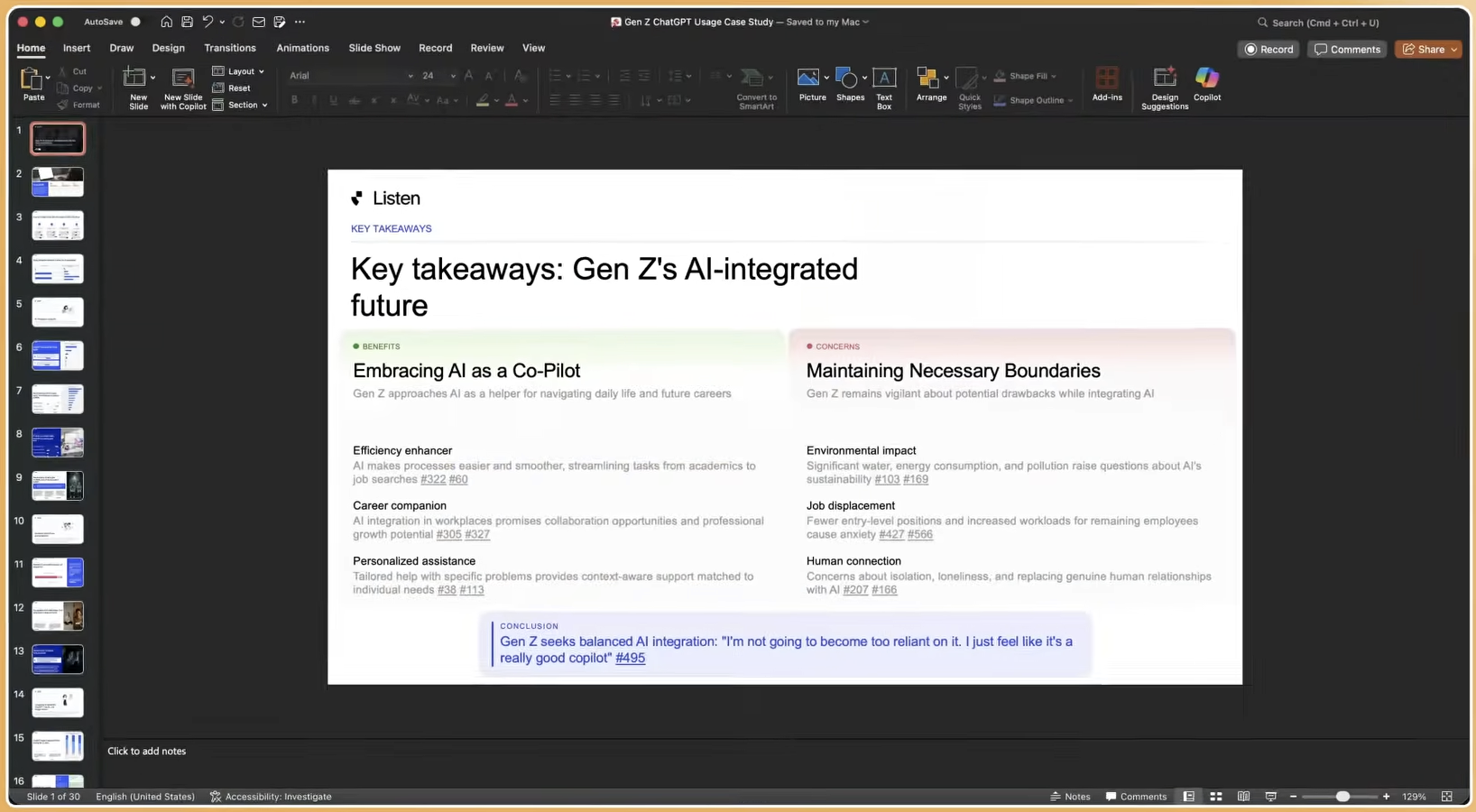
Listen Labs’ Research Agent processes interview data objectively and identifies patterns and themes across large datasets without human bias. The AI engine separates signal from noise using proprietary data from a wide range of completed studies. It then produces automated key findings, statistical tests, and segmentation breakdowns. Every insight links directly to the underlying responses, which preserves transparency and traceability.
Mistake #8: Overgeneralization from Small Samples That Misleads Strategy
Teams sometimes extend insights from a small qualitative group to an entire market without enough statistical support. This overreach can drive product or messaging decisions that do not match real customer behavior.
Listen Labs supports large-scale qualitative segmentation that provides stronger confidence for population-level insights. The platform’s capacity for hundreds of concurrent interviews enables robust subgroup analysis and cross-demographic comparisons, with appropriate sample sizes for each segment.
Mistake #9: Ethical and Compliance Gaps That Erode Trust
Research teams often juggle consent management, data privacy compliance, and ethical review workflows, especially in global projects that span multiple regulations. These gaps create legal exposure and reduce participant trust in the process.
Listen Labs maintains enterprise-grade security with SOC 2 Type II certification. The platform automates consent management, data encryption, and privacy compliance across many countries. This automation supports consistent ethical standards while reducing manual oversight burdens.
Mistake #10: Siloed Insights That Never Reach Decision-Makers
Research outputs often sit in scattered slide decks, PDFs, and personal folders. Teams then repeat similar studies because prior findings remain hard to locate, which wastes budget and slows decisions.
Listen Labs’ Mission Control functions as a centralized source of truth for customer insights. Each new study enriches this knowledge base and enables cross-study queries, trend tracking, and institutional memory. Teams can retrieve relevant answers from past work in seconds instead of digging through archives or re-running similar projects.
Mistake #11: Data Overload That Leads to Analysis Paralysis
Large qualitative projects generate extensive transcripts that human analysts struggle to review thoroughly. The volume of data often delays synthesis, hides important patterns, and slows delivery of insights to stakeholders.
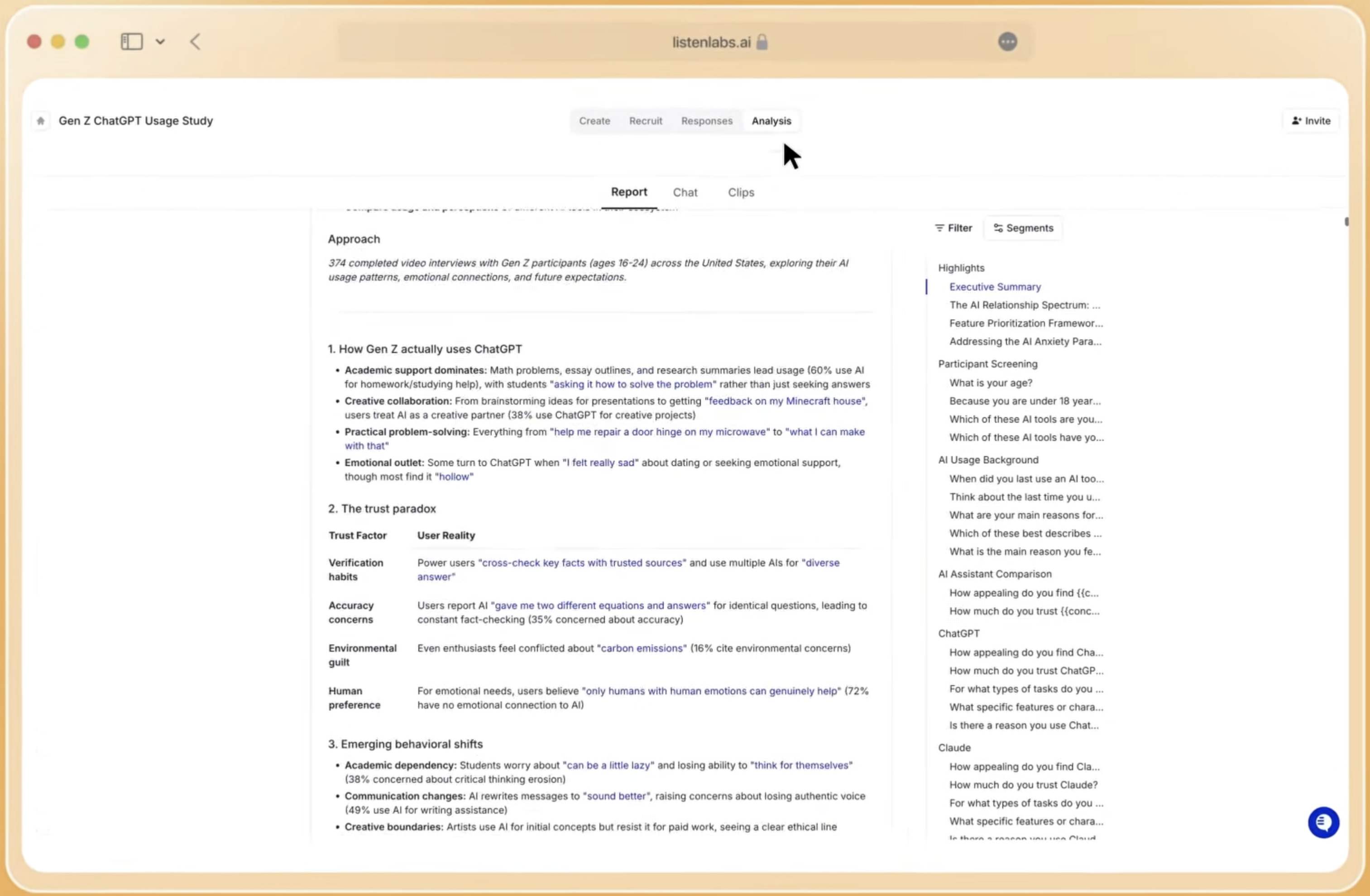
Listen Labs’ automated deliverables convert raw interview data into stakeholder-ready outputs such as slide decks, video highlight reels, statistical charts, and custom reports in under a minute. The Research Agent supports natural-language queries across the full dataset so researchers can pull specific insights without manual coding or spreadsheet work.
Mistake #12: Ignoring Emotional Signals Hidden Behind Words
Traditional qualitative workflows focus on what participants say and how they rate concepts, while missing emotional cues such as hesitation, confusion, or delight. Two ideas might receive similar ratings yet trigger very different emotional reactions.
Listen Labs’ Emotional Intelligence module analyzes tone of voice, word choice, and micro-expressions to reveal emotions that transcripts alone overlook. Built on Ekman’s universal emotions framework, the system quantifies emotions per question and concept with precise timestamps. Each emotional label connects back to exact quotes and reasoning, which helps researchers pinpoint moments of confusion, friction, and delight across multiple languages.
AI that addresses these twelve mistakes reshapes how teams run qualitative research. Explore bias-free research at scale and see how Listen Labs upgrades your entire insight pipeline.
Listen Labs vs. Traditional Tools: How AI Changes the Research Equation
The following table summarizes how Listen Labs’ AI-driven approach compares with traditional research options across four critical dimensions: speed, cost, scale, and quality consistency.
| Dimension | Traditional Agencies | UserTesting | Listen Labs |
|---|---|---|---|
| Speed | 4-8 weeks | a week or two | <24 hours |
| Cost | High | Moderate | Lower than traditional |
| Scale | Dozen interviews | Dozens of sessions | 1000s simultaneous |
| Quality | Variable by moderator | Human-dependent | Fraud-proof, consistent |
FAQ: Practical Answers on Avoiding Qualitative Research Mistakes
Can AI interviewers really match the quality of experienced human researchers?
AI-moderated interviews deliver methodological rigor comparable to strong in-house research teams and often outperform under-resourced operations. Listen Labs combines more than 50 years of collective research expertise with AI consistency, which removes variability and bias from individual moderators. The platform conducts adaptive conversations with smart follow-up questions and captures the same depth as skilled human interviewers while scaling to hundreds of simultaneous sessions.
How does AI prevent the bias and fraud issues common in qualitative research?
Listen Labs uses three layers of quality protection. First, verified high-quality panels exclude professional survey-takers. Second, real-time Quality Guard monitoring reviews video, voice, and content signals to detect fraud or low-effort behavior. Third, dedicated recruitment operations teams provide human review. Participants can join only three studies per month, which limits fatigue and professional respondent patterns. AI moderation removes interviewer bias, and Emotional Intelligence surfaces genuine emotional responses that participants may not articulate directly.
What about the common mistake of poorly formulated research questions?
Listen Labs’ AI-assisted study co-design addresses question quality from the outset. The system interprets research goals in natural language and produces structured objectives, targeted questions, and strategic probing paths. It draws on a large library of completed studies to recommend question types that support strong analysis and clear decisions. This automation replaces the weeks usually spent iterating between researchers and stakeholders.
Can AI-powered research scale while maintaining ethical standards?
Listen Labs maintains enterprise-grade security with SOC 2 Type II certification. The platform automates consent management, data encryption, and privacy compliance across many countries. Customer data never trains AI models, and all processing follows strict ethical standards while scaling to thousands of participants globally.
How quickly can enterprises see results compared to traditional research timelines?
Listen Labs compresses the full research cycle from several weeks to less than 24 hours. As noted earlier, enterprise clients such as Microsoft use Listen Labs to accelerate customer research dramatically. The platform manages study design, recruitment from 30 million verified respondents, AI-moderated interviews, analysis, and deliverable creation in one automated workflow.
Conclusion: Turn Qualitative Research from Bottleneck to Advantage
The twelve mistakes outlined above have limited enterprise qualitative research for decades. AI platforms such as Listen Labs now remove these barriers and increase research output by a factor of ten, delivering rigorous insights at scale without traditional constraints on time, cost, or human capacity.
Organizations that maintain slow, manual research processes risk delayed launches and missed market shifts. The post-AI era requires insight infrastructure that matches the pace of modern decision-making. Schedule your Listen Labs walkthrough and see how AI-powered qualitative research becomes a durable competitive advantage.