
Written by: Anish Rao, Head of Growth, Listen Labs
Key Takeaways
- Discuss.io’s live-only model creates scheduling bottlenecks, high no-show rates, and limits scalability for enterprise qualitative research.
- AI-powered platforms like Listen Labs run hundreds of simultaneous interviews with emotional analysis, global recruitment, and automated insights in hours, not weeks.
- Listen Labs delivers end-to-end research with 30M+ participants, fraud prevention, AI moderation, emotional intelligence, and instant deliverables, outperforming competitors like UserTesting and dscout.
- Enterprises including Microsoft, Anthropic, and P&G achieve one-third the cost, 5x responses, and 5x faster turnaround after switching to Listen Labs.
- Replace Discuss.io with Listen Labs’ qual-at-scale platform by scheduling your pilot and seeing results in days.
Why Discuss.io’s Live-Only Model Limits Enterprise Research
Discuss.io’s core limitations come from its dependence on live video sessions that cannot scale beyond small groups. Live-moderated video focus group tools typically cap at 6–10 respondents per single session before quality and depth degrade, which creates structural bottlenecks for enterprise teams that need statistically meaningful samples.
The platform’s synchronous requirements create what researchers call a “scheduling tax”, the coordination friction of aligning multiple participants across time zones. This coordination burden compounds into three cascading problems. Traditional focus groups suffer high no-show rates that bias samples and waste recruitment investments. Successful sessions still come at significant cost, and these combined factors make frequent research cycles prohibitively expensive for most enterprises.
Discuss.io also lacks the emotional intelligence and AI analysis capabilities that modern research teams now expect. The platform offers AI transcription but cannot capture micro-expressions, tone analysis, or subconscious emotional signals that reveal what participants truly feel versus what they say. Traditional focus groups, including live video sessions, can require 4–6 weeks from study brief to insights owing to recruitment, scheduling, and moderation limitations, which slows product and marketing decisions across large organizations.
Six Criteria for Choosing a Discuss.io Replacement in 2026
Enterprise insights leaders should evaluate Discuss.io alternatives against six critical dimensions that enable true qual-at-scale.
1. Segment-level saturation. Insights professionals prioritize segment-level saturation over simple volume when scaling qualitative research, seeking platforms that reliably achieve saturation within each customer segment rather than relying on pooled aggregates.
2. Speed to insight. Speed to insight remains paramount, with leading platforms delivering results in under 24 hours versus the 4–6 week cycles mentioned earlier.
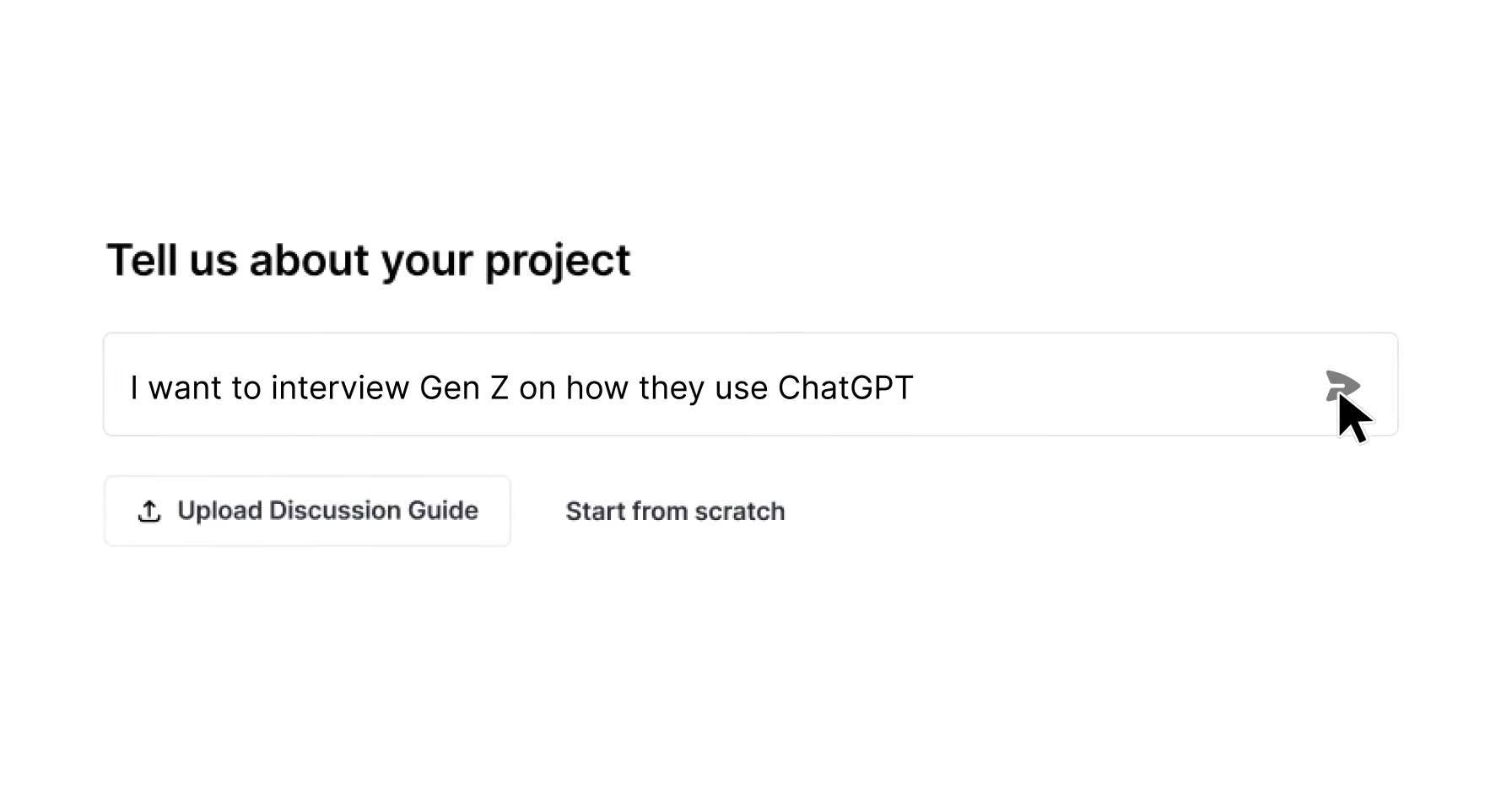
3. Global reach. This speed advantage only matters when the platform can reach the right participants globally. Global reach is a key evaluation criterion for scalable qualitative platforms, and insights professionals require support for diverse geographies, including Tier-2 cities, rural populations, and underserved languages.
4. Quality controls. Global reach at speed introduces fraud risks, so quality controls must include fraud prevention, participant verification, and real-time monitoring to maintain data integrity at scale.
5. Analysis automation. Analysis automation should compress mechanical tasks from days to minutes while still preserving strategic human oversight, freeing researchers to focus on interpretation and stakeholder alignment.
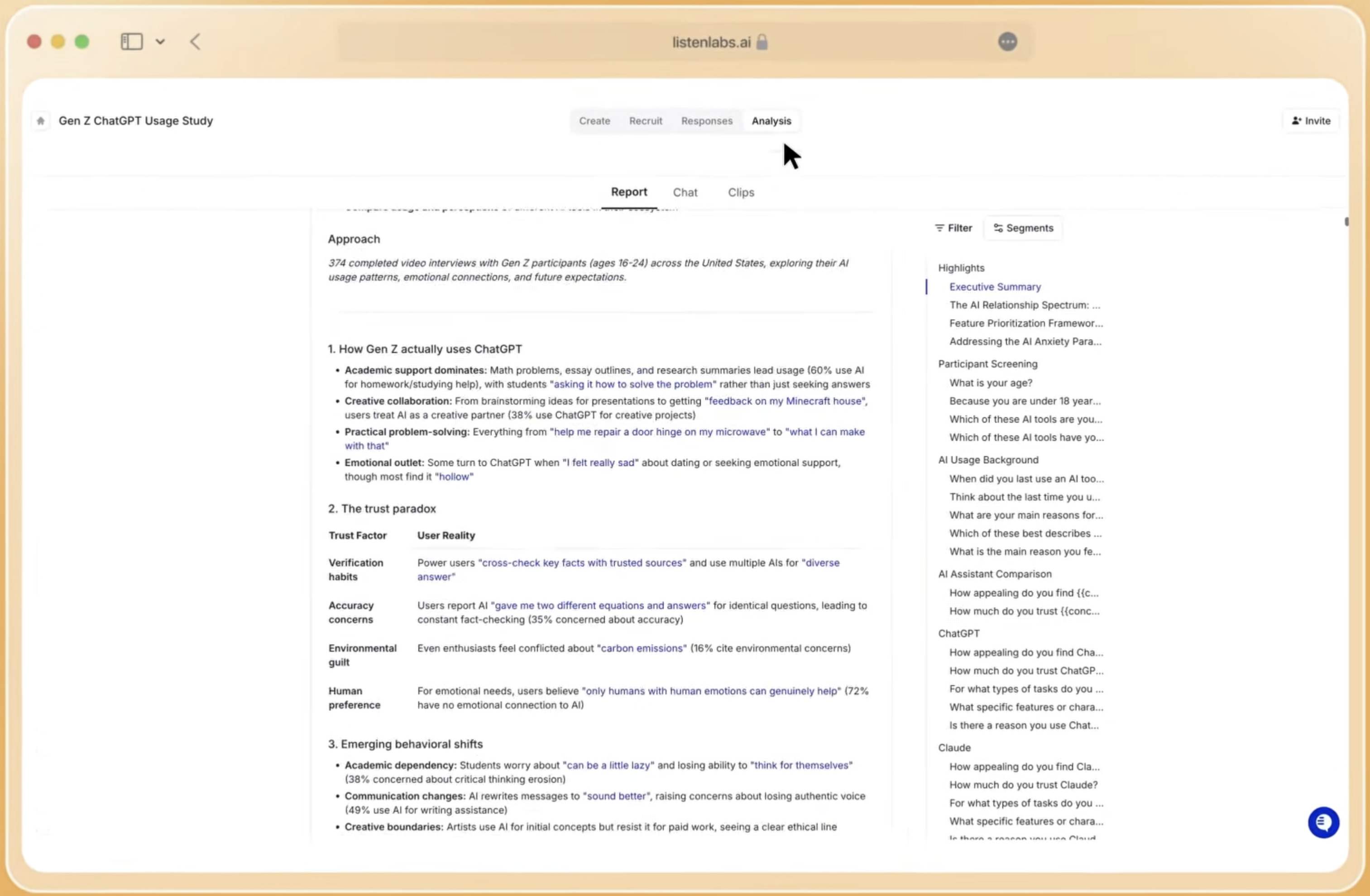
6. Emotional intelligence. Emotional intelligence capabilities that capture tone, micro-expressions, and subconscious signals provide depth that transcripts alone cannot deliver and often reveal the “why” behind customer behavior.
Top Discuss.io Replacements by Category
Listen Labs: Complete AI-Scale Qualitative Research Platform
Listen Labs serves as the most comprehensive Discuss.io replacement, with a single platform that manages every stage of qualitative research from design through delivery. The platform’s Listen Atlas provides access to 30M+ verified participants across 45+ countries and 100+ languages, and AI orchestration automatically matches the best participants for any study requirements.
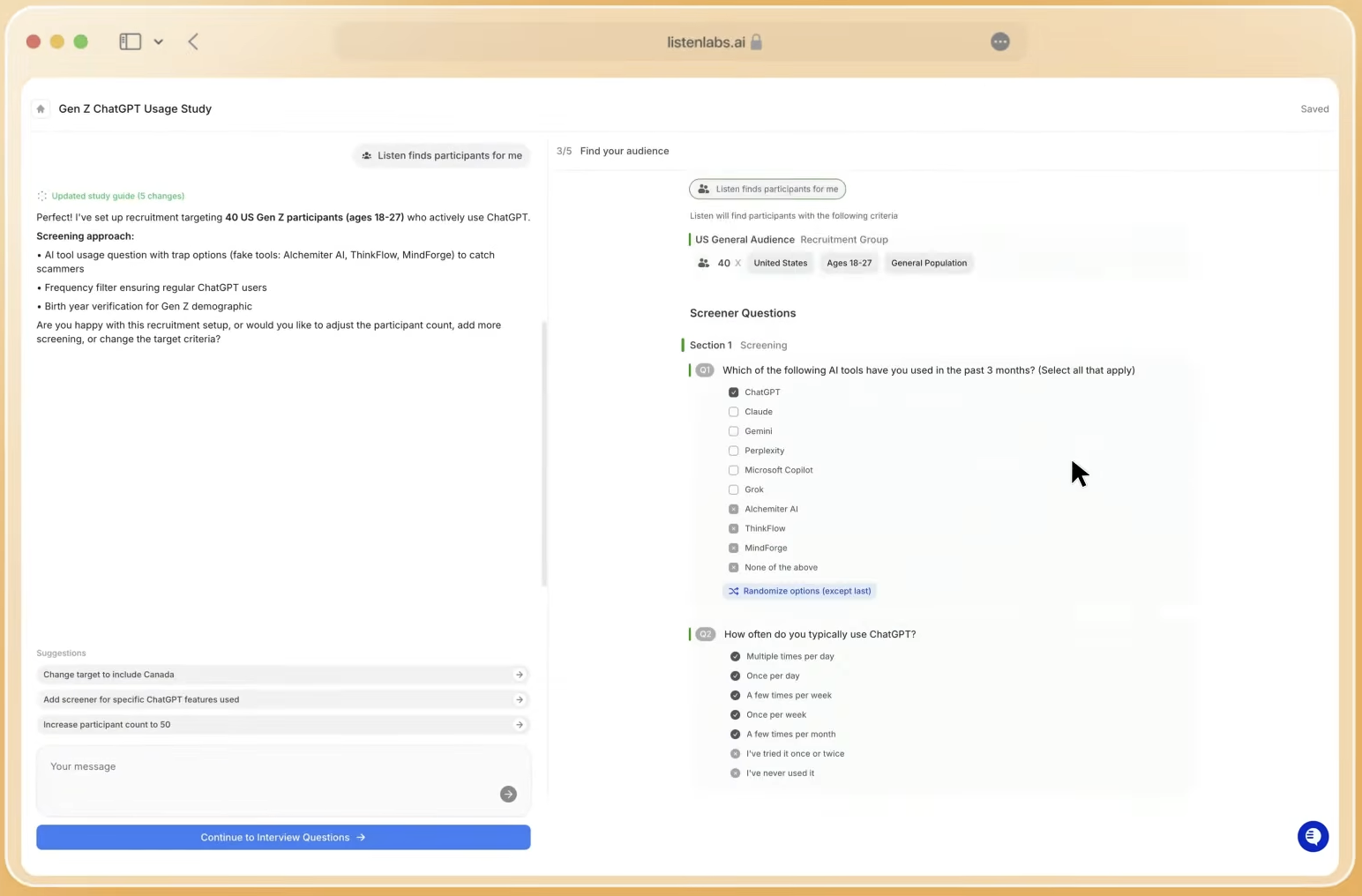
Quality Guard delivers multi-layer fraud protection through real-time monitoring across video, voice, content, and device signals, and it limits participants to three studies per month to prevent professional survey-takers. AI-moderated interviews run personalized conversations with dynamic follow-up questions, capturing both video responses and screen recordings for complete usability testing.
Listen Labs’ Emotional Intelligence feature analyzes tone of voice, word choice, and subconscious micro expressions to surface emotions that transcripts miss, and it quantifies feelings per question with traceable reasoning. The Research Agent automates analysis from raw data to stakeholder-ready deliverables, generating slide decks, highlight reels, and statistical comparisons in under a minute.
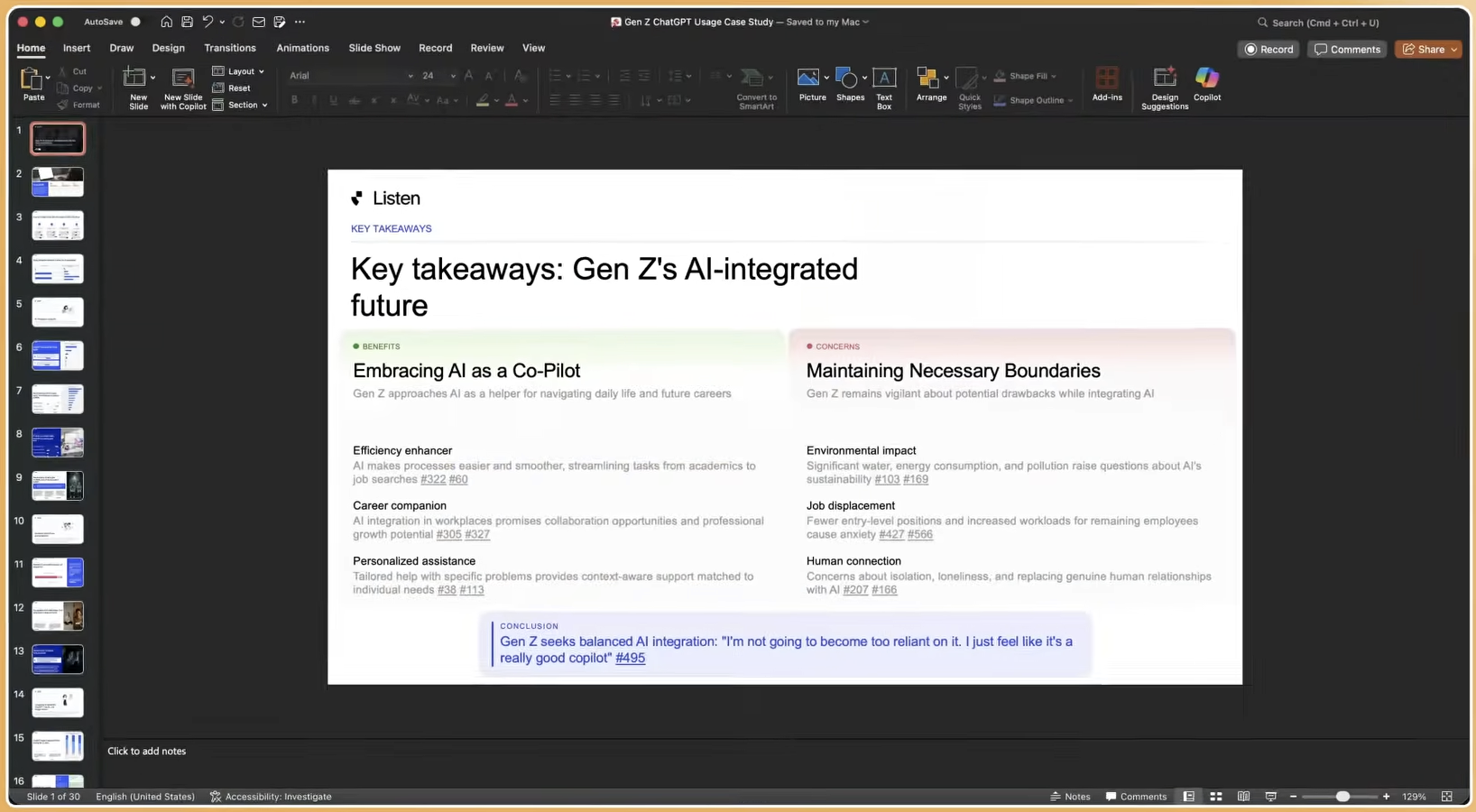
Enterprise case studies show Listen Labs’ performance across more than 1 million AI interviews. Microsoft uses Listen Labs for customer research across multiple audiences, achieving qualitative depth, scale, and speed for rapid product decisions. Anthropic used the platform to understand Claude user churn through 300+ interviews in 48 hours, and P&G validated product claims with 250+ male consumers overnight.
UserTesting: UX Research with Human Moderators
UserTesting remains a common choice for UX research but relies on human moderators that limit scalability. The platform’s live conversations for focus group research carry significant cost, which makes large-scale studies expensive. UserTesting performs well for usability testing yet lacks the conversational depth and emotional analysis that AI-moderated alternatives provide.
dscout: Strong Diary Studies Without AI Scale
dscout focuses on longitudinal diary studies and ethnographic research but cannot match the scale and speed of AI-moderated platforms. The tool works well for in-context behavioral research, yet it requires extensive manual analysis and offers limited automated insight generation, which makes it a poor fit for rapid enterprise decision-making.
Recollective: Community Research with Fragmented Workflow
Recollective supports online research communities and asynchronous discussions but spreads the research process across multiple tools. Its qualitative platform includes asynchronous discussion boards, video focus groups, IDIs, stimulus testing, and AI-powered analysis. The product still lacks integrated recruitment, emotional intelligence, and automated deliverables, which enterprise teams increasingly treat as baseline requirements.
Prolific and User Interviews: Recruitment-Only Vendors
Prolific and User Interviews solve participant sourcing but stop there, so teams still need separate tools for moderation, analysis, and reporting. These gaps recreate the same fragmentation issues that slow traditional research workflows and force teams to manage multiple vendors and handoffs.
Dovetail: Research Repository Without Data Collection
Dovetail excels at organizing and analyzing existing research but cannot conduct new studies. Teams still require separate platforms for recruitment and data collection, which makes Dovetail a useful complement rather than a complete Discuss.io replacement.
Why Listen Labs Outperforms Other Discuss.io Alternatives
Listen Labs’ competitive edge comes from three defensible moats that other vendors struggle to match. The data flywheel uses insights from tens of thousands of completed studies to improve question quality, analysis accuracy, and methodology effectiveness over time. This proprietary dataset informs every step of the research process, from study design recommendations to automated theme identification.
The recruitment flywheel creates compounding quality advantages through Quality Guard’s reputation scoring system, which tracks participant performance across studies. As more enterprises use Listen Labs, this reputation data becomes richer and more predictive, which allows the system to route higher-quality participants to new studies and filter out poor performers across the network. This network effect strengthens with scale and makes it difficult for competitors to match Listen Labs’ participant quality and fraud prevention without first building a similar data foundation.
Listen Labs also replaces multiple tools and headcount with one integrated platform. Traditional workflows require separate vendors for recruitment, moderation, transcription, and analysis, while Listen Labs manages everything end-to-end. This integration enables faster cycles, higher data quality, and lower total cost of ownership compared to fragmented alternatives.
The platform serves different enterprise personas effectively. Insights VPs achieve 10x research output with existing teams. UX researchers can run 50–100 usability tests per sprint. Product managers gain self-serve access to customer insights without waiting on research bandwidth. This qual-at-scale approach removes the traditional trade-off between depth and volume that has constrained qualitative research for decades.
See how Listen Labs replaces your Discuss.io workflow in under 24 hours.
Best-Fit Use Cases and a Low-Risk Migration Path
Listen Labs excels in three primary scenarios where Discuss.io’s live-only model creates bottlenecks. Enterprise continuous intelligence programs require weekly or monthly research waves that become nearly impossible to schedule with live sessions, while Listen Labs’ asynchronous AI interviews remove scheduling overhead entirely. UX teams running rapid prototype testing need feedback from hundreds of users at once, a scale that would demand months of sequential focus groups but takes days with AI moderation. Research agencies face the same constraint under client deadlines, and they can deliver comprehensive insights in days rather than months when the platform removes live coordination as the limiting factor.
Migration from Discuss.io to Listen Labs creates minimal disruption for existing teams. Organizations can import existing study templates, bring their own participant lists to reduce costs, and run parallel pilots to validate results quality. Most enterprises complete full migration within 30 days while maintaining research continuity.
Addressing Common Concerns About AI-Moderated Research
Three objections appear most often when enterprises consider replacing Discuss.io with AI platforms. Concerns about AI limitations in complex ethnographic research are valid but rare, and AI has enabled collection of rich, open-ended interviews at extraordinary scale, bridging the typical tradeoff in qualitative research between depth and volume. For specialized ethnographic needs, Listen Labs’ human research team provides oversight and refinement.
Fraud concerns are addressed through Quality Guard’s multi-layered verification system that exceeds traditional panel standards. Team adoption fears usually come from misconceptions about AI replacing researchers. In practice, Listen Labs has run over 1 million AI-powered customer interviews for companies including Microsoft, Perplexity, and Sweetgreen, which consistently shows that AI acts as a force multiplier rather than a replacement for human expertise.
Decision Framework and Practical Next Steps
Enterprises can use a simple five-point checklist when evaluating Discuss.io replacements. First, confirm that the platform delivers insights in under 24 hours. Second, check whether it scales to hundreds of participants without quality degradation. Third, verify that it provides enterprise-grade security and compliance. Fourth, ensure that it captures emotional signals beyond transcripts. Fifth, confirm that it integrates recruitment, moderation, and analysis in one workflow.
Listen Labs meets all five criteria and adds a broad feature set with a proven enterprise track record. Pilot Listen Labs against your current Discuss.io workflow and experience the difference firsthand.
Frequently Asked Questions
How does AI moderation compare to human moderators in terms of quality?
AI moderation through Listen Labs maintains the same methodological rigor as experienced human researchers while delivering far better consistency and scale. The platform’s AI runs personalized conversations with dynamic follow-up questions and probes deeper on interesting responses just like trained human interviewers. Human moderators may experience fatigue or bias across multiple sessions, while AI maintains uniform depth and question flow from the first interview to the hundredth. Listen Labs’ 50+ years of combined research team expertise continually refines the AI methodology, which supports enterprise-grade quality that often exceeds under-resourced human operations.
Can Listen Labs recruit niche or hard-to-find participants?
Yes. Listen Labs recruits specialized audiences through its dedicated recruitment operations team and 30M+ verified participant network. The platform can source participants below 1% incidence rate, including enterprise decision-makers, healthcare workers, engineers, and highly specific consumer segments. Listen Atlas uses AI orchestration to match and bid across multiple panel partners automatically, while the recruitment ops team taps specialized networks and micro-communities to find the right participants for any study requirements.
How does Listen Labs pricing compare to traditional research costs?
Listen Labs uses a subscription model with platform access plus credit-based participant costs. Credits vary based on audience difficulty, so general population studies cost fewer credits than niche segments. Enterprise clients typically achieve research at one-third the cost of traditional methods while running significantly more studies. The platform removes expenses for separate recruitment vendors, transcription services, analysis contractors, and report writing, which creates substantial total cost of ownership savings compared to fragmented traditional workflows.
What security and compliance standards does Listen Labs maintain?
Listen Labs maintains enterprise-grade security with SOC 2 Type II, GDPR, ISO 27001, ISO 27701, and ISO 42001 certifications. The platform uses 256-bit encryption for all data transmission and storage, applies role-based access controls, and ensures customer data is never used for AI model training. These security standards meet or exceed requirements for Fortune 500 enterprises, government agencies, and regulated industries.
How is Listen Labs different from running surveys on traditional platforms?
Listen Labs conducts conversational interviews where AI adapts in real time, asks follow-up questions based on participant responses, and uncovers unexpected insights that surveys miss. Surveys deliver structured data through pre-set questions with no ability to probe deeper, while Listen Labs captures emotional nuance, rich context, and the “why” behind customer behaviors. The platform combines qualitative depth with quantitative scale, enabling hundreds of personalized conversations that reveal insights impossible to capture through checkbox surveys. This difference reflects the gap between a conversation and a questionnaire.