
Written by: Anish Rao, Head of Growth, Listen Labs
Key Takeaways for 2026 F&B Decision Makers
- The 2026 F&B industry is realigning, and generic trend reports no longer create advantage. Brands that validate macro signals with proprietary consumer research win.
- Eight high-priority trends are reshaping product strategy, from functional gut health and premium non-alcoholic beverages to GLP-1 personalization and packaging circularity.
- Traditional surveys miss the emotional nuance that drives repeat purchase. AI-moderated interviews with emotional intelligence analysis capture tone, micro-expressions, and verbatim reactions at scale.
- Listen Labs compresses the traditional 4–6 week research cycle into under 24 hours while maintaining enterprise-grade quality, security certifications, and methodological rigor.
- Proprietary consumer research that validates macro trends against your specific audience delivers an edge that generic industry reports cannot match.
Eight 2026 Trends Reshaping F&B Strategy
Eight high-priority themes are reshaping F&B product strategy, innovation pipelines, and shopper insights programs in 2026:
- Functional health and gut balance
- Premium non-alcoholic beverages
- Value and convenience under inflation
- Authentic plant-based and sustainable sourcing
- Personalization and GLP-1 support
- Emotional and experiential differentiation
- AI-enabled operations and supply-chain transparency
- Packaging circularity
Functional Health and Gut Balance
The global gut health products market was valued at approximately $55.1 billion in 2025 and is projected to reach around $115 billion by 2035, driven by fast-growing segments. Probiotics lead the digestive health supplements market, while the nutraceutical drinks segment, covering probiotic drinks, kombucha, kefir, and fortified waters, is forecast to grow at a 9.7% CAGR through 2033. Innova’s February 2026 report shows many consumers have already acted on gut health concerns. One-third of Americans are trying to increase probiotic intake, while only 10 percent are trying to consume prebiotics. “Fibermaxxing,” or maximizing fiber intake for digestive and metabolic benefit, is gaining traction and shaping product expectations.
Consumer motivation in this category is emotionally layered. Gut health connects to energy, skin, immunity, and mental well-being, so reactions to claims often mix curiosity, hope, and skepticism. Standard survey data captures stated intent but misses hesitation or genuine delight, which drive repeat purchase and word of mouth. AI-moderated interviews with Listen Labs’ Emotional Intelligence layer surface those signals at the exact timestamp where they occur, using tone of voice, micro-expressions, and word choice. Innovation teams then see precisely which functional claims feel credible and which trigger doubt before committing to launch.
The same emotional complexity around credibility and benefit also appears in the next major shift: premium non-alcoholic beverages, where consumers must justify paying alcohol-level prices for zero-proof products.
Premium Non-Alcoholic Beverages
The global non-alcoholic beverages market is projected to grow from USD 1.29 trillion in 2026 to USD 1.69 trillion in 2031. The combined no- and low-alcohol market across 10 key markets is expected to expand by a 4% volume CAGR through 2028. The shift is generational and structural. Over two-thirds of Gen Zers plan to drink less alcohol in 2025, and non-alcoholic beverage sales are rising faster than alcoholic beverages. Functional sodas lead consumer interest, while many US consumers moderating alcohol intake seek more pre-mixed sober options.
The premium positioning challenge is clear. Many US alcohol drinkers question whether non-alcoholic versions justify a premium price. Teams need to know which flavor profiles, functional claims, and occasion framings overcome that barrier for their buyers. Rating scales cannot reveal that decision process. An AI-moderated concept test through Listen Labs can recruit from the 30 million verified respondent network by occasion type and moderation behavior. Within a day, teams receive emotional signal analysis and verbatim themes that show where premium pricing feels fair and where it fails.
Price–value tension also defines the next trend, where inflation reshapes how shoppers weigh taste, convenience, and brand loyalty.
Value and Convenience Under Inflation
The University of Michigan Consumer Sentiment Index fell to a record low of 44.8 in May 2026, with many consumers citing high prices as eroding their finances. Private label dollar market share reached 21.2% in the first half of 2025, an all-time high, and many US grocery shoppers have increased private label purchasing. At the same time, value does not equal “cheapest.” Consumers want products they see as good value, not just low price, and 88% cite taste as their primary purchase driver.
The main insight gap is understanding which value signals matter most for each shopper segment. A Walmart buyer and a Whole Foods buyer both talk about “value,” yet the emotional drivers behind that word differ completely. Listen Labs’ AI-moderated interviews probe that distinction with dynamic follow-up questions that reveal the real hierarchy of trade-offs. Fixed-format surveys cannot adapt in this way, so they miss how shoppers balance taste, convenience, pack size, and brand trust when budgets tighten.
Those trade-offs also shape how consumers judge plant-based products and sourcing claims, where authenticity and processing concerns sit alongside price.
Authentic Plant-Based and Sustainable Sourcing
Innova’s #5 Top Trend for 2026, “Authentic Plant-Based,” signals a decisive shift. Fifty-five percent of global consumers agree plant-based foods should be considered their own category rather than substitutes for meat or dairy, and many want less processing. At the same time, plant-based menu presence declined 14% and social conversation fell 32% as of April 2026, while upcycled ingredients grew 39% on menus. On sourcing transparency, consumers globally say transparency is important when purchasing sustainable food and drink, and some accept higher prices when brands clearly support local farmers or communities.
Authenticity claims attract the highest skepticism, so emotional nuance matters most here. Listen Labs’ multimodal Emotional Intelligence analysis, built on Ekman’s universal emotions framework, identifies precise moments of trust, doubt, or confusion in reactions to sourcing claims or ingredient stories. Brand research teams then refine messaging, proof points, and label language using evidence from real consumer responses rather than assumptions.
Personal relevance becomes even sharper in the next area, where GLP-1 medications and personalized nutrition reshape eating patterns and product expectations.
Personalization and GLP-1 Support
GLP-1 medications are restructuring household grocery behavior at measurable scale. Eighteen percent of American adults are currently using a GLP-1 medication as of spring 2026, and Circana projects GLP-1 households will represent 35% of all US food and beverage purchases by 2030. These consumers are shifting spending toward fewer sweet treats and salty snacks, and toward more fresh produce and packaged protein. The global personalized nutrition market is forecast to grow from $15.79 billion in 2025 to $30.94 billion by 2030.
The GLP-1 opportunity is highly brand-specific. A consumer reducing snack spend may actively seek high-protein, fiber-rich formats that fit a new eating pattern, yet their emotional relationship with food has changed. Many GLP-1 users describe their approach as “mindful,” guided by hunger rather than habit. Capturing that shift requires in-depth interviews, not a demographic filter on a survey panel. Listen Labs enables P&G-scale research teams to run 250 or more AI-moderated interviews with verified GLP-1 users, segmented by usage stage and category behavior, and receive quantified emotional themes and verbatim proof within a single business day.
The emotional stakes around health, comfort, and reward also drive the next trend, where brands compete on how products feel, not just what they do.
Emotional and Experiential Differentiation
Sixty-seven percent of Americans now practice mental and emotional self-care. In food and beverage, this creates demand for products that deliver comfort, ritual, and sensory reward alongside functional benefit. Comfort motivation among UK consumers increased by up to 5 percentage points year-over-year, and Tastewise analysis found sharp increases in interest for specific snack textures. At the same time, many consumers say they do not trust health claims made by food companies, so emotional resonance becomes the credibility bridge.
Emotional differentiation cannot be measured with a simple agreement scale. The same Emotional Intelligence capability described in the gut health section becomes even more critical here. Listen Labs captures tone of voice, word choice, and micro-expressions simultaneously, pinpointing the exact moment a consumer lights up at a flavor description or disengages from a packaging concept. Timestamp-level signals, linked to verbatim quotes, give creative and innovation teams clear evidence for confident go or no-go decisions on experiential claims.
Trust and transparency also shape how consumers respond to AI in operations and supply chains, which now influence brand perception directly.
AI-Enabled Operations and Supply-Chain Transparency
Operational AI is shifting from a back-office efficiency tool to a consumer-facing trust signal. Forty-two percent of consumers globally are comfortable with AI being used in food and drink product development, especially for reducing water use and managing quality. The FDA’s Food Traceability Rule took effect in January 2026, requiring enhanced tracking across major food categories and accelerating investment in traceability systems. Traceability is becoming a procurement standard, with farm-to-fork visibility and third-party certifications now key criteria during supplier selection.
Consumer acceptance of AI in the supply chain varies by category, claim type, and demographic. Some shoppers see AI as a quality and safety advantage, while others worry about “lab-made” food. Understanding where transparency builds trust versus where it triggers skepticism requires qualitative research at scale. Listen Labs delivers this through AI-moderated interviews with dynamic probing that reveal how shoppers interpret AI and traceability language in real time.
Those same expectations carry through to packaging, where circularity and sustainability must align with perceived value and product performance.
Packaging Circularity and Perceived Value
Many consumers find sustainable and transparent packaging appealing, and they increasingly expect clear information. Brands that switch to compostable or recyclable packaging can see consumer repeat intent rise after visible packaging sustainability changes. Regulatory pressure is accelerating this shift. Tighter regulations and retailer requirements are pushing manufacturers toward circular packaging that considers material choices, weight reduction, reuse, and take-back schemes. Improved quality or taste can make a higher price for a sustainable product feel justified, so the value narrative around circular packaging must be tested by brand and by shopper type.
Packaging concept testing with Listen Labs allows enterprise teams to show consumers actual or rendered packaging formats and capture real-time emotional reactions via video. Findings can be segmented by shopper type, sustainability mindset, or retailer, all within a single study delivered in under 24 hours. Teams then see which sustainability cues support trade-up and which feel like greenwashing.
Across all eight trends, the common challenge is validation. Macro data signals where the market is moving, while brand-specific research shows how those shifts land with your consumers.
Validate 2026 F&B Trends With Your Consumers
Knowing that gut health is a $55 billion market or that 18% of adults use GLP-1 medications does not answer the question that drives brand decisions. Leaders need to see how these trends land with their specific consumers, in their categories, against their claims and concepts. That gap between macro signal and brand-level validation is what Listen Labs closes.
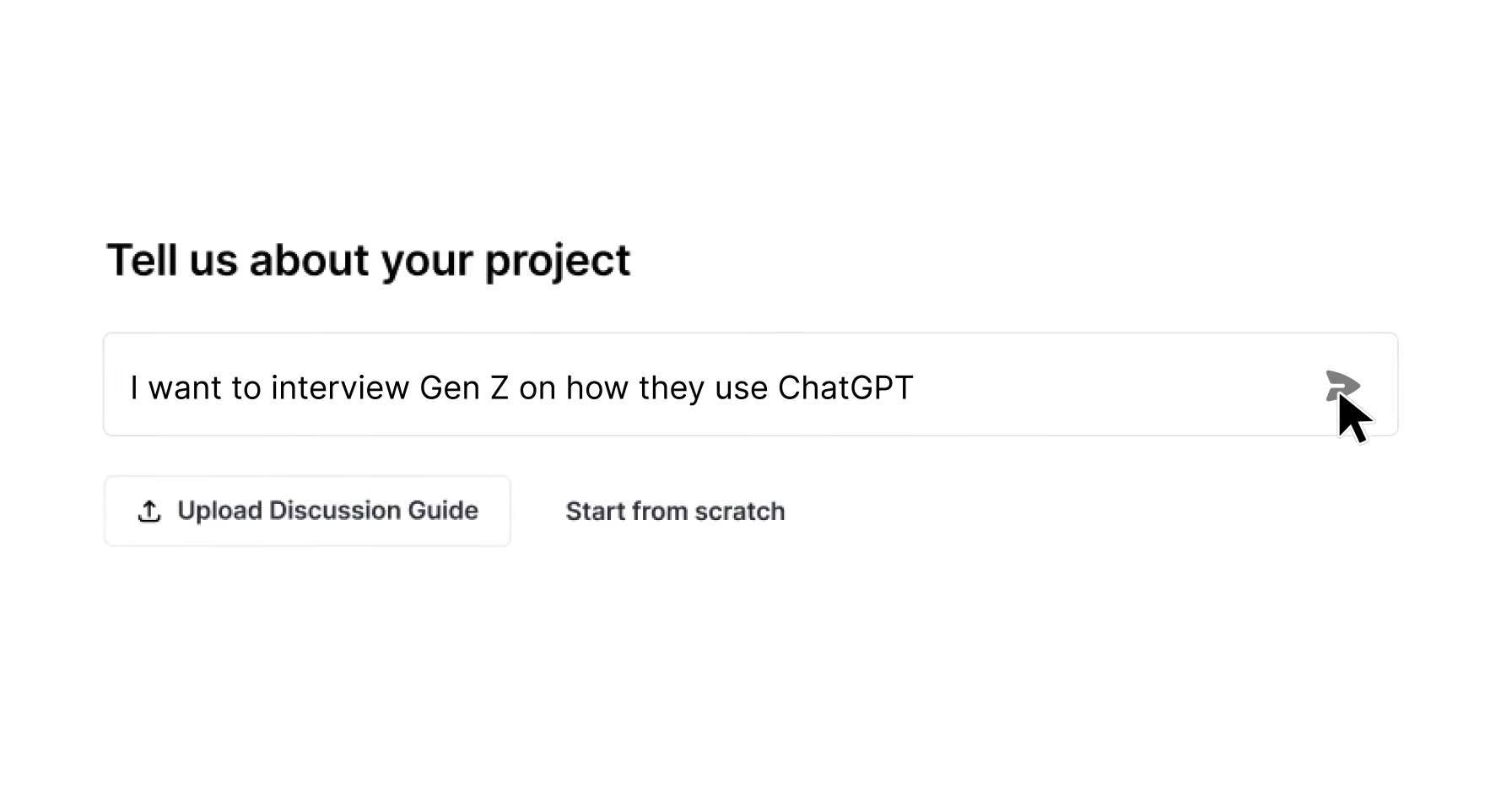
The end-to-end process follows a clear sequence. A Consumer Insights leader describes a research objective in natural language, such as “understand how GLP-1 users in our core 35–54 demographic respond to our new high-protein snack line.” Listen Labs’ AI then co-designs the study guide, sets up stimuli like product images, packaging concepts, or claim statements, and configures branching logic for different segments. Listen Atlas recruits verified participants from a global network of 30 million respondents across more than 45 countries, matching on behavioral and intent signals rather than self-reported demographics alone. Quality Guard monitors every interview in real time for fraud, low-effort responses, and repeat respondents, with participants limited to three studies per month.
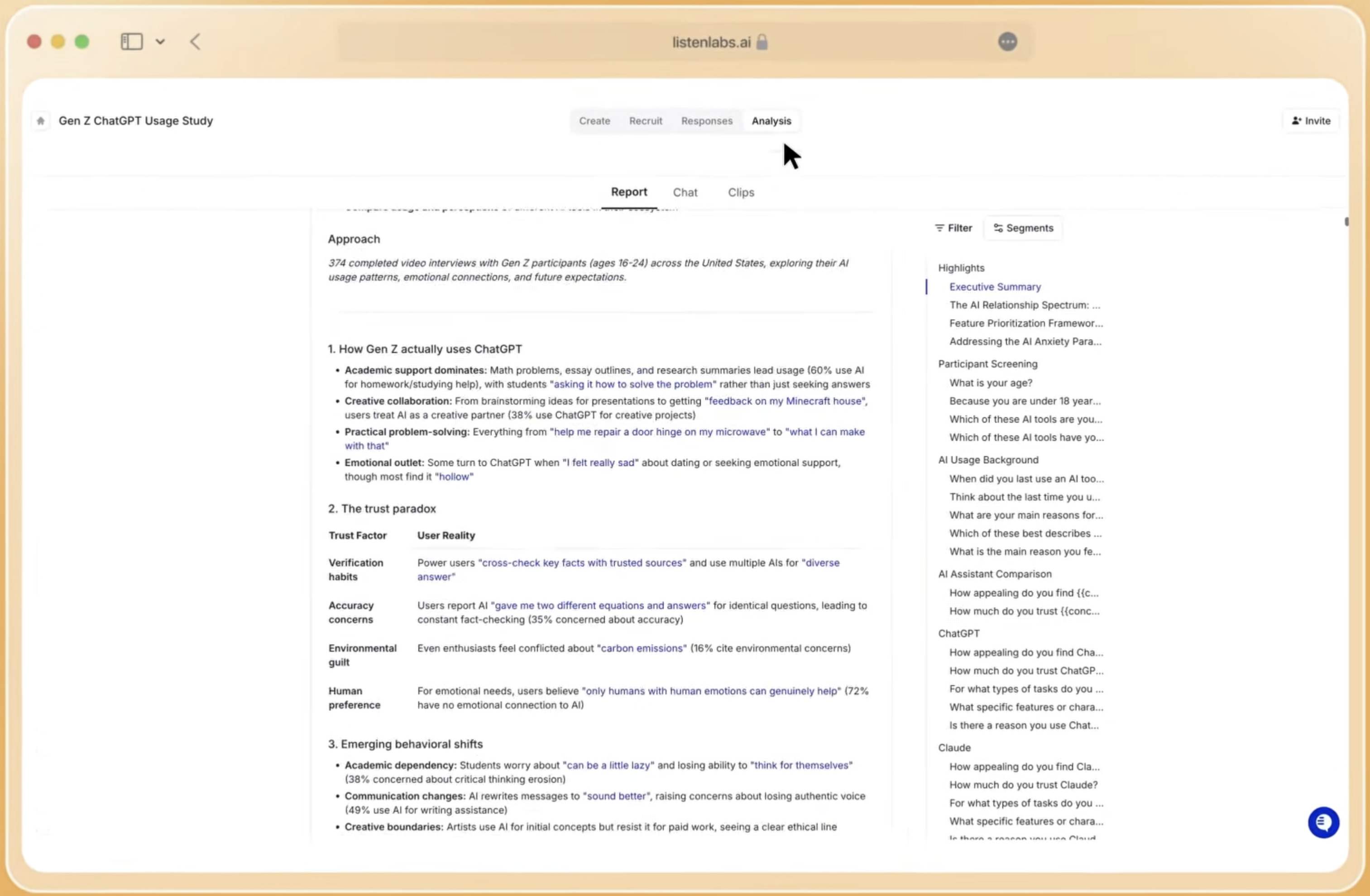
AI-moderated video interviews run simultaneously across hundreds of participants. Dynamic follow-up questions probe unexpected answers in the same way a trained human moderator would. Emotional Intelligence analyzes tone of voice, word choice, and micro-expressions across every response, quantifying emotions per question and per concept with full traceability to timestamps and verbatim quotes. The Research Agent then generates consultant-quality slide decks, memos, highlight reels, and segmentation breakdowns, all available in under 24 hours.
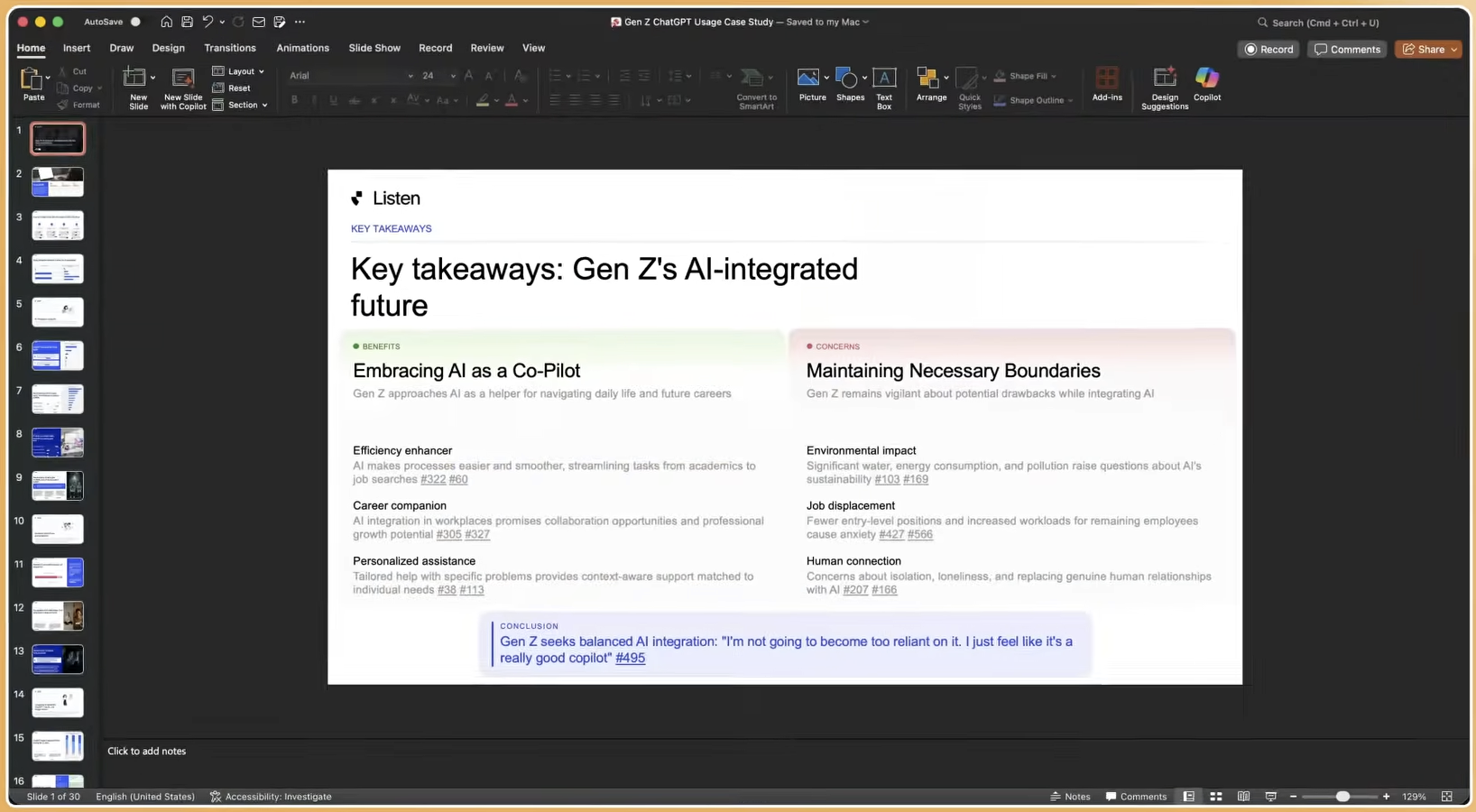
This workflow helped P&G surface where product claims felt exaggerated or unclear before market launch, using more than 250 interviews with quantified themes and verbatim proof that shaped product and brand strategy. Nestlé-scale teams use the same infrastructure to move from trend signal to decision-ready insight without adding headcount or extending research backlogs.
Listen Labs compresses a traditional 4–6 week research cycle into a single business day while maintaining quality. The platform is SOC 2 Type II, GDPR, ISO 27001, ISO 27701, and ISO 42001 certified, with enterprise SSO and 256-bit encryption. Customer data is never used for AI model training. The system is built by researchers with more than 50 years of combined in-house expertise and meets the methodological standards that VP- and Director-level Consumer Insights leaders require.
Start turning 2026 F&B trends into decision-ready consumer insight for your brand.
Frequently Asked Questions
How do AI-moderated interviews compare to human researchers for F&B concept testing?
AI-moderated interviews conducted through Listen Labs maintain the same methodological rigor as an experienced in-house research team. The AI probes deeper on short or unexpected answers, adapts its questions based on each participant’s responses, and captures video, audio, and text at the same time. For F&B concept testing, this means a consumer’s hesitation when hearing a functional claim, or spontaneous enthusiasm for a flavor description, is captured and quantified rather than filtered through a moderator’s notes. The in-house research team, with more than 50 years of combined expertise, continuously refines the methodology. Your Consumer Insights team can then focus on strategic interpretation instead of logistics, multiplying research output without proportional headcount increases.
How does Listen Labs ensure participant quality for F&B shopper research?
Three layers of quality control operate at once. First, Listen Labs works only with high-quality, non-commodity panel sources, avoiding professional survey-takers. Second, Quality Guard uses real-time AI monitoring across video, voice, content, and device signals to detect fraud, low-effort responses, AI-generated scripts, and mismatched profiles. Third, a dedicated recruitment operations team adds a human review layer, and participants are limited to three studies per month to prevent panel fatigue. For specialized F&B segments such as GLP-1 users, premium non-alcoholic beverage buyers, or specific dietary cohorts, the recruitment team sources participants through niche communities and specialized networks, reaching audiences below 1% incidence rate when needed.
Can Listen Labs reach international F&B consumer segments for multi-market validation?
Yes. Listen Atlas covers more than 45 countries across the Americas, Europe, APAC, and MEA, with interview moderation supported in over 100 languages and automatic translation and transcription. Multi-market studies can run simultaneously, and the Research Agent segments findings by country, language, or custom demographic cohort. This is especially useful for 2026 F&B trends with strong regional variation. Gut health adoption patterns, for example, differ materially between North America, Asia Pacific, and Western Europe, and a single global study design can surface those differences within one 24-hour research cycle.
Will using Listen Labs replace our Consumer Insights team?
No. Listen Labs is designed as a force multiplier for existing research teams, not a replacement. Enterprise Consumer Insights teams using the platform run significantly more studies with the same headcount, clearing backlogs that previously stretched to 4–6 weeks per study. Researchers shift from managing logistics such as recruitment, scheduling, moderation, transcription, and analysis to focusing on strategic interpretation and stakeholder communication. The platform’s Research Agent generates slide decks, memos, and highlight reels in under a minute, while your team retains ownership of strategic judgment about what the findings mean for brand positioning or innovation direction.
What data privacy and security standards does Listen Labs meet for enterprise F&B research?
Listen Labs holds SOC 2 Type II, GDPR, ISO 27001, ISO 27701, and ISO 42001 certifications, with enterprise SSO support and 256-bit encryption. Customer data is never used for AI model training. These certifications cover the full research lifecycle, including participant data, interview recordings, analysis outputs, and deliverables. The platform meets the compliance requirements of Fortune 500 F&B and CPG enterprises that operate across multiple regulatory jurisdictions.
Turn Industry Signals Into Your Competitive Advantage
Each of the eight trends above creates a distinct validation challenge for F&B brands. Gut health requires emotional nuance around skepticism and credibility, GLP-1 reshapes eating patterns and identity, and premium non-alcoholic positioning must overcome price resistance. Value and circular packaging demand proof that sustainability and affordability can coexist, while AI in operations and plant-based sourcing raise new trust questions.
Brands that move fastest from macro signal to proprietary consumer insight will define category leadership in 2026. The advantage comes from combining fresh trend synthesis, emotionally rich AI-moderated interviews, and decision-ready deliverables at enterprise scale. When that system runs in a single business day, teams can test more ideas, refine claims earlier, and enter the market with greater confidence.
Turn today’s F&B industry signals into a durable consumer insight advantage for your brand.