Product
Introducing Emotional Intelligence
What people say and how they feel don't always line up. Understand both with Emotional Intelligence.
Imagine you're testing two new ads. Both get positive ratings.
For one, pupils widen, eyebrows lift, and smiles appear in seconds. The other elicits flat, even confused expressions.
But text alone can't capture that human nuance. So we built Emotional Intelligence.
Emotional Intelligence analyzes three signals: tone of voice, word choice, and subconscious micro expressions. Together, these multi-modal signals detect emotions that transcripts might not capture.
Every emotion is quantified per question and concept, with every label traceable to the exact timestamp, verbatim quote, and AI reasoning behind it. This is not a black box – you can see why Listen detected “happiness”, not just that it did.
We built Emotional Intelligence using Ekman's universal six emotions framework, the same standard used in clinical psychology and UX research: anger, disgust, fear, happiness, sadness, surprise, and neutral.
Teams are already using Emotional Intelligence for:
Creative Testing. See how people react to your creative: where they light up, disengage, or get confused.
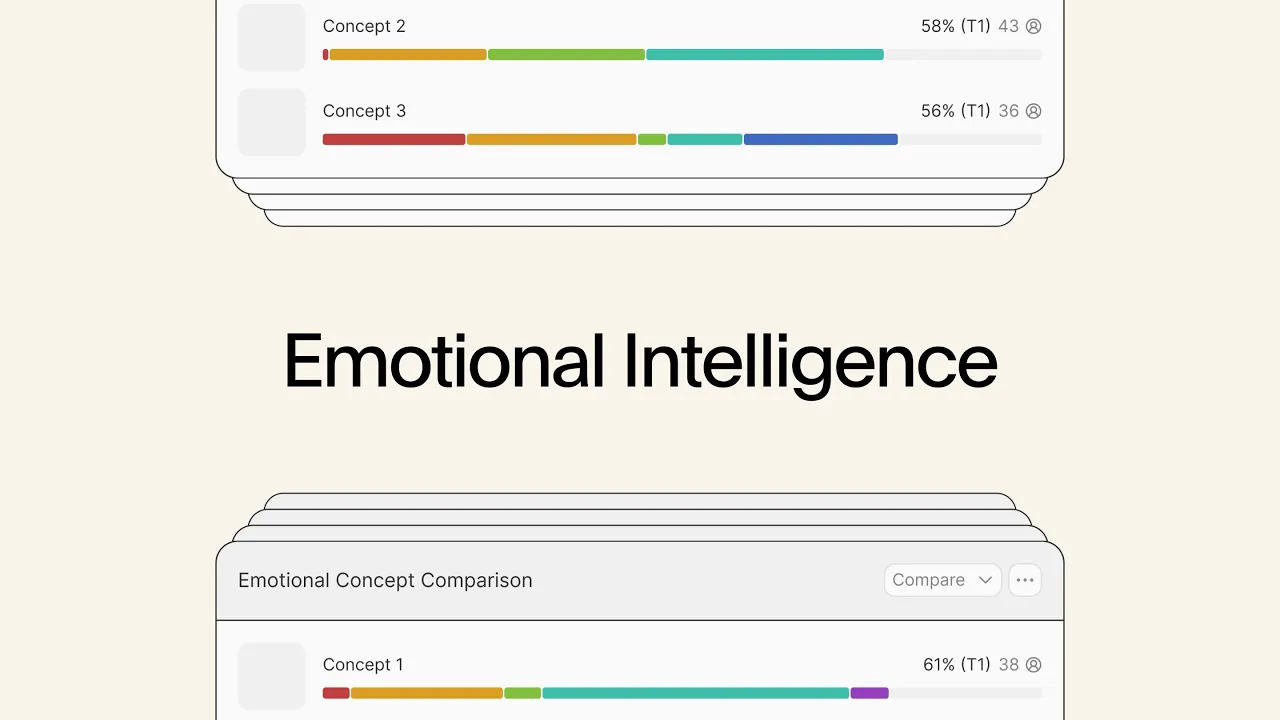
Concept Comparison. Ask "Which concept triggered the most confusion?" and get a side-by-side emotional comparison across stimuli, segments, and markets.
Brand Research. Understand how people emotionally connect to your brand. Surface the nuance behind what's said about your brand versus competitors.
Usability Testing. Catch the exact moments of hesitation, frustration, and delight during task-based workflows that participants don’t verbalize.
Emotional Intelligence also integrates directly with Listen’s Research Agent. You can now query emotional data in natural language, generate highlight reels of your most engaged responses, and fold insights into the charts, slides, and reports you're already building in Listen.
Get started today
Emotional Intelligence is available today, across 50+ languages. Open any study in Listen and explore the Details page.
If you're new to Listen, see Emotional Intelligence in action.
What people say is only part of the story. Now you can see the rest.



Use Case
© 2026 Listen Labs • All rights reserved