
Written by: Anish Rao, Head of Growth, Listen Labs | Last updated: April 15, 2026
Key Takeaways
- Enterprise AI research platforms now automate the full research lifecycle and compress 4–6 week backlogs into 24-hour cycles with methodological rigor.
- Listen Labs leads with a large verified participant network, emotion AI based on Ekman’s model, and automation from recruitment through branded reports.
- Key criteria include speed under 24 hours, high panel quality with fraud detection, hundreds of interviews per study, enterprise security, and materially lower costs than traditional research.
- Competitors such as Glean, UserTesting, and Qualtrics perform well in specific niches but lack Listen Labs’ qual-at-scale capabilities and full workflow integration.
- Transform your research operations with Listen Labs—see a live 24-hour study workflow.
Seven Criteria That Define Enterprise-Grade AI Research Platforms
Enterprise AI research assistant platforms must meet seven criteria that separate market leaders from basic automation tools. Methodological depth starts with adaptive interview capabilities and emotion AI built on frameworks like Ekman’s universal emotions model. This depth only delivers value when paired with strong panel quality, supported by verified participant networks at scale and fraud detection that removes professional survey-takers. Speed then becomes the multiplier, with modern benchmarks focused on 24-hour research cycles instead of traditional 4–6 week timelines.
Scale extends these gains by enabling hundreds of simultaneous interviews while preserving conversational depth. Security keeps this data safe through SOC2 and ISO certifications that satisfy enterprise compliance teams. Integration capabilities connect the platform to existing tech stacks through APIs and SSO so research fits into current workflows. Cost efficiency completes the picture by cutting traditional research expenses through automation and reduced manual effort.
The table below summarizes how these seven criteria translate into measurable benchmarks for platform evaluation.
| Criterion | Why It Matters | Benchmark |
|---|---|---|
| Speed | Turns multi-week projects into rapid cycles | <24hrs per NVIDIA ROI studies |
| Panel Quality | Reduces fraud and bias in responses | Verified participant networks at global scale |
| Methodological Depth | Delivers qual-at-scale insights | Emotion AI plus adaptive interviews |
| Security | Supports enterprise compliance | SOC2 and ISO certifications |
Ready to compare against these benchmarks? See Listen Labs mapped to your criteria
Top 10 Enterprise AI Research Assistant Platforms for 2026
1. Listen Labs
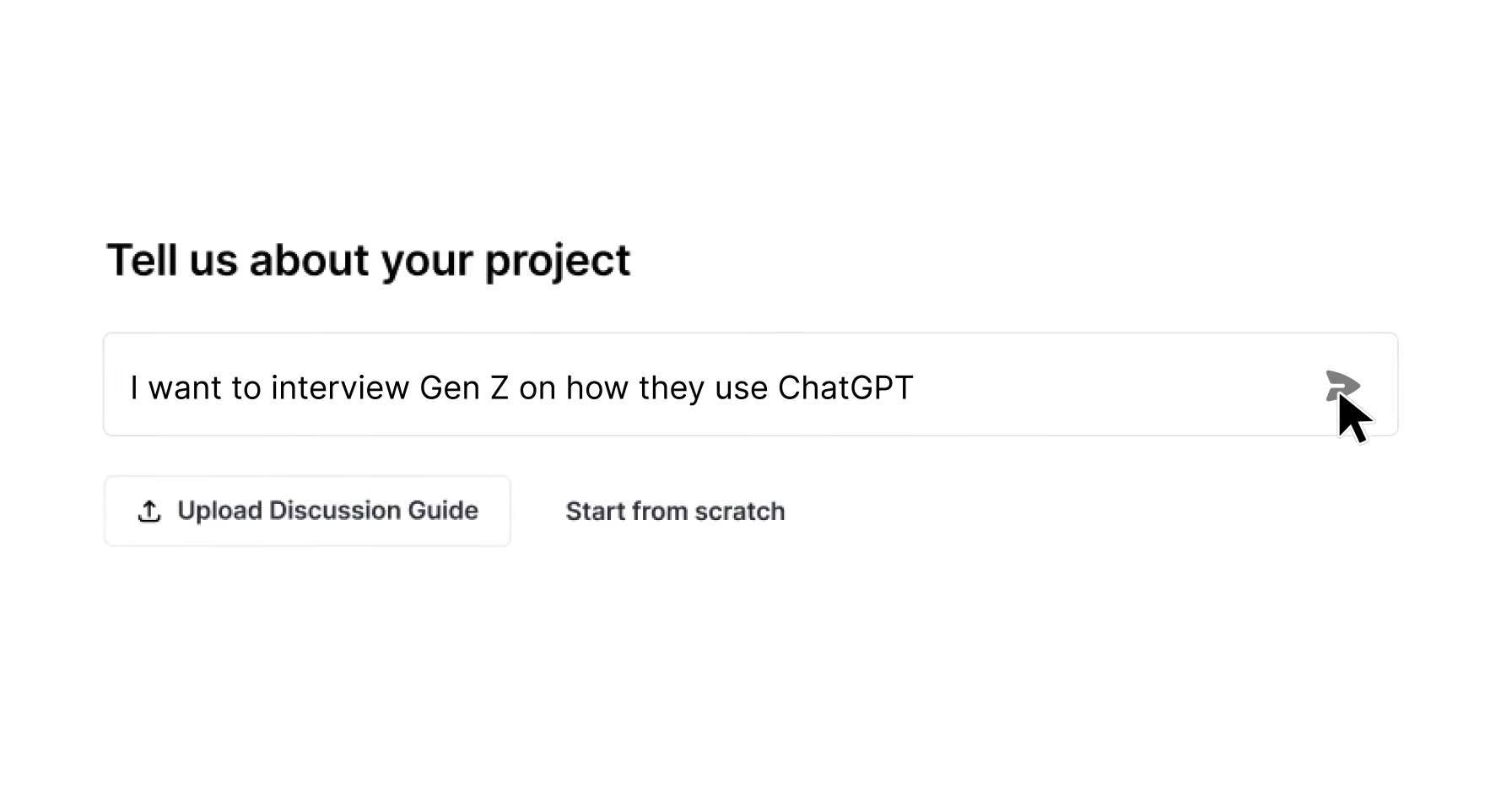
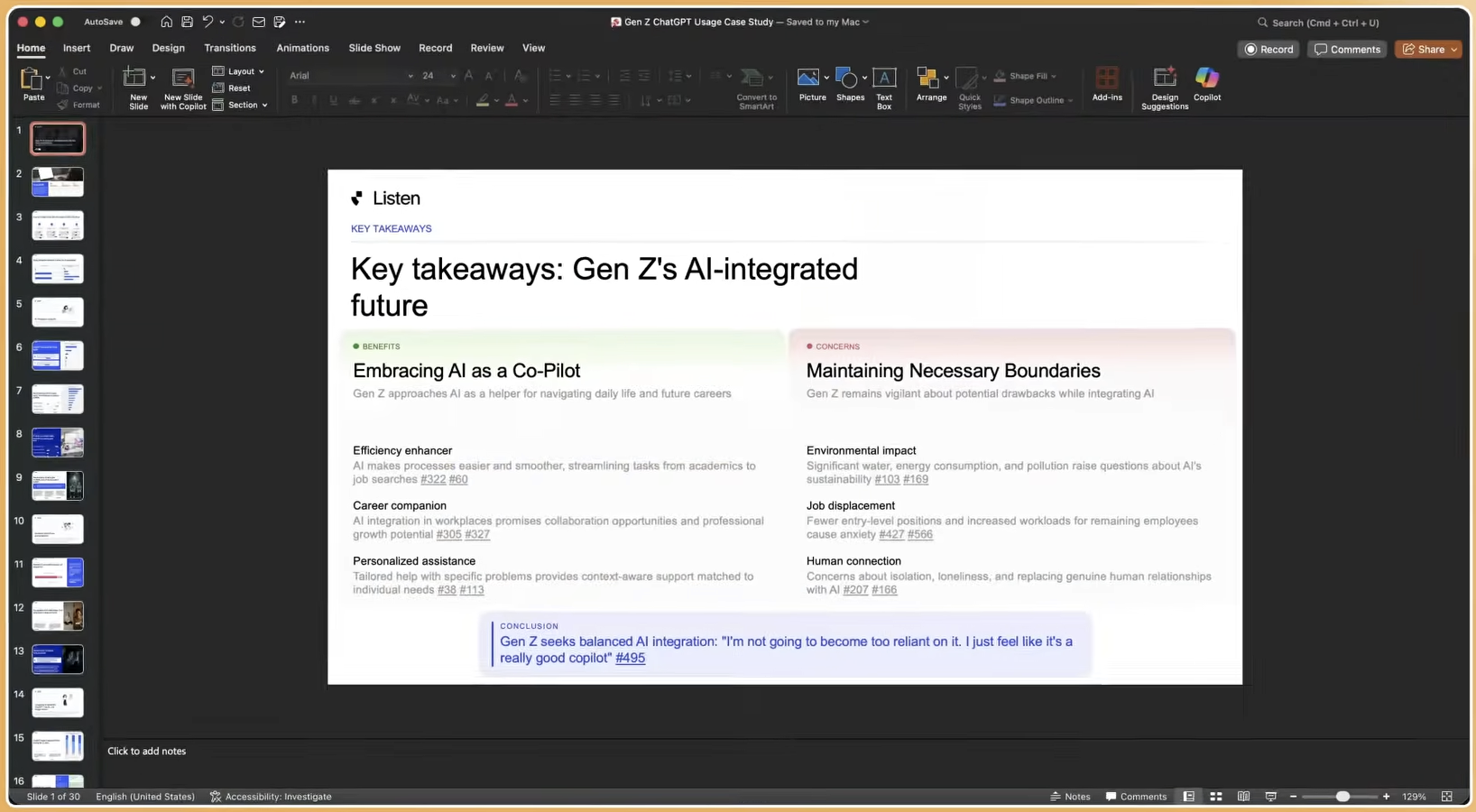
Listen Labs leads the enterprise AI research assistant market with an end-to-end platform that combines its 30M+ participant network across 100+ languages, AI-moderated interviews with Emotional Intelligence, and automated deliverable generation. The platform’s Research Agent handles full analysis workflows from raw data to stakeholder-ready reports, while Quality Guard removes fraud through real-time behavioral monitoring. Research Agent generates slide decks in company-branded templates and downloadable reports, so one researcher can complete buying-intent analysis across three user segments in under a minute. Emotional Intelligence analyzes tone, word choice, and micro expressions using Ekman’s framework, then quantifies emotions per question with timestamp-level traceability. Mission Control acts as the organizational source of truth, enabling cross-study queries and long-term institutional knowledge.
2. Glean
Glean specializes in enterprise search and knowledge management with AI-powered information retrieval across more than 100 applications. The platform excels at document search and knowledge synthesis but does not provide end-to-end qualitative research capabilities such as participant recruitment and interview moderation.
3. IBM Watson
IBM Watson delivers broad enterprise AI capabilities with strong security and compliance features. The platform focuses on data analysis and insight generation yet requires separate tools for participant recruitment and interview moderation, which limits its effectiveness for complete research workflows.
4. Moveworks
Moveworks offers AI-powered IT support and employee assistance with advanced natural language processing. It performs well for internal enterprise automation but lacks customer research features such as panel management and qualitative interview moderation.
5. UserTesting
UserTesting provides human-moderated usability testing and customer feedback collection. The platform delivers quality insights, although its reliance on human moderators creates scalability constraints and longer turnaround times compared with AI-moderated alternatives.
6. Qualtrics
Qualtrics dominates quantitative survey research with robust analytics and enterprise integrations. It excels at structured data collection but does not offer conversational interview capabilities or the qualitative depth required for comprehensive customer understanding.
7. Dovetail
Dovetail supplies research repository and analysis tools for organizing existing research data. It serves as a valuable analysis layer yet depends on separate solutions for participant recruitment and data collection, which limits its end-to-end utility.
8. Prolific
Prolific focuses on participant recruitment services with quality screening mechanisms. The platform grants access to research participants but requires additional tools for interview moderation and analysis, creating fragmented workflows.
9. Anthropic Tools
Anthropic provides AI models and tools for various enterprise applications, including research assistance. These tools offer strong AI capabilities but lack specialized research infrastructure such as panel management and interview orchestration.
10. SurveyMonkey
SurveyMonkey delivers accessible survey creation and basic analytics for small to medium enterprises. The platform handles structured questionnaires effectively but cannot support conversational interviews or advanced qualitative analysis required for enterprise research.
The following table compares how these top platforms stack up across the most critical evaluation dimensions.
| Platform | Best For | Speed | Scale | Price Hint |
|---|---|---|---|---|
| Listen Labs | Qual-at-scale | 24hrs | 100s interviews | Significantly below traditional |
| Glean | Enterprise search | Days | Document-focused | Higher |
| UserTesting | Human moderation | Weeks | Limited | Higher |
| Qualtrics | Surveys | Weeks | Quantitative only | Higher |
Many respondents report improved employee productivity as a major business impact of AI, and Listen Labs extends that impact directly into research operations.
See why the top-ranked platform leads enterprise research—watch a Listen Labs walkthrough
Why Listen Labs Outperforms Competitors for Customer Research
Listen Labs maintains market leadership through three defensible moats that competitors struggle to match. The platform benefits from proprietary data generated across numerous completed studies, which continuously improves its models and workflows. A recruitment flywheel powered by Quality Guard builds participant reputation scores across every interview, raising data quality over time. Full end-to-end platform integration then ties these strengths together into a single environment.
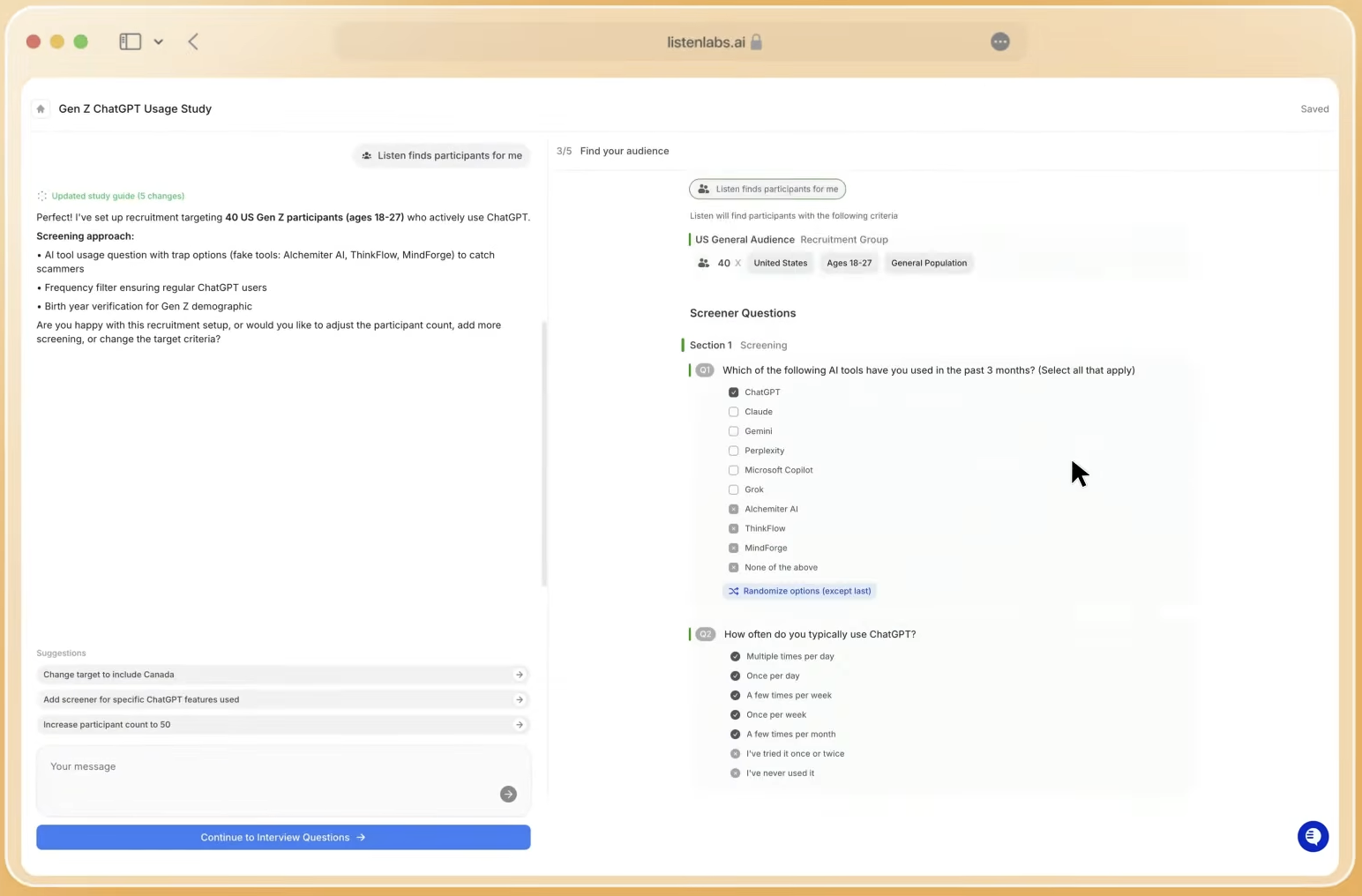
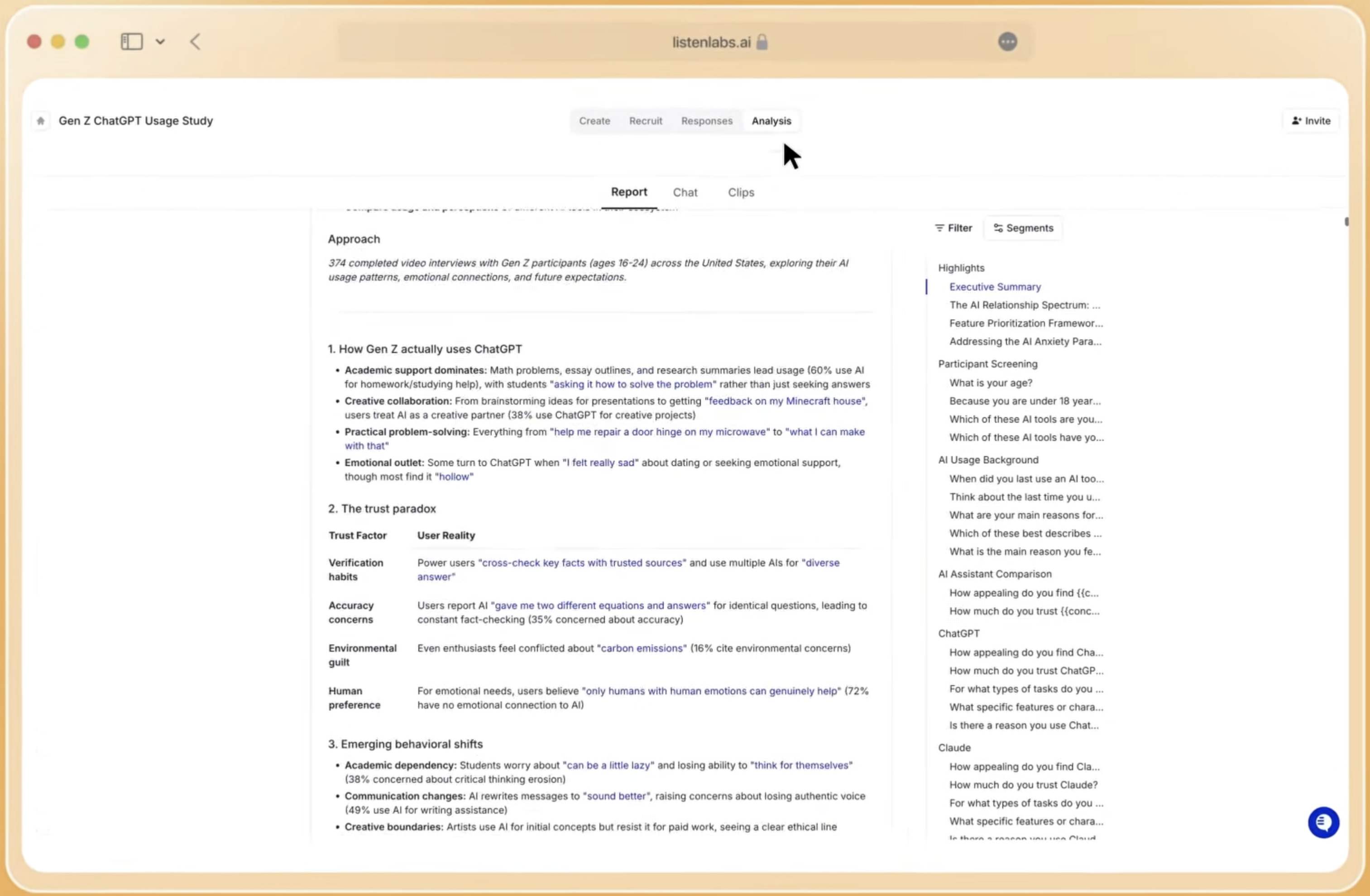
Every insight links directly to the underlying response data, which enables transparent analysis and easy auditability. Extensive in-house research expertise ensures methodological rigor, while engineering teams focus on reliable scale for global enterprises.
| Feature | Listen Labs | Glean | UserTesting | Dovetail | Qualtrics |
|---|---|---|---|---|---|
| Time to Results | 24hrs | Days | Weeks | Analysis only | Weeks |
| Cost | Lower than traditional research | Higher | Higher | Analysis-only | Higher |
| Panel Access | Global network, 100+ languages | Limited | Limited | None | Quantitative |
| Emotion AI | Ekman-based | None | None | None | None |
| Enterprise Proof | Microsoft and P&G | Enterprise search | Human testing | Repository | Surveys |
Glean Alternatives and Free Enterprise-Grade Research Options
Glean excels at enterprise search and document retrieval but does not cover qualitative research capabilities such as participant recruitment and interview moderation. Organizations that consider Glean alternatives for customer research need platforms that combine strong search with end-to-end research workflows. Listen Labs delivers this combination through conversational interviews, emotion analysis, and enterprise-grade search across research findings.
Free tier options can support pilot programs, although enterprise-scale qualitative research requires dedicated infrastructure and verified participant networks. Many enterprise leaders say proving AI ROI at scale is difficult, so platform selection directly affects measurable research impact.
| Option | Speed | Scale | Best For |
|---|---|---|---|
| Free Tiers | Days | Limited | Pilots |
| Paid Listen Labs | 24hrs | 100s interviews | Qual-at-scale |
| Glean Search | Minutes | Document-focused | Knowledge retrieval |
Enterprise-ready? Explore enterprise pricing and capabilities
How to Choose the Right AI Research Platform for Your Team
Consumer Insights Leaders should focus on platforms that deliver qual-at-scale capabilities, large verified participant access, and SOC2 or ISO security certifications. UX Research Heads benefit from emotion AI and screen-sharing functionality that supports usability testing. Product Managers gain the most from 24-hour turnaround times and natural language study design that fits into agile development cycles.
Teams should evaluate platforms against concrete scenarios. Research backlogs call for at least 10x output scaling. Niche audiences require recruitment success at incidence rates below 1 percent. Enterprise compliance teams expect data residency controls and clear governance. Key decision factors also include integration with existing tech stacks, automated deliverable generation, and proven enterprise case studies from Fortune 500 companies.
Frequently Asked Questions
How does AI interview quality compare to human moderators?
AI-moderated interviews can match the methodological rigor of excellent human researchers while delivering far better consistency and scale. Listen Labs’ AI conducts personalized conversations with dynamic follow-up questions, which removes moderator bias and fatigue that often affect human-led sessions. The platform’s 50+ years of combined research expertise shapes the methodology, while AI enables simultaneous interviews with hundreds of participants. Quality stays high through structured conversation flows, real-time fraud detection, and emotion analysis that captures nuanced responses human moderators might miss.
What fraud prevention measures protect participant quality?
Enterprise AI research platforms rely on multi-layered fraud detection that includes behavioral matching on intent, real-time monitoring across video and voice signals, and reputation scoring systems. Listen Labs’ Quality Guard analyzes device patterns, response consistency, and engagement metrics to remove professional survey-takers and AI-generated responses. Participants face limits on the number of studies they can join each month, which reduces panel fatigue. Dedicated recruitment operations teams add human review for high-value segments, and continuous monitoring supports rapid participant removal when needed.
Can AI research platforms handle niche or specialized audiences?
Leading platforms can recruit audiences below 1 percent incidence rates through dedicated operations teams and specialized network partnerships. Listen Labs reaches enterprise decision-makers, healthcare workers, engineers, and highly specific consumer segments across more than 45 countries. The platform’s AI orchestration layer automatically matches and bids across multiple panel sources, while recruitment specialists manage manual sourcing for the most challenging segments. Success rates remain strong even for audiences that require specific certifications, job titles, or behavioral criteria.
How do enterprise security and compliance requirements work?
Enterprise AI research platforms must support SOC2 Type II, ISO 27001, ISO 27701, and GDPR compliance with end-to-end encryption and data residency controls. Listen Labs provides enterprise SSO integration, and customer data never trains AI models. Listen Labs holds SOC 2 Type II certification. Audit trails track every action, and role-based access controls ensure appropriate data visibility across research teams.
What is the difference between AI research platforms and traditional surveys?
Traditional surveys capture structured responses through pre-set questions without follow-up capability, which limits insights to surface-level data. AI research platforms conduct conversational interviews where artificial intelligence adapts in real time, probes deeper on interesting responses, and uncovers unexpected findings. This approach combines quantitative scale with qualitative depth, so teams gain statistical confidence from large samples while preserving rich context. The result is comprehensive customer intelligence that traditional surveys cannot provide.
Conclusion: Why Listen Labs Leads Enterprise AI Research in 2026
Listen Labs leads the 2026 enterprise AI research assistant landscape by resolving the long-standing trade-off between research depth and scale. The platform’s combination of a large verified participant network, AI-moderated interviews with emotion analysis, and 24-hour research cycles positions it as a powerful solution for Consumer Insights Leaders facing mounting research backlogs. As most organizations report productivity and efficiency gains from enterprise AI adoption, the research function now stands ready for similar transformation.
Ready to cut research cycles to 24 hours? Schedule your Listen Labs session