
Written by: Anish Rao, Head of Growth, Listen Labs | Last updated: June 18, 2026
Key Takeaways
- Qualitative case study research rests on three major methodological traditions: Yin’s post-positivist framework, Stake’s constructivist approach, and Merriam’s practical guidance. Each tradition sets different expectations for design, analysis, and validity.
- Yin’s Case Study Research and Applications remains the core reference for proposition-driven single- and multiple-case designs, replication logic, and the four quality criteria of construct validity, internal validity, external validity, and reliability.
- Researchers can use free, high-impact resources such as Baxter & Jack (2008) and Flyvbjerg (2006) to justify design choices and respond directly to reviewer concerns about generalizability and rigor.
- Companion texts from Miles, Huberman & Saldaña and Saldaña’s Coding Manual provide concrete tools for coding, data display, and transparent analysis that extend the foundational design texts into day-to-day analytic practice.
- Listen Labs applies these classic methodological frameworks at enterprise scale with AI-moderated interviews and automated analysis, delivering rigorous qualitative findings in under 24 hours.
Three Dominant Methodological Traditions in Case Study Research
Robert K. Yin’s post-positivist framework treats the case as a bounded empirical unit and expects proposition-driven design, multiple evidence sources, and explicit replication logic for multiple-case work. In contrast, Robert Stake’s constructivist tradition foregrounds the intrinsic uniqueness of each case, prioritizes thick description, and centers the researcher’s interpretive role over cross-case generalization. Sharan Merriam’s education-focused approach sits between these two poles, emphasizing purposive sampling, inductive analysis, and accessible guidance for applied researchers who need defensible designs without extensive philosophical debate.
Best Book for Single-Case vs. Multiple-Case Designs
Researchers designing either a single bounded case or a replication-logic multiple-case study typically start with Yin’s Case Study Research and Applications (Sixth Edition, 2017). Chapters 2 through 5 move in order through case bounding, proposition development, data collection protocol construction, and analytic strategy.
Chapter 4 details six sources of evidence and four principles of data collection. Chapter 5 presents five analytic techniques: pattern matching, explanation building, time-series analysis, logic models, and cross-case synthesis. Yin stresses the need for an overarching analytic strategy that coordinates these tools rather than relying on a single preferred technique. For multiple-case designs, his replication logic treats each case as a separate experiment that predicts either similar results (literal replication) or contrasting results for predictable reasons (theoretical replication). Dissertation committees often expect researchers to explain this distinction explicitly.
Stake’s The Art of Case Study Research (1995) and Multiple Case Study Analysis (2006) guide researchers working within a constructivist or interpretivist paradigm where deep understanding of a particular case matters more than cross-case generalization. Merriam’s Qualitative Research: A Guide to Design and Implementation (4th ed., 2016, co-authored with Elizabeth Tisdell) offers a single, practical volume that covers design, sampling, data collection, and analysis for education and social science researchers.
These foundational texts establish rigorous design standards, yet they assume manual data collection and relatively small samples. Modern platforms such as Listen Labs extend these frameworks to larger samples and faster timelines by automating interviewing and analysis while preserving the underlying methodological logic.

Open-Access Case Study Methodology PDF
The most widely cited freely available guide is Baxter & Jack (2008), “Qualitative Case Study Methodology: Study Design and Implementation for Novice Researchers,” The Qualitative Report, 13(4), 544–559. The article synthesizes Yin, Stake, and Merriam into a single accessible framework, covers case bounding, purposive sampling rationale, and common design pitfalls, and is available as a free PDF from Nova Southeastern University’s open-access journal.
Additional open-access resources include:
- Hyett, Kenny & Dickson-Swift (2014), “Methodology or Method? A Critical Review of Qualitative Case Study Reports,” International Journal of Qualitative Studies on Health and Well-being, which helps researchers see how reviewers evaluate case study design choices.
- Flyvbjerg (2006), “Five Misunderstandings About Case-Study Research,” Qualitative Inquiry, 12(2), 219–245, a foundational open-access paper that addresses generalizability critiques directly.
How to Justify Case Study Validity
Reviewers and dissertation committees most often challenge case study designs on construct validity, internal validity, external validity, and reliability. Yin’s four quality criteria, as applied in the Sixth Edition, map directly onto these concerns:
- Construct validity is established by using multiple data sources and asking key informants to review draft case descriptions before finalization.
- Internal validity is addressed through pattern-matching across sources and explicit engagement with rival explanations.
- External validity (transferability) is supported by providing thick description of the case context so readers can judge applicability to their own settings.
- Reliability is demonstrated by documenting all procedures in a case study protocol that would allow another researcher to replicate the study.
Triangulation, or cross-checking findings across different data sources, methods, or investigators, functions as the central procedural tool for establishing rigor across all four criteria.
Flyvbjerg (2006) offers a strong published rebuttal to the generalizability objection. He argues that a single well-chosen case can falsify a general proposition and that strategic case selection, such as a “most likely” or “least likely” case, enables analytic generalization even from a single site. Citing Flyvbjerg directly in a proposal or dissertation defense helps pre-empt the most common reviewer objection to case study designs.
Mapping Case Study Resources to Common Research Use Cases
The resources below map primary methodological texts to typical researcher use cases, sample-size orientations, and key contributions. Use this mapping to match your research paradigm and dissertation stage to the most relevant source, then build outward from that anchor text. All characterizations are drawn from the cited sources.
- Yin (2017), 6th ed., supports post-positivist single or multiple-case designs, dissertation proposals, and applied policy research. It spans single to multiple cases through replication logic and contributes proposition-driven design, chain of evidence guidance, four quality criteria, and five analytic techniques.
- Stake (1995, 2006) guides constructivist or interpretivist designs in education and other uniqueness-focused inquiries. It ranges from single intrinsic cases to bounded multiple cases and clarifies the intrinsic versus instrumental case distinction, thick description, and the researcher-as-instrument stance.
- Merriam & Tisdell (2016) serves applied education and social science research with practical design guidance. It covers single to small multiple cases and offers an accessible synthesis of design, sampling, data collection, and inductive analysis.
- Baxter & Jack (2008) supports novice researchers, proposal writing, and open-access referencing. It addresses single to multiple cases and provides a free PDF synthesis of Yin, Stake, and Merriam with design pitfall guidance.
- Flyvbjerg (2006) focuses on defending generalizability and rebutting reviewer objections for single-case work. It contributes the five misunderstandings rebuttal, strategic case selection logic, and a clear analytic generalization argument.
Data-Analysis Companions for Case Study Research
Case study design texts outline data collection and analytic strategy, yet researchers still need concrete guidance on coding and data display. Two companion resources have become standard in qualitative analysis workflows.
- Miles, Huberman & Saldaña, Qualitative Data Analysis: A Methods Sourcebook (3rd ed., 2014) serves as a core reference for data display, including matrices, networks, and cross-case comparison displays. The matrix formats apply directly to within-case and cross-case analytic phases in Yin-style multiple-case designs.
- Saldaña, The Coding Manual for Qualitative Researchers (4th ed., 2021) covers 32 coding methods with worked examples. It is particularly useful for researchers moving from raw case study transcripts to thematic categories and for meeting committee expectations for transparent analytic procedures.
Both texts are available through Sage Publications and most university library systems. Using Miles et al.’s display methods alongside Yin’s analytic techniques creates a defensible, fully documented analysis trail from raw data to findings.
2025 Update: AI-Assisted Platforms and Case Study Rigor
The methodological traditions of Yin, Stake, and Merriam emerged in research contexts where data collection was slow, sample sizes stayed small, and analysis was entirely manual. AI-assisted platforms do not replace these frameworks; they extend their reach into settings that demand speed and scale.
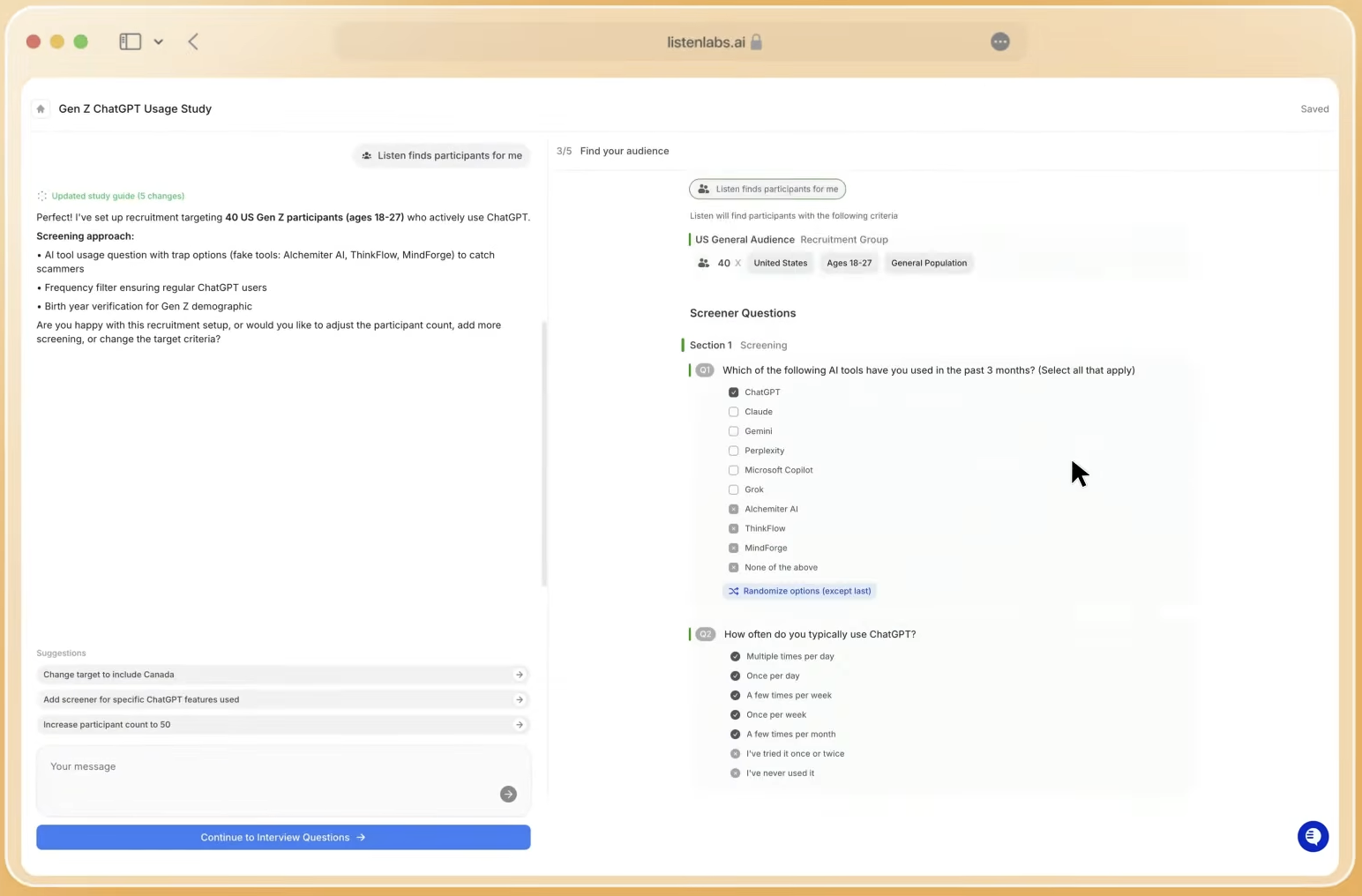
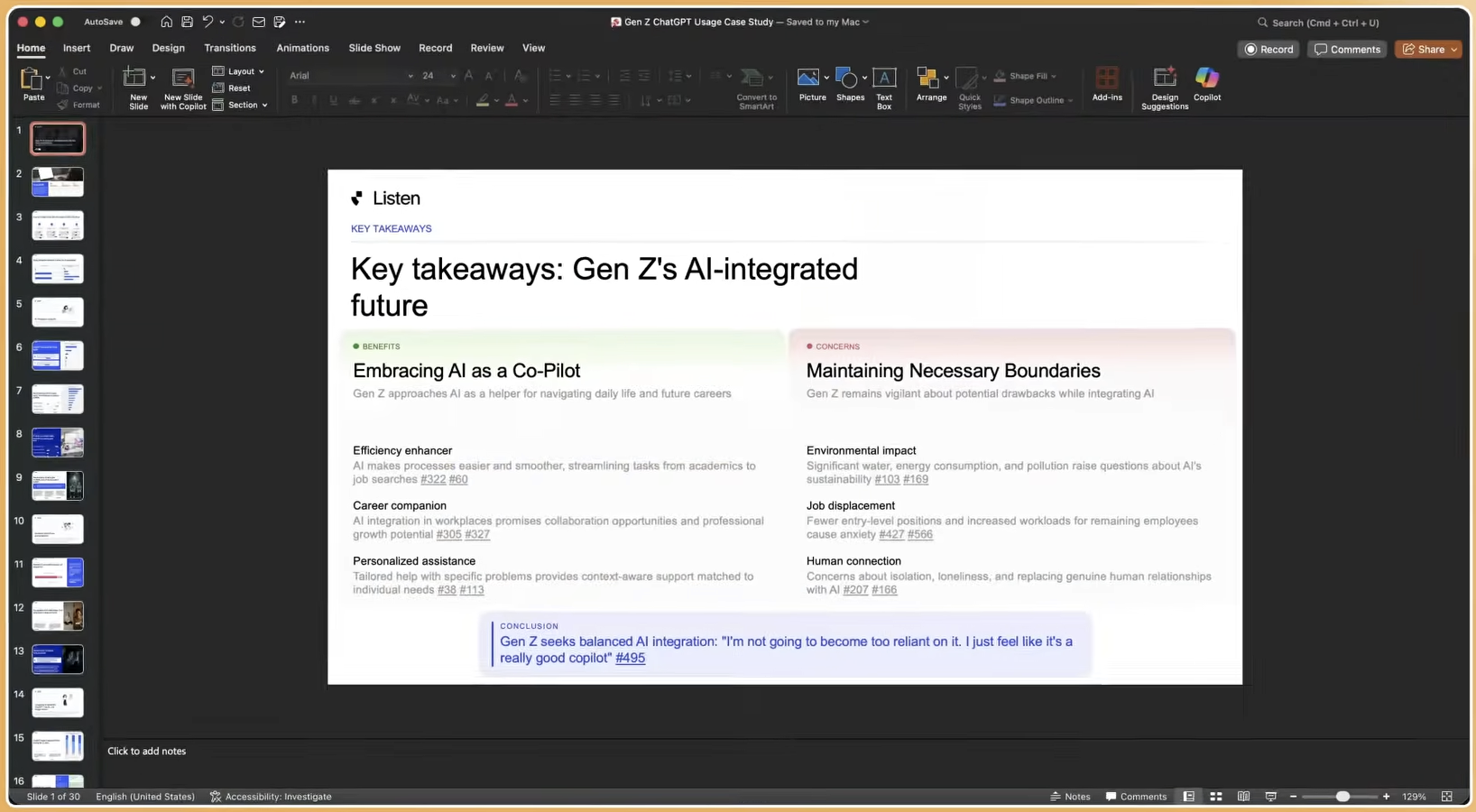
Platforms such as Listen Labs operationalize qualitative interview methods at enterprise scale. The platform supports AI-moderated in-depth interviews with dynamic follow-up probing, automated thematic analysis across hundreds of responses, and deliverables that include verbatim evidence trails. These evidence trails mirror the chain of evidence Yin requires, yet they are generated in hours instead of weeks. For applied researchers and enterprise insight teams, replication logic, triangulation, and construct validity procedures no longer depend on the logistics of small-sample manual research.
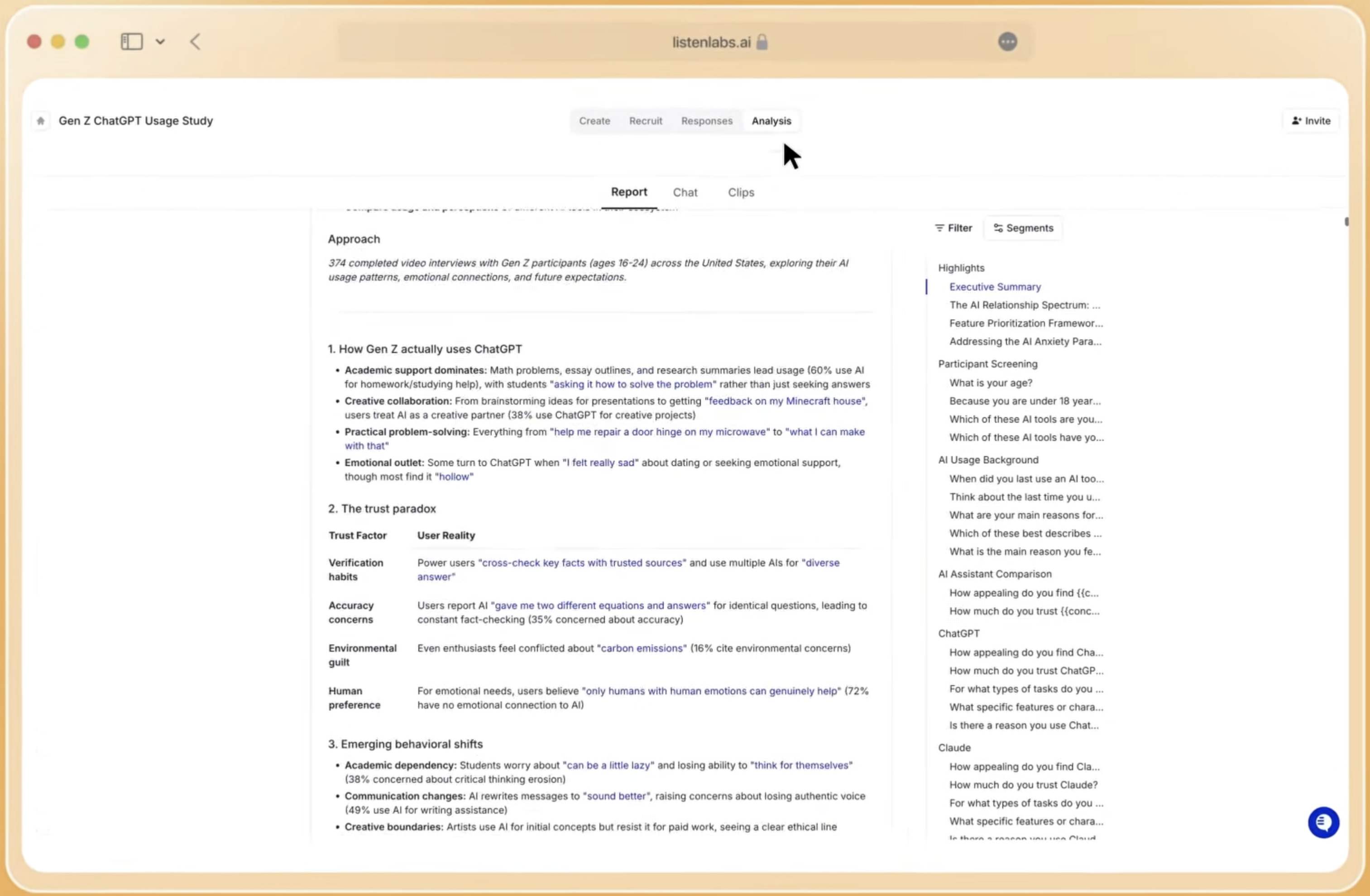
Listen Labs supports the full research lifecycle, including study design, participant recruitment from a verified global panel of 30M respondents across 45+ countries, AI-moderated interviews in 100+ languages, automated analysis, and consultant-quality deliverables. This infrastructure complements the 24-hour delivery mentioned earlier by also expanding geographic reach, language coverage, and sample diversity.
Decision-Tree: Recommended Reading Order by Dissertation Stage
The order in which you read these resources shapes how quickly you can assemble a defensible design and analysis plan.
- Proposal stage: Start with Baxter & Jack (2008) for a rapid orientation to design options and common pitfalls. Move next to Yin Chapters 1–3, which provide the case bounding and proposition structure that most committees expect. Add Flyvbjerg (2006) to frame your limitations section and address generalizability concerns directly.
- Data collection phase: Return to Yin Chapter 4, which covers six sources of evidence and four collection principles, and use it to build your case study protocol before entering the field. Researchers working within a constructivist paradigm can use Stake (1995) Chapter 4 on data gathering as the parallel reference.
- Analysis phase: Use Yin Chapter 5 to select an analytic strategy, then turn to Miles, Huberman & Saldaña for display construction and to Saldaña’s Coding Manual for first- and second-cycle coding procedures.
- Writing and defense: Revisit Yin’s four quality criteria and document how you addressed each one in your methodology chapter. Merriam & Tisdell Chapter 9 on writing qualitative research offers practical guidance for structuring the final report.
Frequently Asked Questions
What is the difference between Yin’s and Stake’s approaches to case study research?
Yin’s approach is post-positivist and proposition-driven. It treats the case as a bounded empirical unit and expects researchers to specify research propositions before data collection, use multiple sources of evidence, maintain a chain of evidence, and apply explicit analytic techniques such as pattern matching and explanation building. Rigor is evaluated against four quality criteria: construct validity, internal validity, external validity, and reliability. Stake’s approach is constructivist and centers on the intrinsic uniqueness of the case itself. The researcher’s interpretive role is foregrounded, thick description is prioritized over theoretical explanation, and the goal is deep understanding of a particular case rather than generalization across cases. The two frameworks are not interchangeable, so the choice between them should follow from the researcher’s epistemological position and the purpose of the inquiry.
How do I justify using a single-case design to a dissertation committee?
Single-case designs are defensible when the case is critical, extreme or unique, revelatory, or longitudinal. A critical case tests a well-formulated theory. An extreme or unique case represents a phenomenon that researchers rarely access. A revelatory case provides access to a previously inaccessible situation. A longitudinal case examines the same case at two or more points in time. Yin’s Sixth Edition outlines these rationales for single-case selection in Chapter 2. Flyvbjerg’s 2006 paper in Qualitative Inquiry provides a strong argument for the analytic value of single cases and addresses the misunderstanding that case studies cannot contribute to scientific generalization. Citing both sources together, with Yin for design rationale and Flyvbjerg for the generalizability rebuttal, offers a clear strategy for committee and reviewer responses.
What is triangulation and why does it matter for case study validity?
Triangulation refers to cross-checking findings across different data sources, methods, or investigators to strengthen confidence in the conclusions. In case study research, it functions as the primary procedural mechanism for establishing construct validity, which concerns whether the study measures what it claims to measure. Yin recommends using at least three independent sources of evidence, such as interviews, documents, and direct observation, and then showing that findings converge across them. When findings do not converge, the divergence itself becomes analytically significant and must be addressed rather than suppressed. Triangulation also supports reliability by creating a documented evidence trail that another researcher could follow to reach the same conclusions.
Is Merriam’s approach suitable for non-education research contexts?
Merriam’s framework originated in education research but now appears widely in social work, nursing, organizational studies, and applied social science. Its practical orientation, which covers purposive sampling rationale, inductive category construction, and accessible writing guidance, makes it useful for any applied researcher who needs a single-volume reference without deep philosophical engagement. The fourth edition, co-authored with Elizabeth Tisdell (2016), updates the framework for online and digital data contexts. Researchers working in fields with strong post-positivist review cultures, such as management or policy research, often anchor their methodology in Yin and use Merriam as a supplementary practical reference rather than the primary citation.
Conclusion: Applying Classic Methods at Modern Scale
The foundational texts of Yin, Stake, Merriam, Flyvbjerg, and their analytic companions remain the authoritative references for qualitative case study design. Each addresses a specific methodological need: Yin for proposition-driven rigor and replication logic, Stake for constructivist depth, Merriam for practical applied guidance, Flyvbjerg for generalizability defense, and Baxter & Jack for accessible open-access synthesis. Mapping these resources to dissertation stage and paradigm, rather than treating them as interchangeable, offers the most efficient path to a defensible design.
The methodological standards these texts establish stay constant even as research contexts evolve. What changes is the infrastructure available to meet those standards at scale. Listen Labs, built by researchers with 50+ years of combined expertise, operationalizes qualitative rigor through adaptive interviewing, triangulated evidence, and transparent analysis trails, while also meeting the speed and volume requirements of contemporary enterprise decision-making.