
Written by: Anish Rao, Head of Growth, Listen Labs
Key Takeaways
-
Self-service telecom channels such as apps, portals, kiosks, and AI agents are becoming the primary customer interface for Tier-1 operators in 2026.
-
GenAI is the dominant technology trend, enabling conversational, intent-aware, and proactive self-service that cuts escalations and speeds resolution through 2030.
-
Four main drivers, including cost reduction, rising digital expectations, competitive pressure from MVNOs, and 5G or IoT complexity, are accelerating self-service investment across all operator tiers.
-
Legacy integration, subscriber adoption gaps, and trust in escalation paths remain the biggest barriers. Direct consumer feedback is required to uncover segment-specific friction points.
-
Listen Labs delivers validated telecom consumer insights in under 24 hours, helping teams test self-service features with real subscribers before development investment.
Market Context and 2030 Outlook
Telecom operators face sustained pressure to reduce cost-to-serve while improving digital experience quality. Self-service channels now serve as the primary lever for achieving both goals at the same time. Mordor Intelligence tracks the broader telecom digital transformation market as one of the fastest-growing enterprise technology segments through 2030.
Adoption is accelerating across all operator tiers. Tier-1 carriers in North America, Europe, and APAC now deploy self-service as a default first-contact strategy instead of a pure deflection mechanism. Many emerging markets are skipping legacy IVR infrastructure and moving directly to app-based and AI-agent models.
Growth projections through 2030 reflect compounding investment in GenAI-powered interfaces, proactive service automation, and omnichannel self-service orchestration. Operators that delay investment risk structural cost disadvantages against digital-native MVNOs and cable-based competitors already operating at lower cost-per-contact ratios.
Ready to validate your self-service roadmap with real customer data? See how Listen Labs delivers telecom consumer insights in under 24 hours by scheduling a live walkthrough of the platform.
Core Self-Service Channels and Use Cases
Telecom self-service spans four primary delivery channels, and each channel supports distinct subscriber intents. These channels also carry different adoption and investment profiles heading into 2030.
Telco Magazine identifies mobile self-service apps as the highest-growth segment, driven by smartphone penetration and operator investment in native app experiences. AI-powered virtual agents represent the fastest-emerging segment, with deployments accelerating sharply since 2024.
Core use cases include bill payment, plan upgrades, device troubleshooting, SIM management, and outage status checks. Higher-complexity tasks such as contract renegotiation, fraud reporting, and number porting are migrating to AI agents as natural language understanding matures.
GenAI and Emerging Technology Shifts
Generative AI is the defining technology shift in telecom self-service for the 2026–2030 period. Intellias identifies large language model integration as the primary driver of capability expansion in operator digital channels, enabling conversational resolution of issues that previously required live agents.
Three trends are reshaping the technology stack. First, intent-aware routing uses GenAI to classify subscriber intent in real time and route to the optimal self-service flow without menu navigation. Second, proactive self-service pushes outage notifications, usage alerts, and upgrade prompts before subscribers initiate contact. Third, multimodal interfaces combine voice, text, and visual troubleshooting guides within a single session.
CustomerThink notes that operators deploying GenAI-augmented self-service report measurable reductions in average handle time for escalated contacts, as AI pre-resolves the most common query types before human handoff.
Agentic AI, which refers to systems that execute multi-step tasks autonomously, is moving from pilot to production at leading carriers. Common use cases include automated plan switching, proactive churn intervention, and real-time network self-healing notifications delivered through subscriber-facing channels.
Primary Drivers of Self-Service Investment
Four forces are driving self-service investment across the operator landscape, and together they shape both budget and roadmap priorities.
Cost reduction. Live agent contacts cost operators significantly more per interaction than fully resolved self-service contacts. Deflection at scale produces material operating expenditure savings, but cost pressure alone does not drive adoption because subscribers must prefer the digital channel.
Subscriber experience expectations. That preference is shaped by cross-industry benchmarks, as subscribers now compare telecom digital experiences with retail, banking, and streaming apps. Operators that lag on self-service quality face higher churn risk among digitally active segments.
Competitive pressure from digital-native entrants. As noted earlier, MVNOs and cable operators use their lighter infrastructure footprints to undercut traditional carrier economics through self-service-first models. These competitors set new expectations for both price and digital convenience.
5G and IoT complexity. Expanding device ecosystems and service tiers create subscriber management complexity that scales more effectively through self-service automation than through agent headcount growth. This complexity makes automation a structural requirement rather than a discretionary enhancement.
Common Implementation Challenges
Operators face three persistent barriers that slow or limit self-service deployment at scale.
Legacy system integration. BSS and OSS platforms built over decades create integration complexity that slows self-service feature deployment. API modernization programs act as necessary prerequisites for real-time self-service data access.
Subscriber adoption gaps. Older subscriber segments and prepaid customers often show lower self-service adoption rates. Operators must design for accessibility and digital literacy variation across their full customer base, not just early adopters.
Trust and escalation design. Subscribers abandon self-service flows when they lose confidence in resolution quality. Poorly designed escalation paths, where AI agents cannot hand off cleanly to live agents, damage satisfaction scores and reduce future self-service uptake.
Direct customer feedback reveals which friction points matter most to specific subscriber segments. Generic usability assumptions frequently misidentify the real barriers that drive abandonment.
Recommended KPIs and Measurement Framework
Operators rely on a consistent set of metrics to evaluate self-service performance, and mature programs track clear benchmarks for each metric.
Self-service containment rate. Percentage of contacts fully resolved without agent escalation, with an industry target of roughly 70 to 85 percent for mature channels.
First contact resolution rate. Percentage of issues resolved in a single self-service session, with typical targets in the 65 to 75 percent range.
Digital channel CSAT. Customer satisfaction score for self-service interactions, often targeted at 4.0 or higher on a 5-point scale.
Cost per self-service contact. Average cost to serve through digital channels compared with live agents, with many operators aiming for an 80 to 90 percent reduction versus agent cost.
Self-service adoption rate. Percentage of eligible transactions completed through digital channels, with leading operators targeting 60 to 75 percent adoption by 2028.
KPI frameworks should be segmented by subscriber cohort, channel, and transaction type. Aggregate containment rates mask significant variation across use cases and demographic segments that inform prioritization decisions.
Need benchmark data specific to your subscriber segments? Get segment-level self-service attitudes in hours by testing the Listen Labs platform with your own research questions.
Primary Research on Self-Service Adoption
Market-level data establishes the strategic context, while primary consumer research answers subscriber-specific questions. These questions include which self-service features your subscribers trust, which friction points drive abandonment, and how emotional reactions to AI agents vary across segments.
Traditional qualitative research cycles often take four to six weeks from study design to final report. For VP-level leaders building 2026–2030 roadmaps, that timeline makes iterative testing impractical. Feature decisions then get made on assumptions rather than validated subscriber feedback.
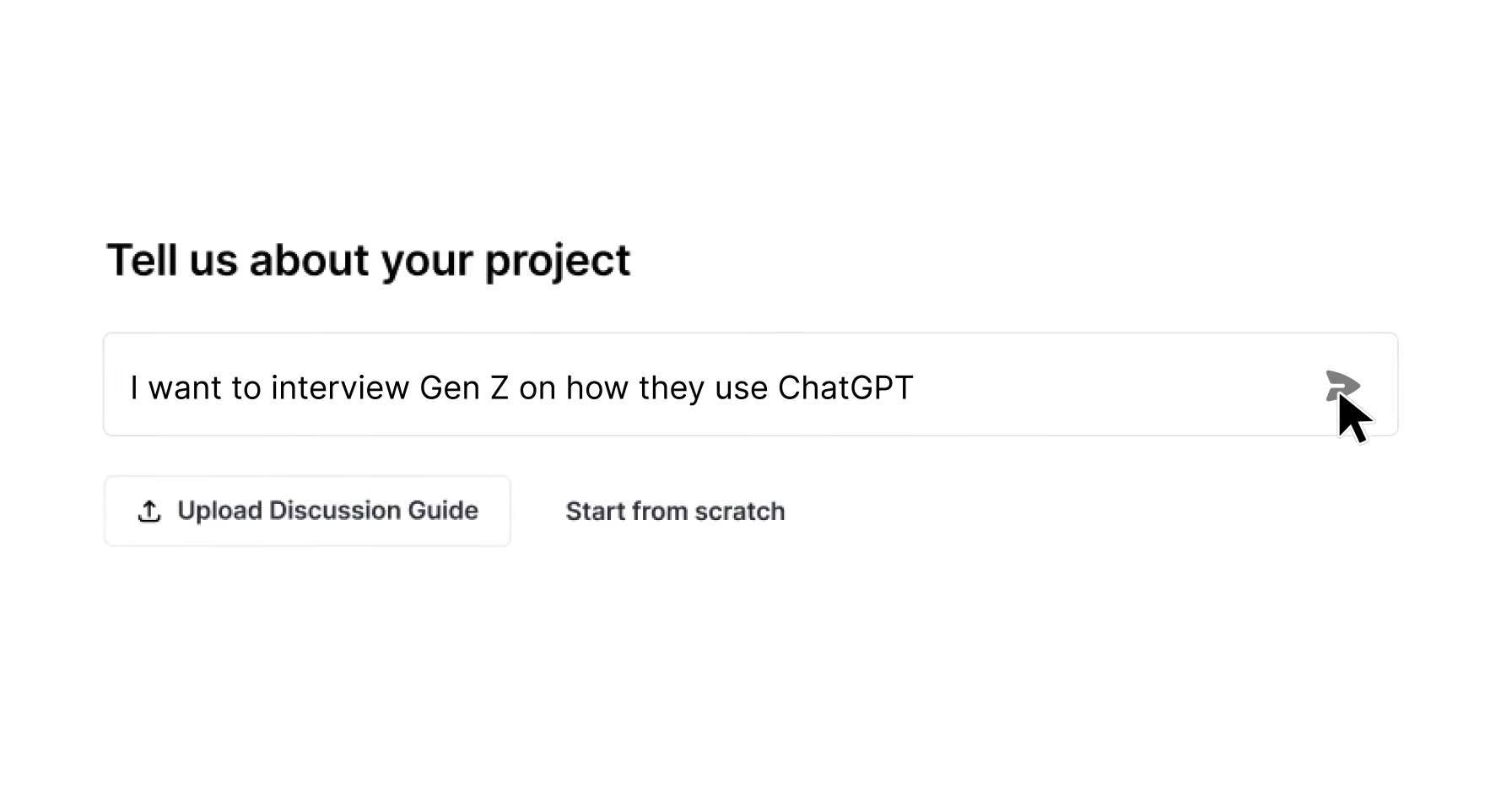
Listen Labs compresses that cycle to the sub-24-hour timeframe mentioned earlier. The platform handles the entire research lifecycle, including AI-assisted study design, participant recruitment from a verified network of 30 million respondents across more than 45 countries, AI-moderated video interviews with dynamic follow-up questions, automated analysis, and delivery of consultant-quality reports and highlight reels.
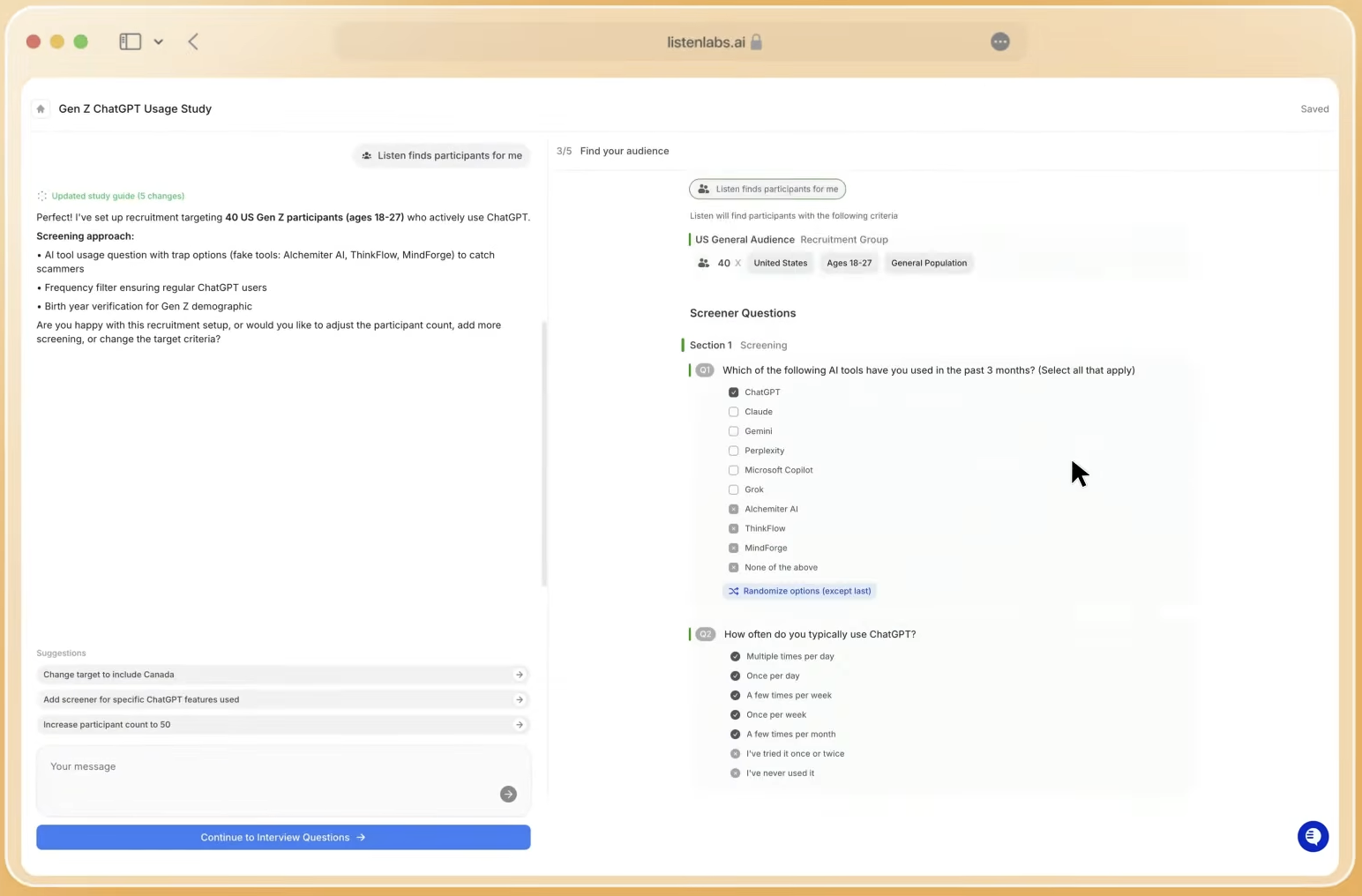
For telecom-specific research, this speed means operators can test self-service portal redesigns, validate AI agent messaging, and measure emotional reactions to new features with real subscribers before committing to development investment. Listen Labs’ Emotional Intelligence layer captures tone, word choice, and micro-expressions, surfacing hesitation and confusion that transcripts alone miss.
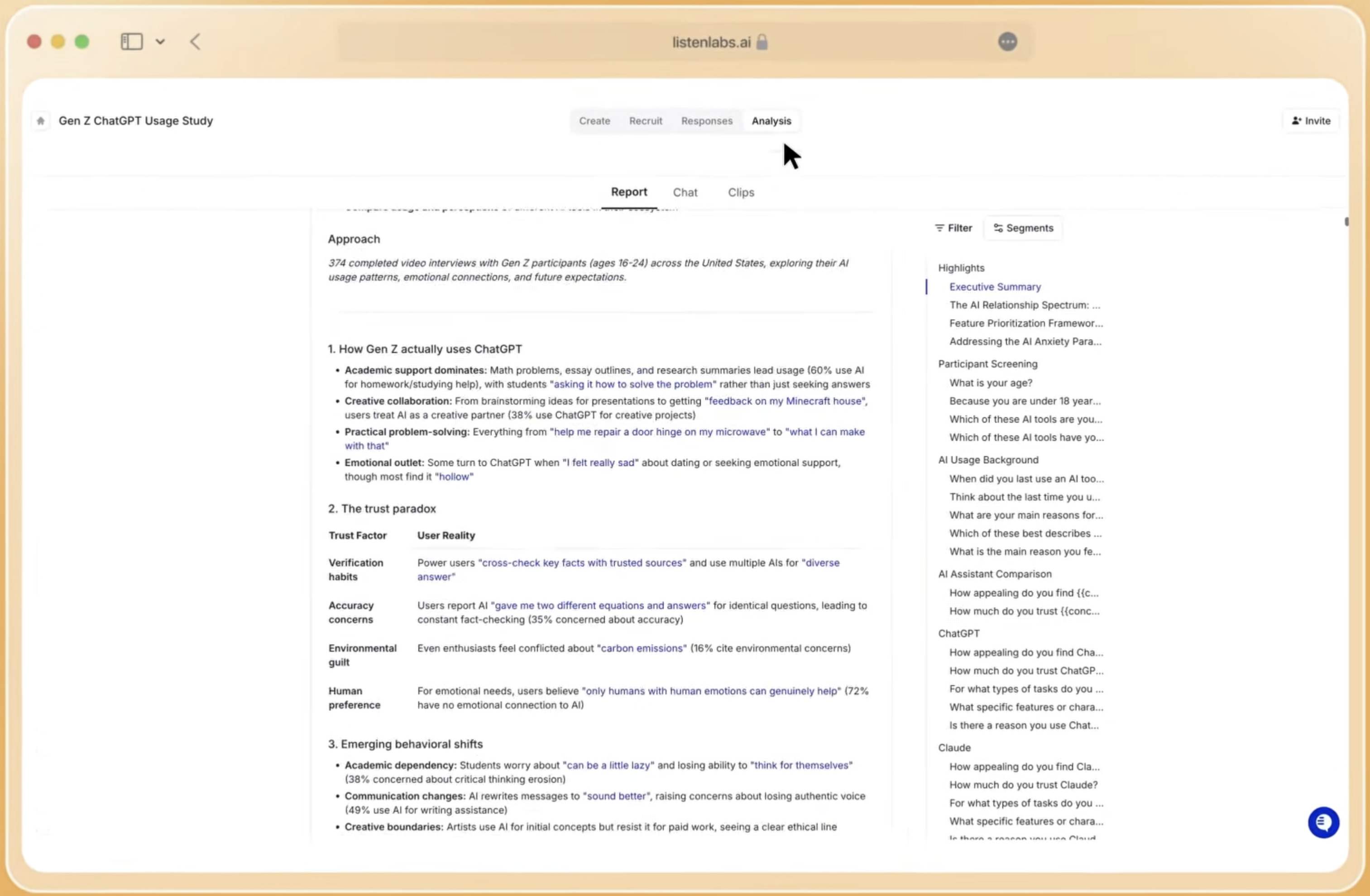
Studies run across more than 100 languages, which makes multi-market self-service research feasible within a single sprint cycle instead of a multi-quarter program.
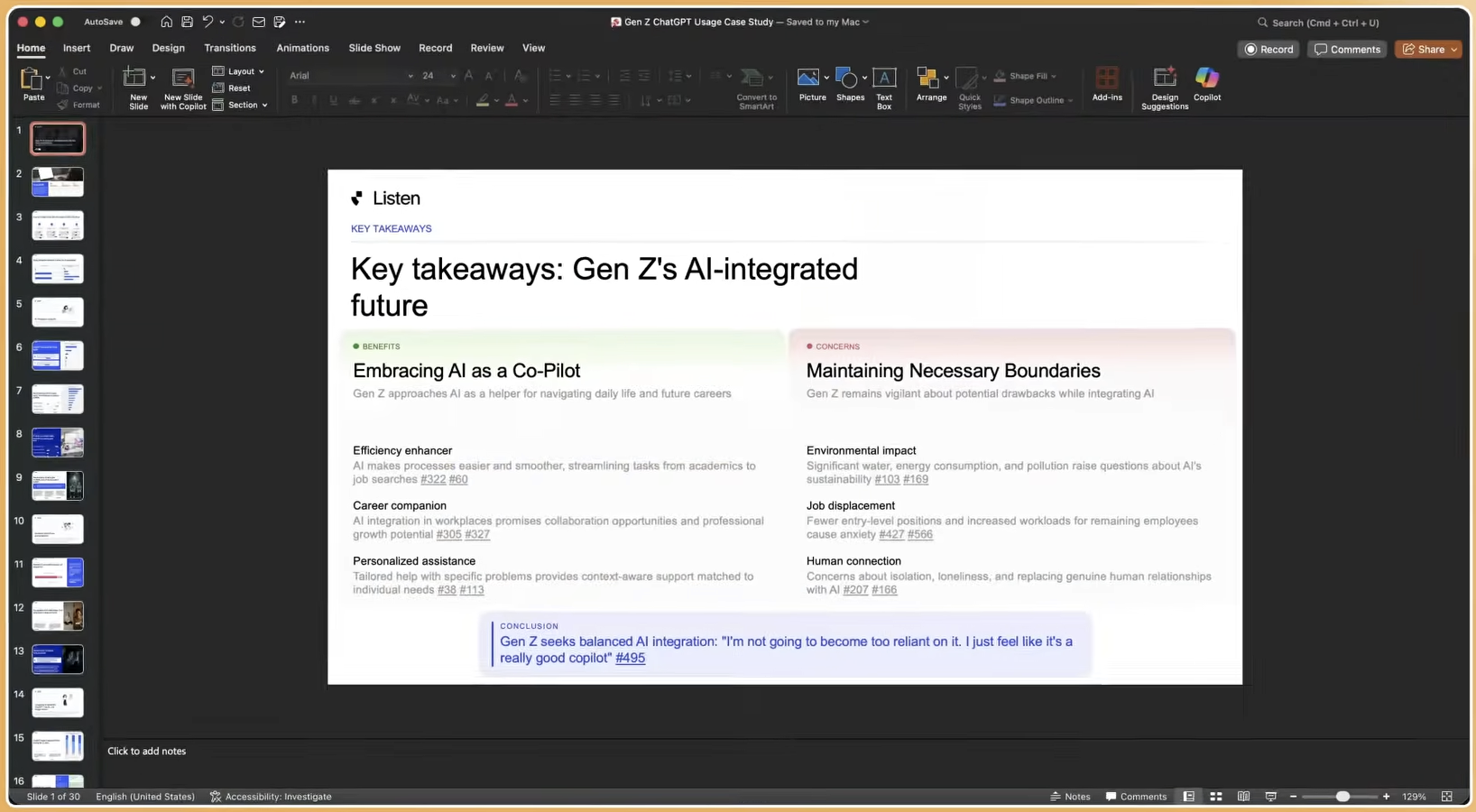
Run your first self-service subscriber study in under 24 hours. Explore the Listen Labs platform with a tailored session focused on your upcoming roadmap decisions.
Frequently Asked Questions
What is the self-service telecom market?
The self-service telecom market includes all digital channels such as mobile apps, web portals, AI virtual agents, kiosks, and IVR systems that allow subscribers to manage accounts, resolve service issues, and purchase or upgrade plans without speaking to a live agent. In 2026, it represents the primary customer interaction layer for most Tier-1 operators globally.
What is driving growth in telecom self-service through 2030?
Four primary forces are driving growth, including operator cost reduction pressure, rising subscriber expectations for digital-first experiences, competition from digital-native MVNOs, and the complexity of managing 5G and IoT device ecosystems at scale. Generative AI accelerates capability expansion across all four dimensions by enabling conversational, intent-aware self-service that handles increasingly complex subscriber tasks.
How does GenAI change telecom self-service portals?
GenAI allows self-service portals to move beyond menu-driven navigation toward natural language interaction. Subscribers describe problems in their own words, and AI agents classify intent, retrieve account context, and execute multi-step resolutions autonomously. This shift expands the range of tasks that can be fully contained within self-service channels, which reduces escalation to live agents and improves resolution speed.
How can telecom operators research subscriber attitudes toward self-service features quickly?
AI-moderated interview platforms such as Listen Labs allow operators to recruit verified subscribers, conduct in-depth video interviews, and receive analyzed findings within 24 hours. This approach replaces the traditional four to six week qualitative research cycle with a continuous feedback loop that fits inside product development sprints. Operators can test specific portal flows, AI agent scripts, and feature concepts with real subscribers before committing to build.
What KPIs should telecom operators track for self-service performance?
The core measurement framework includes self-service containment rate, first contact resolution rate, digital channel CSAT, cost per self-service contact, and self-service adoption rate across eligible transaction types. These metrics should be segmented by subscriber cohort, channel, and transaction complexity. Aggregate KPIs frequently obscure segment-level variation that drives the most actionable roadmap decisions.