Written by: Anish Rao, Head of Growth, Listen Labs
Key Takeaways for Media and Insights Teams
- Secondary data sources like Nielsen and Statista deliver fast macro baselines but often lag 6–24 months behind current consumer sentiment.
- Traditional primary research through panels and focus groups provides depth yet requires 4–6 weeks and carries quality risks from professional respondents.
- AI-moderated interview platforms remove the historic trade-off between depth and scale by delivering verified primary insights in under 24 hours.
- Listen Labs combines 30M+ verified respondents, 100+ language support, and real-time Emotional Intelligence analysis to surface both stated answers and emotional signals.
- Teams ready to replace weeks-long research cycles with same-day primary insights can schedule a walkthrough with Listen Labs today.
Why Media Teams Blend Secondary Baselines with Primary AI Insights
Consumer insights leaders, media planners, and agency teams typically need three things at once: audience sizing for reach planning, competitive ad tracking for share-of-voice analysis, and consumption trend data for creative and channel strategy. No single source category satisfies all three needs. Secondary databases provide historical baselines quickly, but secondary data reflects outdated populations and cannot isolate attributable effects without triangulation against primary data.
AI adoption for audience research and persona work continues to grow across marketing organizations. AI systems now autonomously handle audience discovery, real-time measurement, and budget reallocation, reducing the insight-to-action cycle from weeks to hours. That shift has raised expectations for speed and specificity. Secondary sources still help with macro baselines, yet teams increasingly require primary data that reflects current consumer sentiment rather than last quarter’s aggregated panel responses.
Audience Measurement Databases for Reach and Frequency
Platforms such as Nielsen, Comscore, and GfK provide syndicated audience measurement data covering reach, frequency, and demographic composition across TV, digital, and streaming environments. These databases work well for media mix modeling and cross-channel reach planning because they aggregate large passive behavioral datasets over time.
The trade-offs are predictable. Data freshness is limited by reporting cadences that often lag the current quarter. Emotional depth is absent entirely, since these sources measure exposure, not response. Secondary data provides aggregated historical baselines quickly and cheaply but lacks depth for specific questions and reflects outdated populations. When a team needs to understand why a particular audience segment responds to a format or message, audience measurement databases provide no direct answer.
Consumer Behavior Panels and Their Quality Challenges
Traditional consumer panels, whether managed by research agencies or commodity platforms, have long served as the primary mechanism for collecting stated consumer preferences at scale. The operational burden is substantial. Traditional focus groups take 3–5 weeks and cost $4,000–$12,000 per 90-minute session.
Sample quality remains a persistent concern. Commodity panels carry documented risks of professional survey-takers, fraudulent respondents, and incentive-driven answers that distort findings. Traditional research costs $15,000–$100,000+ per cycle, while AI-powered research can be completed for a fraction of the cost. Listen Labs addresses these quality risks through Quality Guard, a real-time AI monitoring layer that screens for fraud, low-effort responses, and repeat participants across video, voice, content, and device signals. Participants are capped at three studies per month, which reduces panel fatigue and professional respondent behavior.
See the platform in action and learn how Listen Labs replaces fragmented panel workflows with a single end-to-end platform that delivers verified primary consumer insights in under 24 hours.
Market Sizing Aggregators for Category Context
Platforms such as Statista, IBISWorld, and Euromonitor aggregate published market data into accessible reports covering category size, growth rates, and competitive share. These sources require minimal analysis effort and help establish macro context in media planning briefs.
Their structural limitation is methodological inflexibility. Secondary data repeatability is reduced by varying source updates, aggregation methods, and lack of a shared persistent layer. When a media team needs to understand how a specific consumer segment currently perceives a category, not how the category performed last year, market sizing aggregators cannot provide that answer. They function as baseline tools rather than diagnostic ones.
Advertising Intelligence Platforms for Competitive Activity
Tools such as Pathmatics, Kantar Ad Intelligence, and MediaRadar track competitive ad spend, creative deployment, and channel allocation across digital and traditional media. For competitive benchmarking and share-of-voice analysis, these platforms provide strong signal on what competitors are spending and where.
The gap appears on the consumer side. Advertising intelligence platforms capture what brands are doing, not how consumers are responding emotionally or behaviorally. Integrating ad spend data with consumer reaction data requires a separate primary research layer. AI can schedule and conduct interviews, analyze transcripts for themes, and generate quantitative insights from those interviews, which makes it possible to pair competitive ad tracking data with same-day consumer response data in a single planning cycle.
Public and Academic Sources for Long-Run Trends
Beyond proprietary databases, government statistical agencies, academic journals, and open-access databases such as Pew Research and the Reuters Institute Digital News Report provide high methodological transparency and free access. For establishing long-run trend baselines or validating demographic assumptions, these sources carry credibility that proprietary databases sometimes lack.
Their limitations for active media planning are significant. Publication timelines mean data is often 12–24 months old by the time it reaches a planning brief. Geographic and language coverage is uneven, with strong representation for North American and Western European populations and limited coverage of APAC, MEA, and Latin American markets. For real-time media decisions, public sources function as context rather than primary evidence.
AI Primary Research: Generating Media Insights in Under 24 Hours
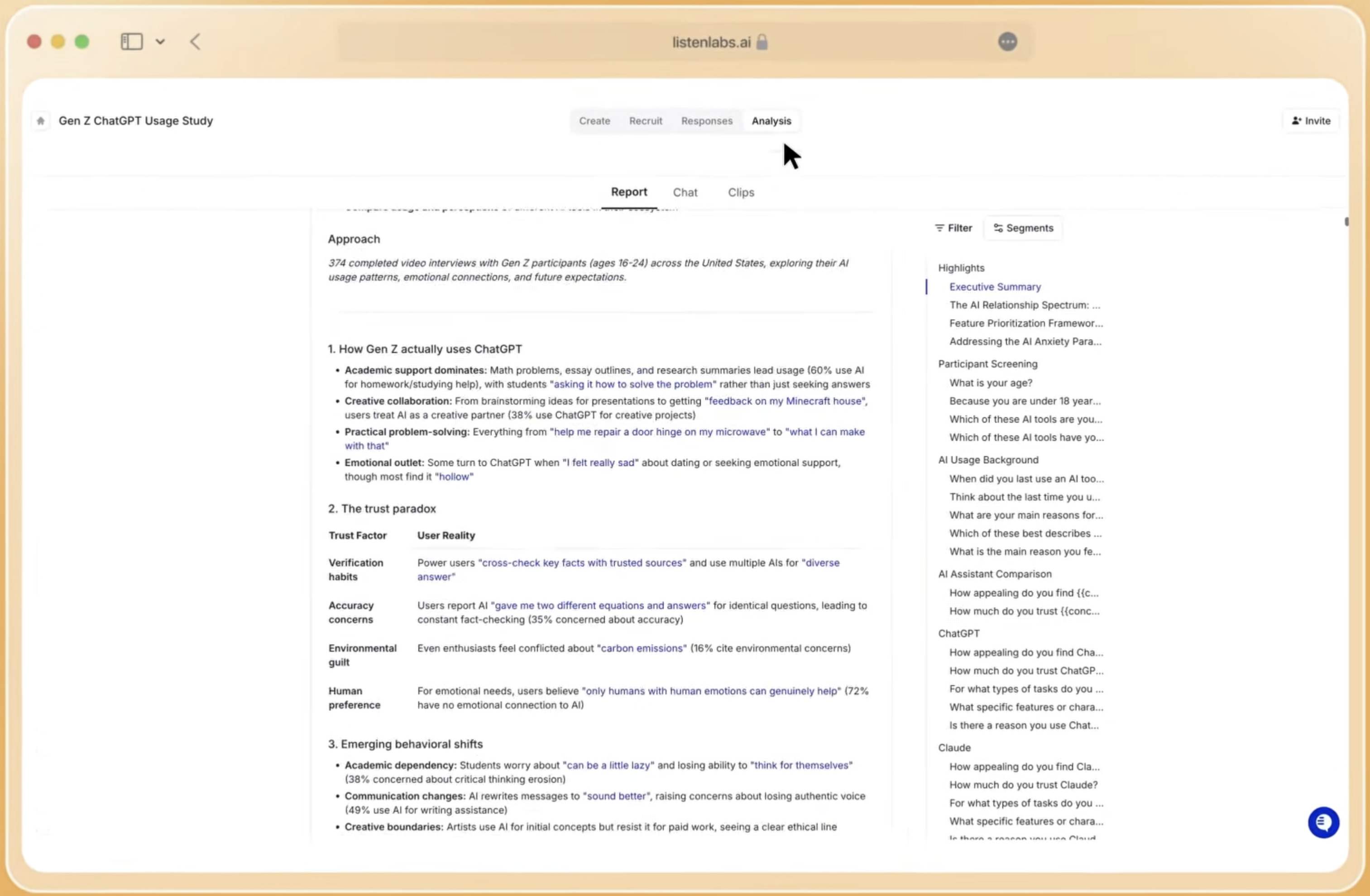
Platforms like Listen Labs layer on auto-recruiting, transcription, sentiment tagging, and insight summarization so teams jump from question to findings in hours, not weeks. The full research lifecycle, including study design, participant recruitment, AI-moderated interviews, analysis, and deliverable generation, runs on a single platform without handoffs between vendors.
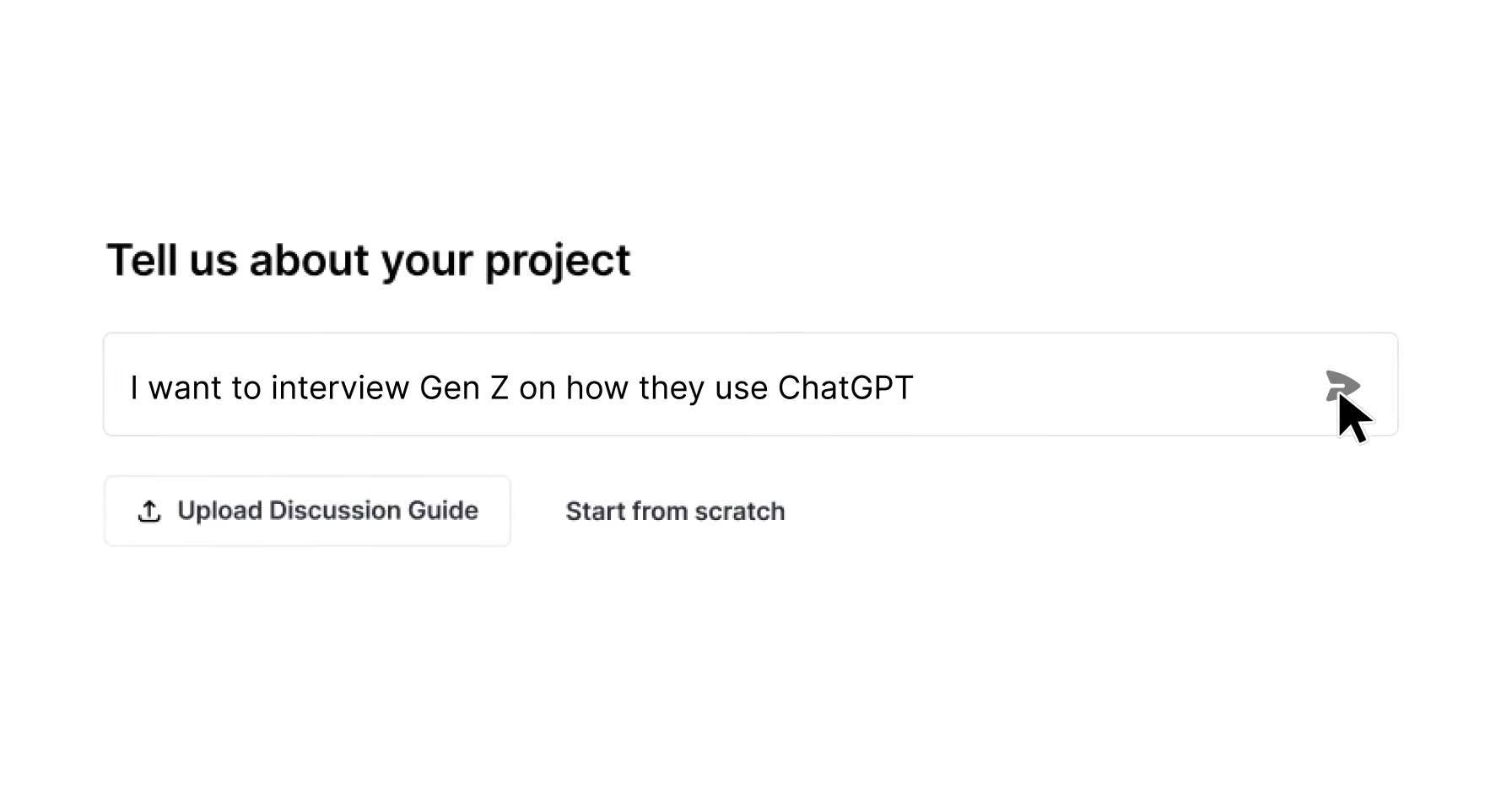
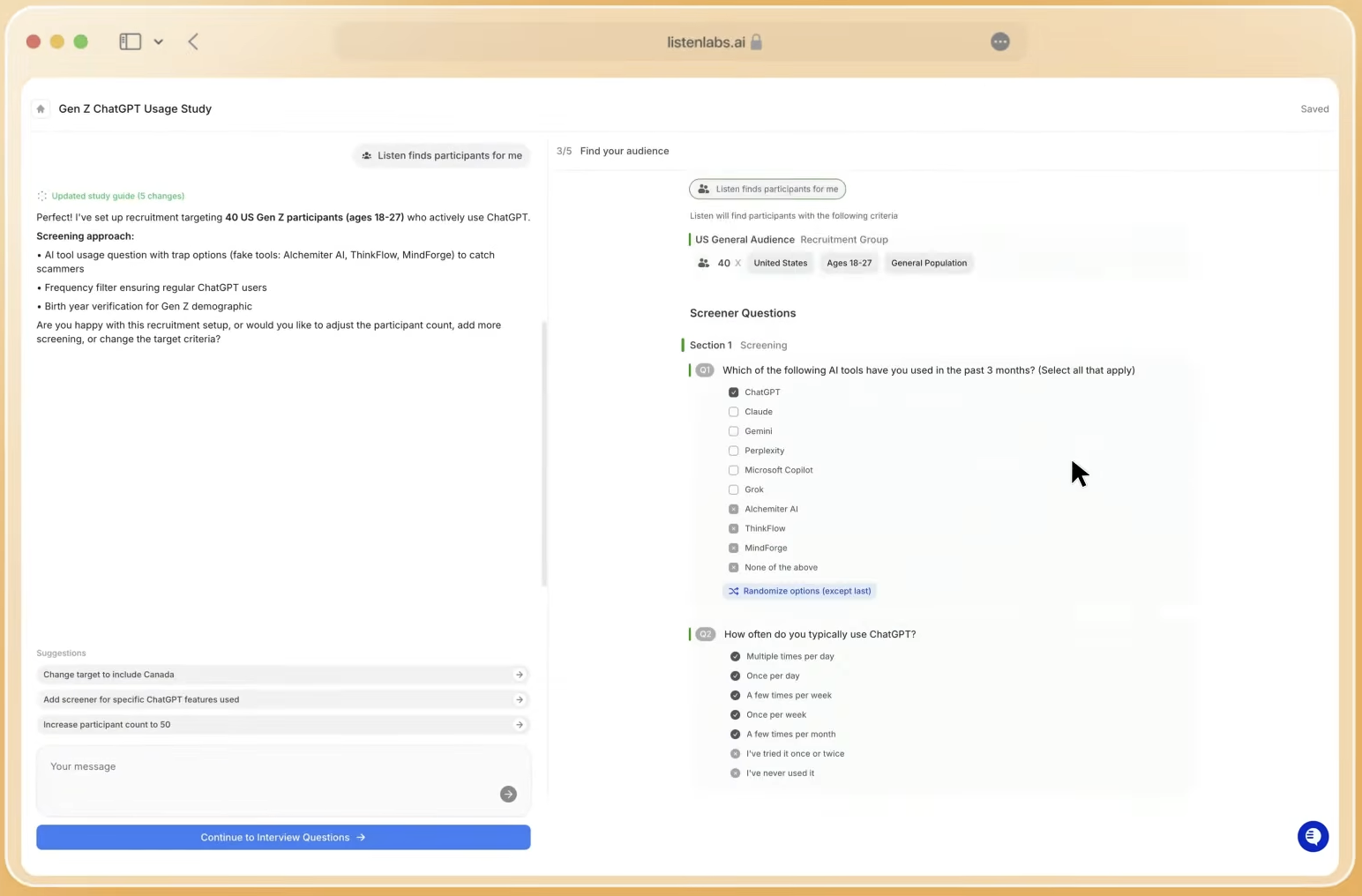
Recruitment draws from a verified network of 30M+ respondents across 45+ countries, which enables qual-at-scale research that engages hundreds or thousands of participants remotely and asynchronously. Qual-at-scale is ideal when research requires large sample sizes or broad geographic reach. To maintain depth at this scale, each interview is conducted in the participant’s language, and Listen Labs supports 100+ languages. Adaptive follow-up questions probe the reasoning behind initial responses.
Emotional Intelligence analysis captures tone of voice, word choice, and facial micro-expressions to surface signals that transcripts alone miss, using Ekman’s universal emotions framework. Listen Labs has run over 1 million AI-powered customer interviews for companies including Microsoft, Perplexity, and Sweetgreen.
Best-Fit Guidance for Enterprise, Mid-Market, and Agencies
Large enterprise insights groups managing high volumes of internal research requests benefit most from Listen Labs’ ability to run parallel studies simultaneously. A team that previously completed 8–12 studies per quarter can multiply that output without adding headcount. Mission Control builds a cross-study knowledge base that prevents re-researching previously answered questions.
Mid-market marketing teams often lack dedicated researchers, which historically meant hiring expensive consultants or skipping primary research entirely. Listen Labs’ AI-assisted study design solves this gap by allowing teams to describe research goals in natural language and receive a structured study guide, recruited participants, moderated interviews, and a consultant-quality report. These teams gain primary research capability without needing methodology expertise in-house.
Agency and consultancy teams operating on client timelines measured in days rather than weeks gain the ability to deliver primary consumer insights within a single project sprint. S&P 500 companies spend tens of billions of dollars annually on consumer polling to test new products, features, and gauge public mood, and Listen Labs compresses that investment cycle from weeks to hours, supported by its track record with enterprise clients. The platform holds SOC 2 Type II, GDPR, ISO 27001, ISO 27701, and ISO 42001 certifications, which satisfies enterprise procurement requirements across major markets.
Request a demo to see how enterprise teams at Microsoft, P&G, and Skims use Listen Labs to run primary consumer research at the speed of their planning cycles.
Risks and Limitations Across Research Approaches
Primary data collection offers purpose-fit, current, and controllable insights but incurs higher operational burden with time delays of weeks versus hours for secondary access. That operational burden is the core problem Listen Labs solves. Traditional primary research requires separate vendors for recruitment, scheduling, moderation, transcription, and analysis, and each handoff introduces delay and quality risk.
Secondary sources carry their own risks. Stale data leads to planning decisions based on consumer behavior from a prior market context. As noted earlier, traditional methods require weeks to deliver insights, while AI-powered methods can reduce time to insight substantially. Shallow survey responses from commodity panels produce findings that lack the explanatory depth needed for creative or messaging decisions. AI-moderated interviews on Listen Labs address both problems through same-day fielding and adaptive conversational probing that surfaces the reasoning behind stated preferences.
Decision Framework for Matching Sources to Objectives
Teams with a primary objective of establishing macro audience baselines for media mix modeling should start with audience measurement databases. These teams can then supplement with primary interviews when segment-level emotional response data is needed. Teams tracking competitive ad activity should use advertising intelligence platforms as their primary signal and layer in AI-moderated consumer interviews to understand how target audiences are actually responding to the creative in market.
Teams focused on current consumer sentiment, concept response, or message resonance, particularly on a timeline shorter than two weeks, should treat AI-moderated primary interviews as the first-choice source rather than a supplement. Switching to Listen Labs AI-moderated interviews let Chubbies capture hundreds of candid, one-to-one conversations overnight. Budget-constrained teams can use public and academic sources for macro context while reserving primary research spend for the specific questions that require current, purpose-fit consumer understanding.
Frequently Asked Questions
What turnaround times can teams expect from different media market research data sources?
Secondary databases and market sizing aggregators are available immediately upon subscription access, though the underlying data may be 6–24 months old. Traditional consumer panels and focus group studies typically require 4–6 weeks from study design to final report, and in large enterprise environments with internal approval processes, that timeline can extend to several months. AI-moderated interview platforms like Listen Labs compress the full research cycle, from study design through recruitment, interviews, analysis, and deliverables, to under 24 hours. This speed makes primary AI interviews the fastest available source for fresh, purpose-fit consumer insights.
How do AI-moderated interviews source participants while maintaining sample quality?
Listen Labs recruits from a verified network of 30M+ respondents across 45+ countries using Listen Atlas, an AI orchestration layer that matches participants based on behavioral and intent data rather than self-reported demographics alone. Quality Guard monitors every interview in real time for fraud indicators, low-effort responses, AI-generated scripts, and mismatched profiles. Participants are limited to three studies per month, which eliminates the professional survey-taker problem common in commodity panels. For hard-to-reach segments such as enterprise decision-makers, healthcare workers, or audiences below 1% incidence rate, a dedicated recruitment operations team handles sourcing through specialized networks and communities.
Which data sources support multilingual research across global markets?
Public and academic sources have uneven multilingual coverage, with strong representation for English-language markets and limited depth elsewhere. Most audience measurement databases and advertising intelligence platforms provide regional data but do not support custom multilingual primary research. Listen Labs supports 100+ languages for AI-moderated interviews, with automatic translation and transcription, and covers 45+ countries across the Americas, Europe, APAC, and MEA. Emotional Intelligence analysis is available across 50+ languages, making it one of the few primary research platforms capable of capturing both stated responses and emotional signals in non-English markets at scale.
What privacy standards apply to primary AI interview platforms?
Listen Labs holds SOC 2 Type II, GDPR, ISO 27001, ISO 27701, and ISO 42001 certifications. All data is protected with 256-bit encryption, and customer data is never used for AI model training. These certifications satisfy enterprise procurement requirements across North America, Europe, and most APAC markets. Teams evaluating any primary research platform should verify that the vendor holds current certifications for the jurisdictions in which they operate, particularly for studies involving EU residents under GDPR or California residents under CCPA.
When do primary AI interviews outperform secondary sources for media planning?
Primary AI interviews outperform secondary sources in four specific scenarios. The first scenario occurs when the planning question requires current consumer sentiment rather than historical behavior. The second scenario appears when emotional response to creative, messaging, or concepts is the core variable. The third scenario involves a target audience that is a niche segment not well-represented in syndicated databases. The fourth scenario arises when the timeline is shorter than the reporting cadence of available secondary sources. For macro audience sizing and long-run trend baselines, secondary sources remain efficient. For understanding why a specific audience segment responds to a specific stimulus right now, primary AI interviews are the only source that delivers both the depth and the speed that 2026 planning cycles require.
Conclusion: Building a 2026-Ready Media Insights Stack
Secondary sources, including audience measurement databases, market sizing aggregators, advertising intelligence platforms, and public data, provide efficient baselines for macro planning decisions. Their structural limitations around data freshness, emotional depth, and methodological flexibility make them insufficient as standalone sources for teams that need to understand current consumer behavior at the segment level. Traditional primary methods address those limitations but introduce weeks of operational delay and significant cost.
Listen Labs removes that trade-off. “Companies use it for all kinds of large decisions. This AI interviewer means that you can have hundreds of one-on-one interviews run at scale,” said Alfred Wahlforss, CEO of Listen Labs. The platform delivers enterprise-grade primary consumer insights, with verified recruitment, adaptive AI moderation, emotional signal analysis, and automated deliverables, within the same rapid timeframe, at a fraction of the cost of traditional research cycles.
See how Listen Labs fits your next planning cycle and get fresh primary consumer insights at the speed your 2026 media decisions require.