Written by: Anish Rao, Head of Growth, Listen Labs
Key Takeaways
- Traditional customer discovery often drags on for 4–6 weeks. This 7-step approach compresses validation into under a week using free tools and direct interviews.
- Convert beliefs into testable, falsifiable assumptions ranked by business risk before you recruit a single participant.
- Pull real customer language from competitor reviews on Reddit, G2, and app stores to sharpen interview questions and positioning.
- Recruit 10–15 target customers through Reddit, Twitter, and warm networks instead of paid panels to get higher-signal conversations.
- Listen Labs compresses the entire validation process into under 24 hours, so you can see how real customers respond before you build. See how it works.
Why Fast, Structured Validation Matters in 2026
Most startups fail because they validate too slowly or never validate at all. Founders spend months building around untested beliefs, then discover the problem is not painful enough or the buyer will not pay.
Traditional customer discovery relies on manual outreach, scheduling, and note-taking. That process often takes 4–6 weeks before you see any clear signal. By that point, competitors may have shipped, budgets may have shifted, or your own runway has shortened.
This 7-step framework compresses that learning cycle into under a week. You move from raw idea to evidence-backed go or pivot decision using structured assumptions, targeted recruitment, and focused interviews. When you are ready to move even faster, Listen Labs automates recruitment, moderation, and analysis so you get validated demand signals in less than 24 hours.
Step 1: Turn Founder Beliefs into Testable Assumptions
Most founders operate on beliefs disguised as facts. You create clarity by converting those beliefs into falsifiable statements that interviews can confirm or kill.
Use this template for each assumption:
“I believe [target customer] experiences [specific problem] when [context]. I will know this is true when [observable evidence].”
Example: “I believe freelance designers experience cash-flow anxiety when invoicing clients with net-30 terms. I will know this is true when at least 6 of 10 interviewees describe delaying a purchase because of unpaid invoices.”
Write 3–5 assumptions before recruiting a single participant. Once they are written, rank them by risk, starting with the assumption that, if wrong, would kill the business. Testing your riskiest assumption first prevents you from unconsciously steering interviews toward confirmation of safer, less critical beliefs. If that highest-risk assumption fails, you pivot immediately instead of spending weeks validating secondary questions.
Even strong assumptions can mislead you if your questions use founder language instead of customer language. Step 2 fixes that by grounding your wording in phrases customers already use in public.
Step 2: Pull Real Customer Complaints from Public Reviews
Spend 60–90 minutes extracting language directly from frustrated customers of existing solutions. This quick research pass sharpens interview questions and surfaces vocabulary customers actually use.
Use this checklist:
- Reddit: search r/[category] + “hate” OR “wish” OR “switched from”
- G2 and Capterra: filter competitor reviews to 1–3 stars, then copy exact complaint phrases
- App Store / Google Play: sort by “Most Critical” and export recurring themes
- Amazon (if physical product): read 2-star reviews for unmet expectations
- Twitter/X: search [competitor name] + “frustrated” OR “broken” OR “finally left”
Build a running list of verbatim phrases. These phrases become raw material for interview probes in Step 5 and the language foundation for future messaging. You now have assumptions from Step 1 and customer language from Step 2, which together shape who you recruit and what you ask next.
Step 3: Size a Reachable Market That Matches Your Assumptions
Before recruiting participants, spend an hour sizing your reachable market. This sizing exercise pressure-tests whether your Step 1 assumptions describe a segment large enough to matter.
If your reachable segment is tiny, the problem may be real but too narrow to support a venture-scale business. Use a bottom-up approach and count real buyers, not broad census populations.
Copy this structure into a spreadsheet:
- Total Potential Reach: All people globally who experience the problem. Source ideas: industry reports, LinkedIn audience estimates, or keyword search volume multiplied by average revenue per user.
- Reachable Segment: The subset you can realistically reach given geography, language, and channel. Apply a realistic filter such as English-speaking, US-based, SaaS-buying.
- Year-One Target: Apply a conservative 1–3% penetration rate to your reachable segment.
Example: Total Potential Reach = 4M freelance designers globally. Reachable Segment = 800K in English-speaking markets with software budgets. Year-One Target = 8,000–24,000. Treat this table as a hypothesis, not a forecast. Interviews in Steps 4 and 5 will pressure-test whether the reachable segment is real and whether the problem is painful enough inside that group.
Step 4: Recruit 10–50 Participants Without Paid Panels
Early validation does not require paid recruitment panels. Ten to fifteen honest conversations beat 500 survey responses for learning whether a problem is real and urgent.
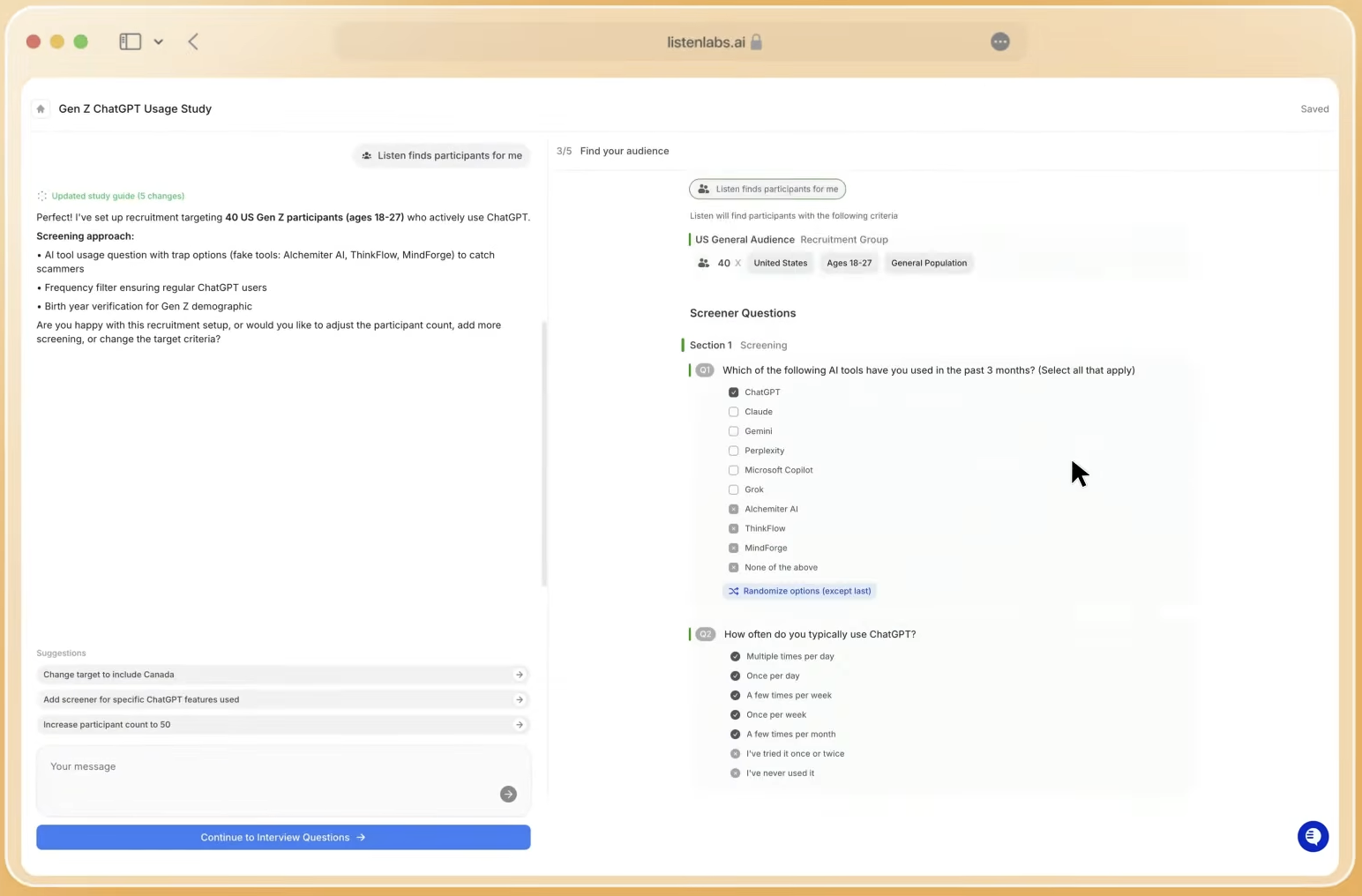
Use these outreach scripts:
Reddit DM: “Hi, I saw your comment about [specific pain point] in r/[community]. I am building something in this space and would value 20 minutes of your honest perspective. No pitch, just questions. Happy to share findings afterward. Interested?”
Twitter/X: “Building a tool for [persona]. If you have ever struggled with [problem], I would love 20 minutes. DM me and I will send a $10 gift card as a thank-you.”
Warm network: “I am validating an idea and need 3 intros to people who [job title or behavior]. Not selling anything, just trying to understand the problem before building.”
Target 15–20 completed conversations for a first validation pass. Focus on participants who match your riskiest assumption’s target customer, not just anyone willing to talk. Once you have those participants lined up, you are ready to run the highest-signal part of this process: the interviews themselves.
Step 5: Run Focused Customer Interviews That Reveal Real Pain
The interview is the highest-signal activity in this entire process. Qualitative methods make up for their smaller sample sizes through their ability to uncover nuance and complexity in human decision-making, which surveys cannot match.
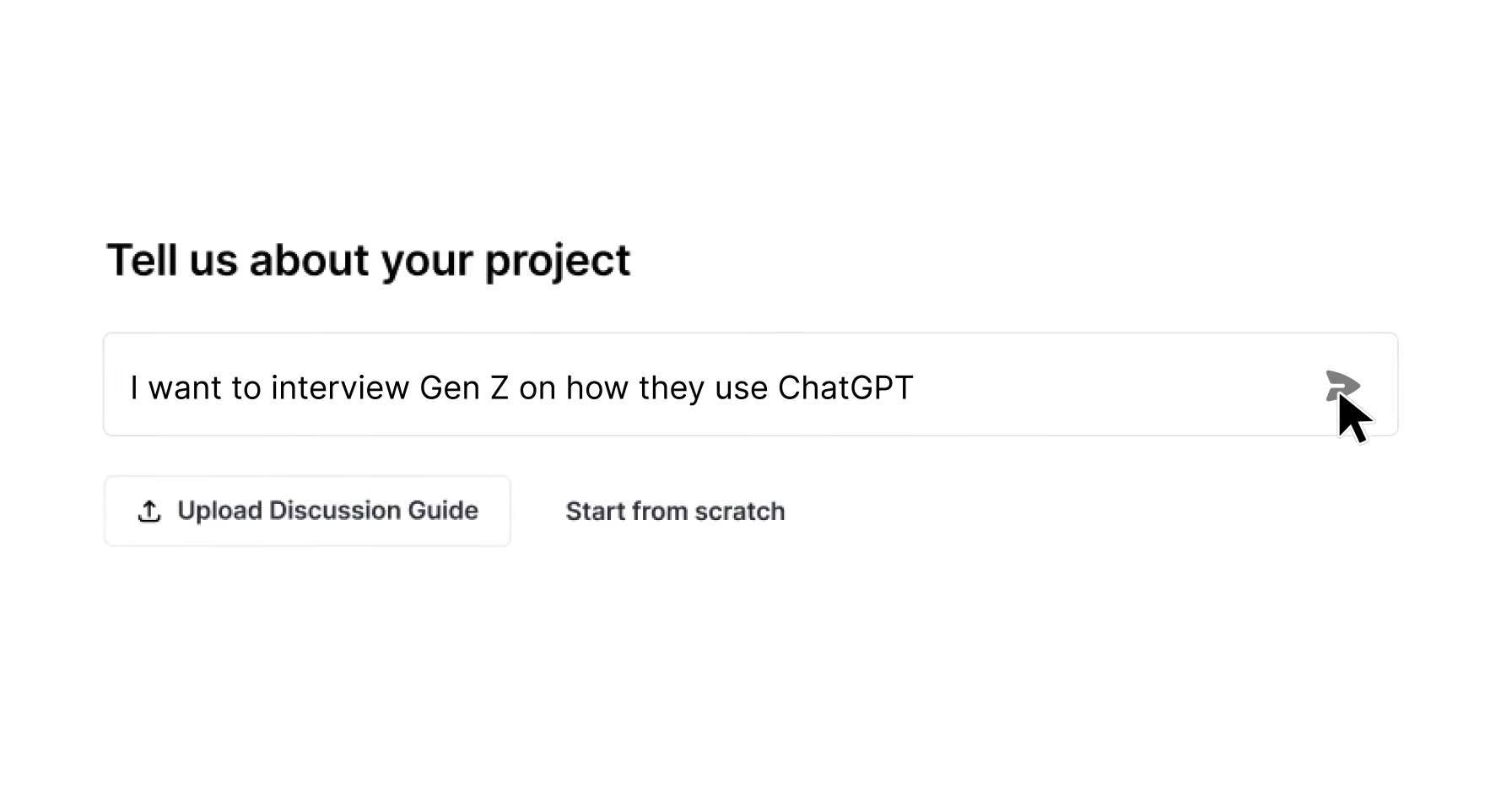
Use this five-question interview script as a starting point:
- “Walk me through the last time you experienced [problem]. What happened?”
- “What did you try to solve it? What worked, what did not?”
- “How much time or money does this problem cost you in a typical month?”
- “If this problem disappeared tomorrow, what would change for you?”
- “Who else on your team or in your life feels this pain?”
Record every session (with consent) using Google Meet, Zoom, or Loom. Log responses in a shared Google Form or Typeform immediately after each call to reduce memory bias and keep data consistent.
Founders who need to move faster or reach participants across time zones can use AI-moderated video interviews that schedule, conduct, and analyze conversations asynchronously. Ninety-two percent of participants report equivalent comfort levels in AI-moderated versus human-moderated sessions, and 30% specifically prefer AI moderation for its scheduling flexibility. Once these interviews are complete, you shift from collecting stories to evaluating buying intent.
Step 6: Score Interviews for Willingness-to-Pay Signals
Positive feedback alone does not prove demand. Enthusiasm without buying intent creates false positives that waste months of build time. Use this checklist to separate genuine willingness to pay from polite interest.
Strong signals (go indicators): Treat each of these as a meaningful data point. One strong signal is useful, and several together form a compelling case to proceed.
- Participant describes money already spent on workarounds
- Participant asks unprompted about pricing or availability
- Participant names a specific budget or budget owner
- Participant references a deadline or urgency, such as “we need this before Q3”
- Participant uses emotional language like frustration, relief, or urgency, not just “that is interesting”
Weak signals (caution indicators): Treat these as reasons to slow down or refine the idea before building.
- “I would probably use that” without specifics
- Enthusiasm that disappears when price is mentioned
- Problem described as minor or occasional
- No current spending on any alternative
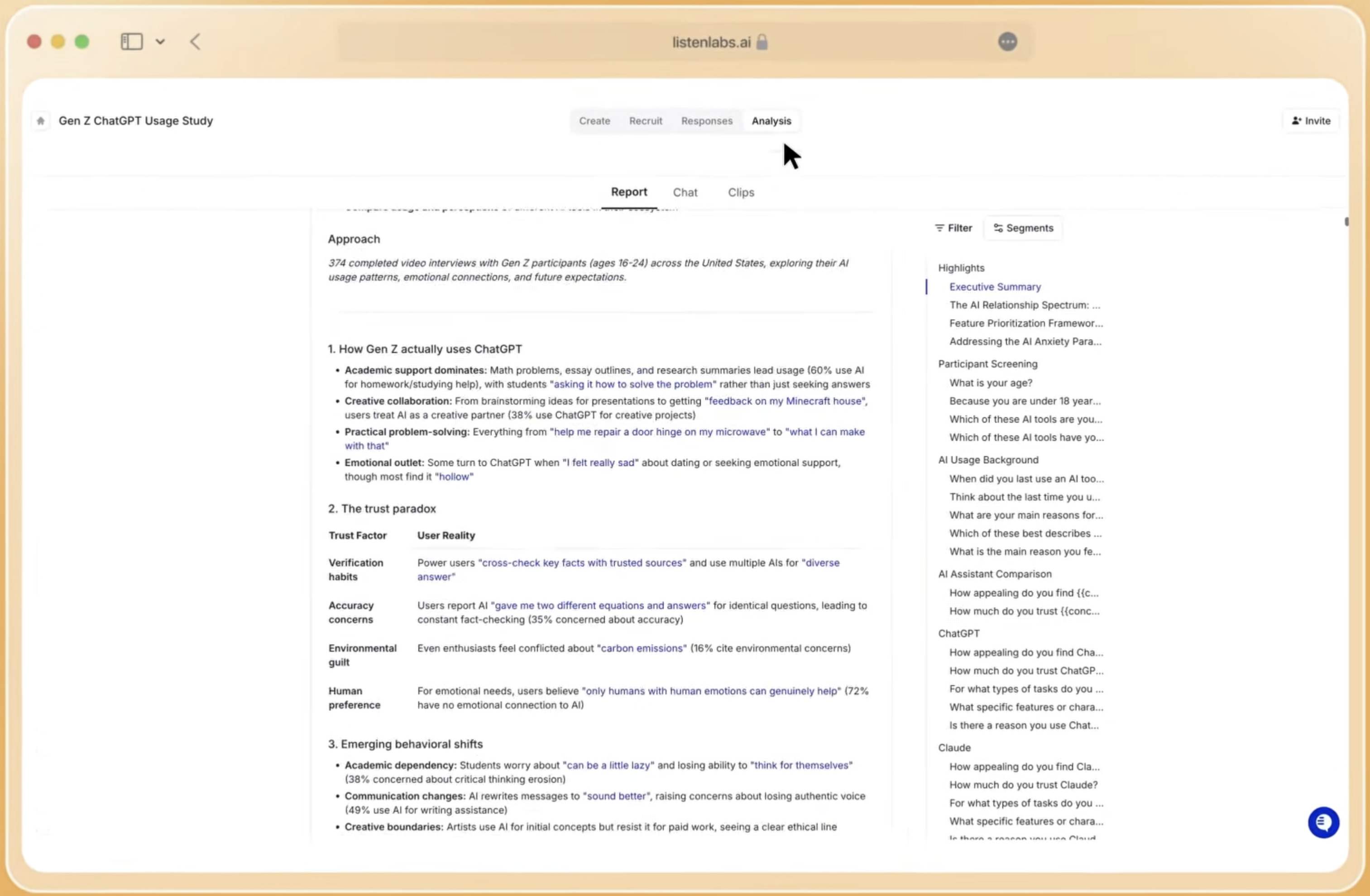
AI analysis can identify themes, quantify sentiment, and surface patterns across hundreds of responses simultaneously. This automation removes manual tagging at scale and lets you focus on decisions instead of spreadsheets.
Step 7: Decide Whether to Go Forward or Pivot
After 10–15 interviews, apply this decision framework before you write code or spend on paid acquisition.
Go criteria (need at least 3 of 4):
- Seven or more of 10 participants confirmed the problem is real and recurring
- Five or more of 10 participants showed at least one strong willingness-to-pay signal
- Participants described the problem in consistent language, which signals a shared, defined pain
- At least one participant asked how to get access or sign up
Pivot triggers (any 1 of these):
- Fewer than 5 of 10 participants confirmed the problem exists
- Zero participants mentioned current spending on any solution
- The problem exists but participants describe it as low-priority relative to other challenges
A pivot is not failure. A pivot means the process is working and saving you from a costly mistake. Return to Step 1 with revised assumptions and repeat. Founders who run this cycle twice in two weeks reach product-market fit faster than those who build for six months on a single untested hypothesis.
Frequently Asked Questions
How long does this 7-step process actually take?
A motivated founder can complete Steps 1–3 in a single afternoon. Recruiting 10–15 participants in Step 4 using Reddit and warm outreach often takes a few days. Conducting interviews in Step 5 depends on participant availability, but each conversation is short and focused. Analysis and the go or pivot decision in Steps 6 and 7 can be completed within hours of the final interview. End-to-end, the manual version of this process takes the 3–6 weeks mentioned earlier. With AI-moderated interviews through Listen Labs, the entire research cycle completes in less than 24 hours.
How many interviews are enough to make a go or pivot decision?
For early-stage validation, 10–15 completed interviews with participants who match your target customer profile are usually enough. At this stage, you are not chasing statistical significance. You are looking for patterns in pain, language, and behavior.
If the same pain, phrases, and behaviors appear across 7 or more conversations, the signal is strong enough to move to a small build or landing page test. If patterns stay inconsistent after 15 interviews, that inconsistency is a finding. The problem may be too fragmented or the target customer too broad.
Can I use ChatGPT to replace customer interviews entirely?
No. General-purpose AI tools can help draft interview scripts, organize notes, and suggest themes, but they cannot replace conversations with real customers. ChatGPT generates responses from training data, not from the specific, lived experiences of your target market in 2026.
Customer interviews surface unexpected language, emotional signals, and behavioral patterns that no language model can fabricate accurately. AI is most valuable after the interviews are complete, when it automates transcription, tags themes, and identifies patterns across large volumes of responses. The interviews themselves must involve real people.
What is the difference between a willingness-to-pay signal and general interest?
General interest means a participant finds the concept appealing in the abstract. Willingness-to-pay signals are concrete and behavioral.
Examples include money already spent on a workaround, a named budget, an unprompted pricing question, or urgency tied to a real deadline. The clearest signal is a pre-order, deposit, or letter of intent that costs the participant something, even if small. Founders who rely on enthusiasm without these concrete signals often build products that collect waitlist signups but generate no revenue. The interview script in Step 5 is designed to surface these distinctions.
When should a startup repeat this research process?
Customer discovery works best as a recurring habit, not a one-time project. Repeat the process when you enter a new customer segment, launch a new product line, adjust pricing, or prepare for a fundraising round.
Early-stage founders should plan for at least two full validation cycles before committing to a build. One cycle confirms the problem and a second cycle validates the proposed solution. After launch, ongoing customer interviews, even 5–10 per month, create a signal layer that prevents product drift and surfaces churn drivers before they become existential.
Conclusion
This 7-step process, from written assumptions through willingness-to-pay analysis and a go or pivot decision, gives bootstrapped founders a repeatable, low-cost framework for validating demand in under a week. Steps 1–3 require no participants and no budget. Steps 4–7 require time, a recording tool, and honest conversations with real customers.
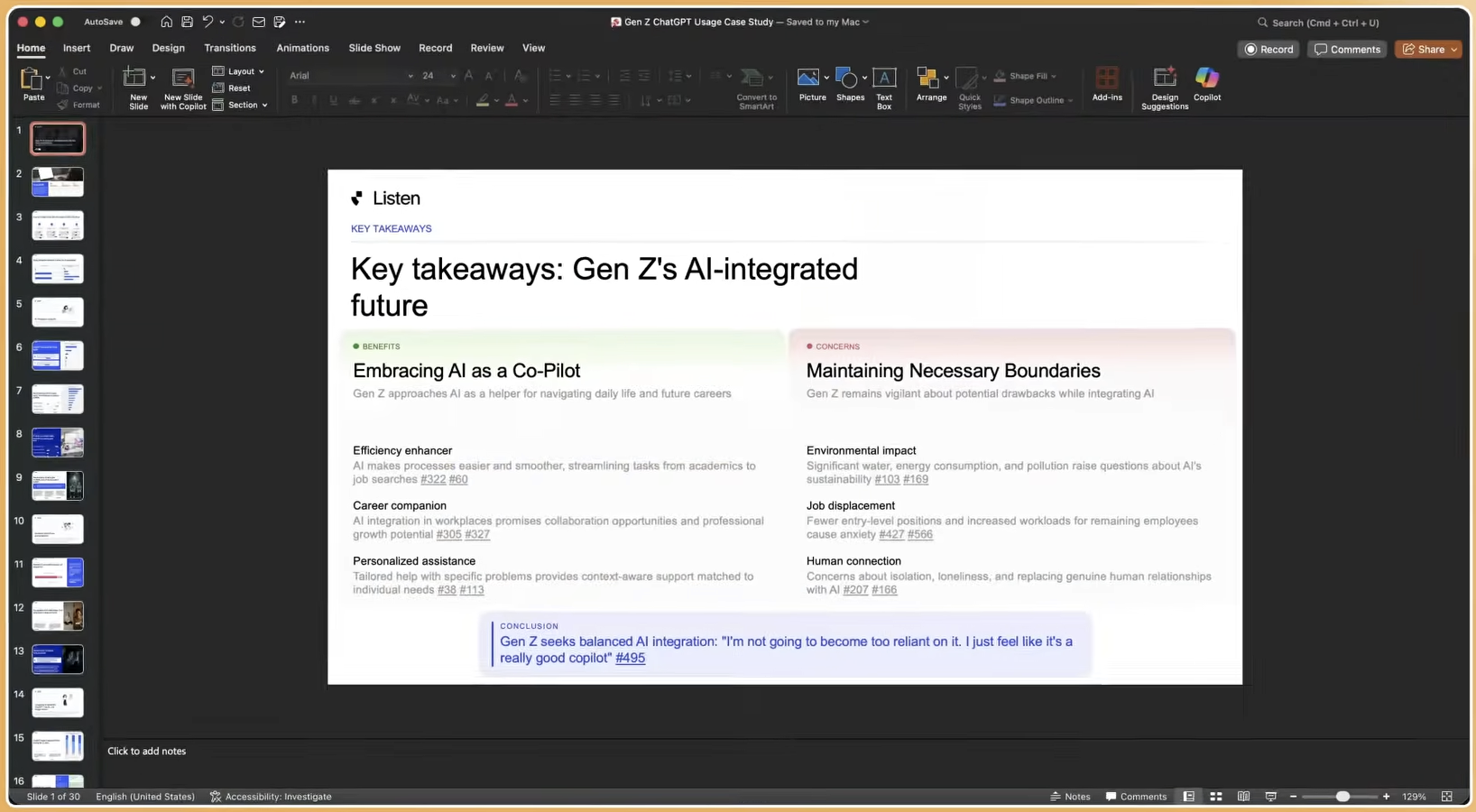
When your validation signal is strong and your next challenge is speed or scale, you can reach hundreds of participants across markets, run interviews asynchronously, and generate analysis without manual tagging. Listen Labs handles the entire research lifecycle from recruitment through AI-moderated interviews to consultant-quality deliverables, delivering the speed advantage described in Step 5: weeks of traditional research compressed into hours.
Book a demo to see how Listen Labs turns customer interviews into validated demand signals in less than 24 hours.