
Written by: Anish Rao, Head of Growth, Listen Labs | Last updated: April 15, 2026
Key Takeaways for Enterprise Research Leaders
- Market research delivers quantitative breadth (what/who) through surveys, while consumer insights uncover qualitative depth (why/behaviors) through interviews and emotional analysis.
- Enterprise teams face research backlogs from slow traditional methods. AI platforms like Listen Labs run hundreds of interviews within 24 hours.
- Leading companies such as Microsoft and P&G use Listen Labs to shrink research cycles from weeks to hours for customer research and claim testing.
- Hybrid approaches pair market research hypotheses with consumer insights validation, supported by AI tools for fraud prevention and rapid analysis.
- Listen Labs offers a 30M participant panel across 100+ languages. Schedule a qual-at-scale walkthrough and expand your enterprise research capacity.
Market Research vs Consumer Insights: Enterprise Comparison
The following table shows how market research and consumer insights differ across core dimensions that matter to enterprise teams. Review each row to see how focus, methods, and outcomes shift as you move from broad measurement to deep understanding.
| Aspect | Market Research | Consumer Insights |
|---|---|---|
| Focus | Quantitative breadth (“what/who”) | Qualitative depth (“why/behaviors”) |
| Methods | Surveys and quantitative tools | Interviews, ethnography, emotional analysis |
| Data Type | Surface metrics and trends | Motivations and emotions across multiple languages |
| Enterprise Use | Market sizing and trend spotting | Product innovation and pricing strategy |
| Scale/Speed | High volume, slower analysis cycles | AI-scalable qualitative work with global reach in under 24 hours |
| Outcomes | Market trends and sizing | Behavior change insights with significantly higher output |
How Market Research and Consumer Insights Relate
Market research uses broad quantitative methodologies to understand market conditions, size opportunities, and track trends. Teams rely on structured surveys, statistical analysis, and demographic segmentation to answer questions about market share, customer acquisition costs, and competitive positioning.
Consumer insights focus on qualitative understanding of customer motivations, emotions, and behavioral drivers. Researchers use ethnographic studies, in-depth interviews, and emotional analysis to uncover the psychological factors that influence purchasing decisions and brand loyalty.
Together, these disciplines give enterprises both the scale to see patterns and the depth to explain them. Market research highlights where opportunities exist, and consumer insights clarify how to act on those opportunities with confidence.
Four Core Types of Market Research
Market research traditionally falls into four categories:
- Exploratory research for initial market understanding
- Descriptive research for detailed market characterization
- Causal research for testing cause-and-effect relationships
- Predictive research for forecasting future trends
Platforms like Qualtrics have standardized these methodologies across enterprise environments, which makes them familiar to most insights and strategy teams.
Enterprise Differences in Practice
Traditional limitations keep market research and consumer insights in separate lanes inside many enterprises. AI platforms such as Listen Labs now bridge this gap through AI-moderated interviews and Emotional Intelligence capabilities that operate at global scale.
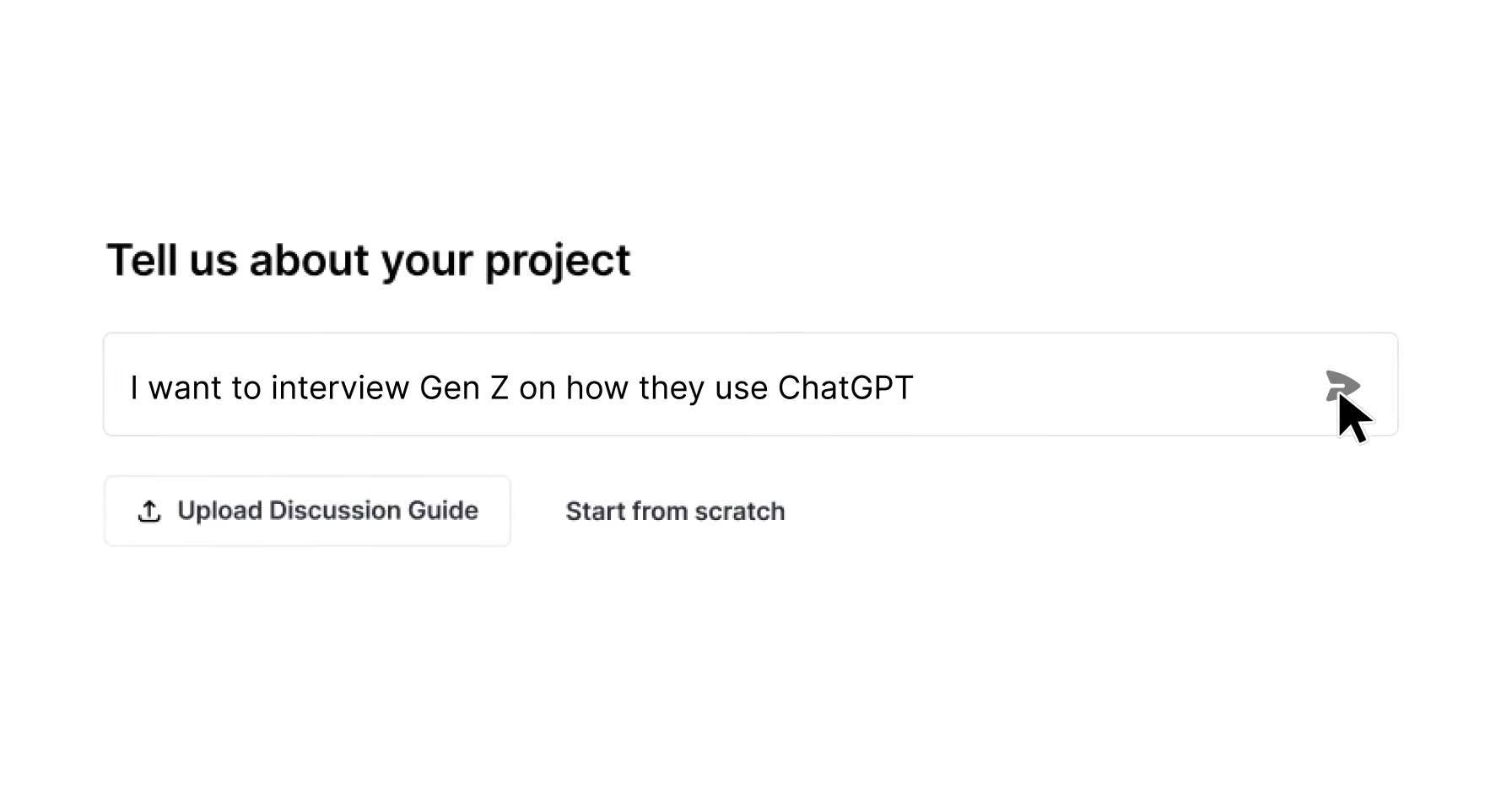
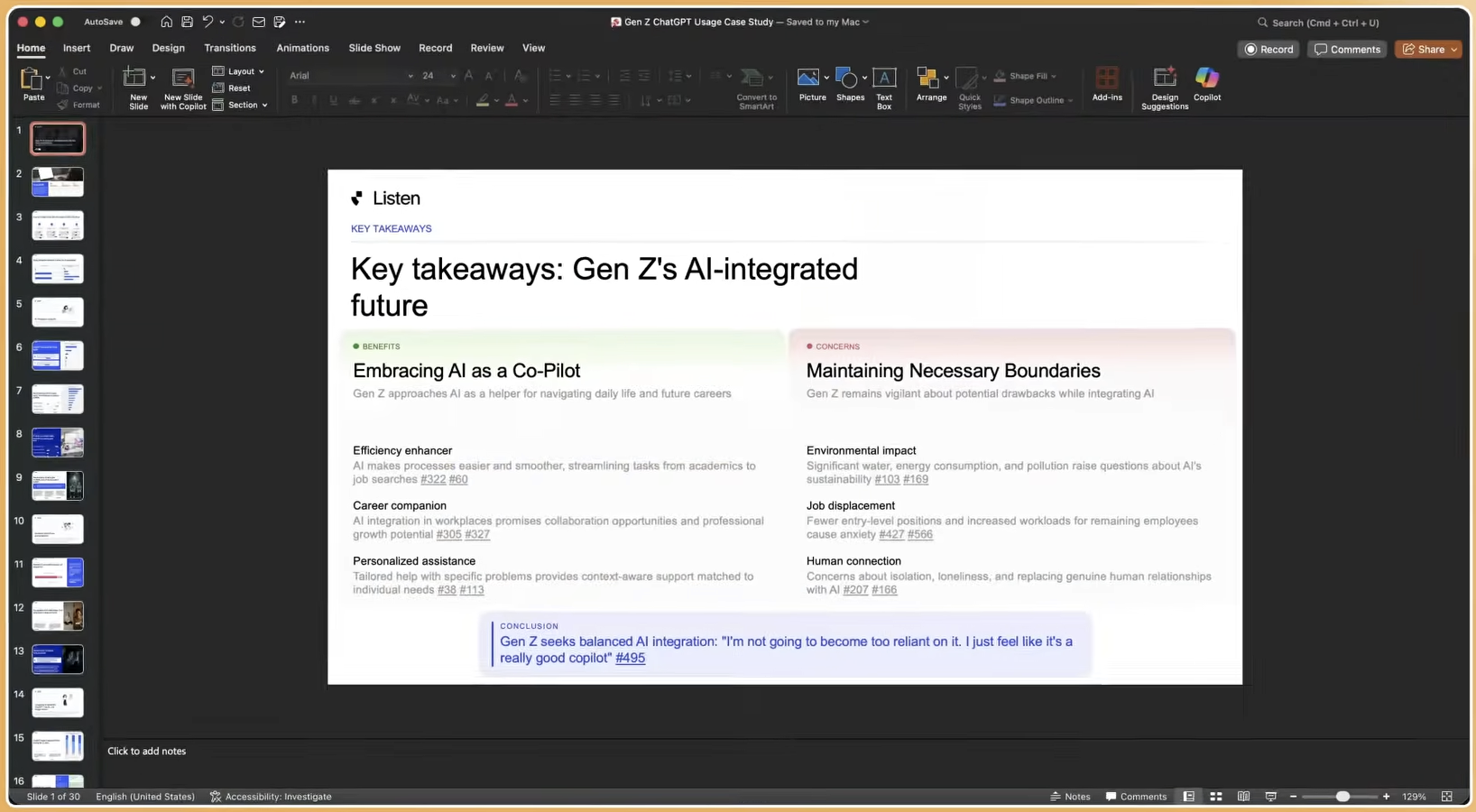
Microsoft leveraged this integration to conduct customer research rapidly, while P&G used the platform for fast, multi-market claim testing. These examples show how integrated approaches compress timelines without sacrificing rigor.
Consumer Insights and Market Research for Enterprises
These success stories highlight a broader challenge for enterprise research teams. Many groups still operate on 4–6 week research cycles that create backlogs and force trade-offs between depth and scale. Market research supports go-to-market sizing and competitive analysis, while consumer insights fuel product innovation and pricing strategies.
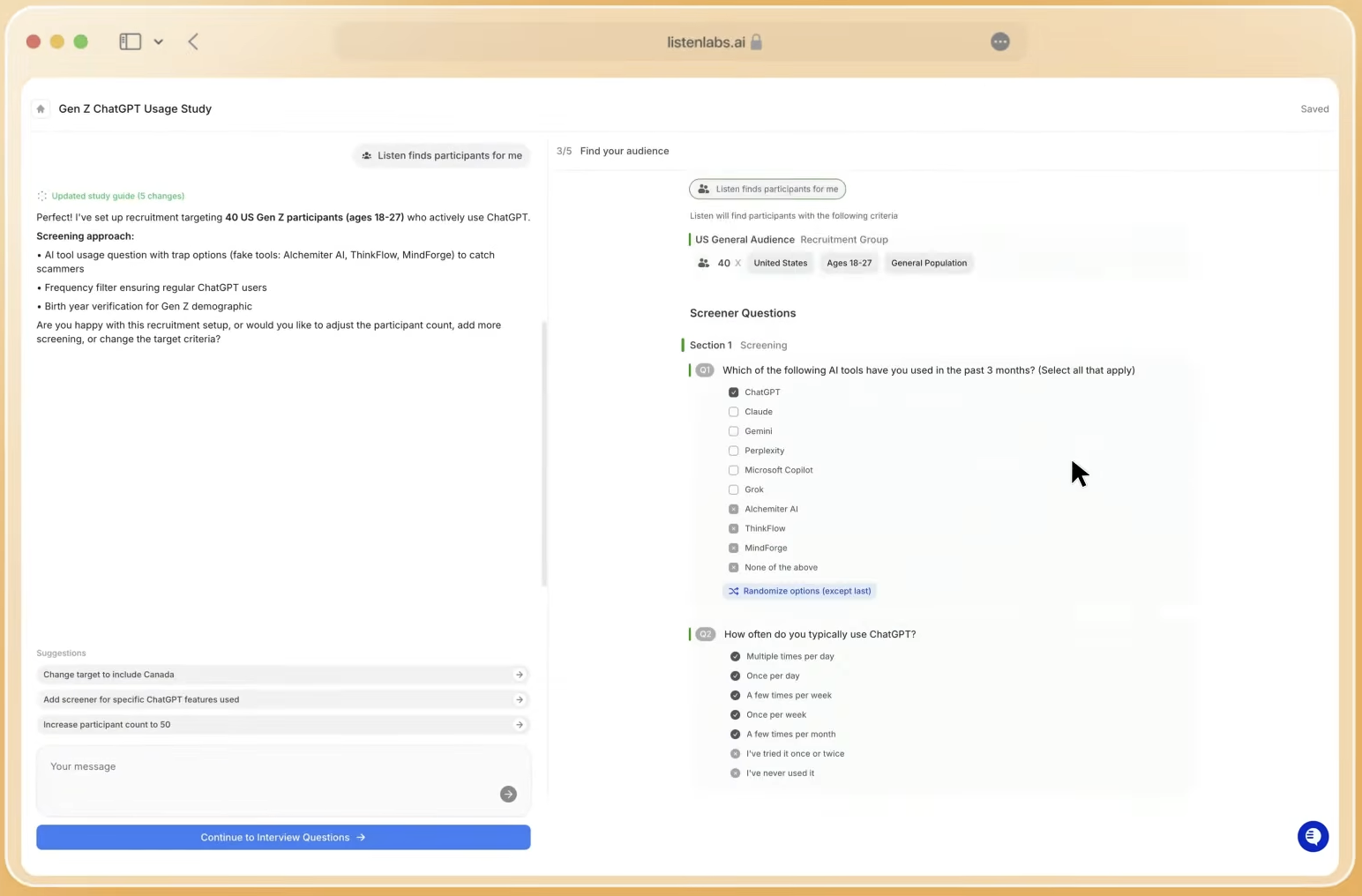
Listen Labs addresses these pain points with a global participant panel spanning 45+ countries and more than 100 languages, delivering complete studies in under 24 hours. Microsoft’s research team cut wait times from weeks to hours, and P&G conducted interviews that produced quantified themes and verbatim evidence for claim decisions. The platform is trusted by leading enterprises globally, including Microsoft, Google, Robinhood, Skims, and Nestlé for mission-critical research initiatives.
How Market Research and Consumer Insights Work Together
Effective enterprise research strategies use market research to generate hypotheses about customer behavior, then validate and refine those hypotheses through qualitative consumer research. This sequence gives leaders both statistical confidence and real customer language.
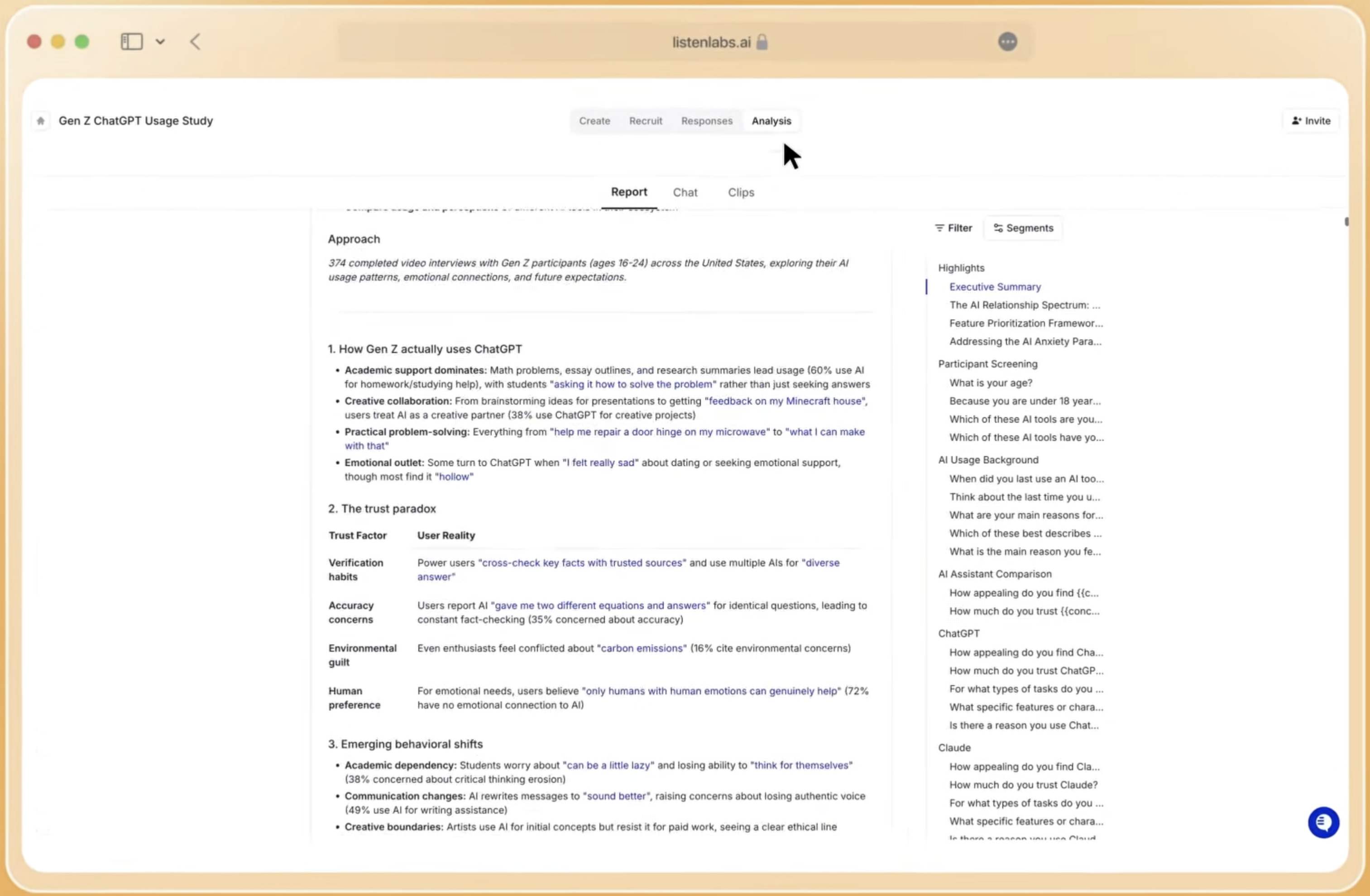
AI accelerates this combined approach through Listen Labs’ integrated suite: Atlas for recruitment, Quality Guard for fraud prevention, Research Agent for analysis, and Mission Control for knowledge management. This integration enables enterprises to move from hypothesis to validated insights within hours rather than months, the same shift that allowed Microsoft and P&G to transform their research cycles.
Enterprise Scenarios: How VPs, UX Leaders, and PMs Use Hybrid Research
Three common enterprise scenarios show how integrated research approaches scale across teams. Research VPs use the platform to eliminate backlogs by running multiple studies at the same time, which increases throughput without adding headcount. This same scalability helps UX leaders expand usability testing from 5–10 participants to hundreds while avoiding logistical overhead. Product managers then benefit from self-serve research capabilities that support rapid decision-making without waiting in a central queue.
Anthropic conducted user interviews to understand subscription churn and identify retention levers. P&G’s interview study generated quantified themes and verbatim proof that supported strategic claims decisions. Together, these cases illustrate how AI-powered research multiplies output without proportional increases in budget or team size.
Decision Matrix: Choosing Market Research, Consumer Insights, or Hybrid
Use this decision matrix to match your research goal with the right approach. The hybrid column shows how Listen Labs combines the strengths of traditional methods while reducing their individual limitations.
| Goal | Market Research | Consumer Insights | Listen Labs Hybrid |
|---|---|---|---|
| Scale Data Collection | High-volume surveys | Not applicable | Hundreds of qualitative interviews in 24 hours |
| Deep Behavioral Understanding | Not applicable | In-depth interviews | Emotional Intelligence |
| Fraud Prevention | Basic screening | Basic screening | Quality Guard real-time monitoring |
See how hybrid approaches can refine your research strategy with a personalized Listen Labs demo.
Consumer Insights vs Market Research FAQs
Can AI replace human insights teams?
AI acts as a force multiplier rather than a replacement for human researchers. Listen Labs enables existing teams to run far more studies with the same headcount, which frees researchers to focus on strategic analysis and decision-making instead of logistics and manual data processing.
How does Listen Labs compare to traditional research methods?
Listen Labs compresses research cycles from 4–6 weeks to under 24 hours while maintaining methodological rigor. The platform combines the statistical confidence of large samples with the qualitative depth of one-on-one interviews, so teams no longer need to choose between scale and depth.
What ensures participant quality in AI-moderated research?
Quality Guard provides three layers of protection for participant quality. The system uses exclusive partnerships with high-quality panels, real-time AI monitoring across video, voice, and content signals, and limits on participant frequency to reduce professional survey-taking behavior.
What are the four types of market research and when should enterprises use each?
Exploratory research works best for initial market understanding and early-stage questions. Descriptive research supports detailed market characterization and segmentation. Causal research helps test cause-and-effect relationships, such as price changes or messaging shifts. Predictive research supports forecasting trends and planning future scenarios. Modern AI platforms can execute all four types within integrated study designs.
How do market research and consumer insights work together in practice?
Many teams use market research to identify trends and opportunities, then apply consumer insights to understand the behavioral drivers behind those patterns. AI platforms enable this combined approach by running quantitative and qualitative components within the same framework, which keeps findings aligned and easier to act on.
Scale Insights with Listen Labs in 2026
The line between consumer insights and market research becomes less rigid when AI allows enterprises to capture quantitative scale and qualitative depth at the same time. Listen Labs has emerged as a leader in this convergence, trusted by Microsoft, Google, P&G, and other Fortune 500 companies to multiply research output while maintaining methodological excellence.
See how Listen Labs delivers both quantitative scale and qualitative depth in a single platform.