
Written by: Anish Rao, Head of Growth, Listen Labs | Last updated: June 29, 2026
Key Takeaways
- Enterprise qualitative research design structures in-depth customer studies so teams deliver credible, decision-ready findings within tight 4–6 week cycles and limited interview budgets.
- Anchor every study to a single business decision, apply purposeful and quota-based sampling across roles, and use semi-structured guides with behavioral probes so insights stay focused and actionable.
- Separate interviews by stakeholder, triangulate qualitative data with behavioral telemetry, and assess thematic saturation iteratively so findings reflect real buying-committee dynamics.
- Standardize transcription, tagging, and methodological documentation while conducting stakeholder debriefs so reliability, reproducibility, and organizational trust in the results all increase.
- Listen Labs operationalizes all 12 best practices in a single end-to-end platform that compresses traditional research timelines to under 24 hours; book a demo to see how leading teams are scaling rigorous qualitative insights.
12 Best Practices for Enterprise Qualitative Research Design
1. Anchor Every Study to a Single Decision
Start every study by naming the specific business decision the work must inform, such as a pricing tier, a feature roadmap choice, or a messaging pivot. A well-scoped research objective prevents scope creep and keeps analysis focused on actionable outputs. In a CPG context, the decision might be whether to reformulate a product line for a new demographic. In financial services, it might be whether to bundle two products. One decision per study produces sharper, faster insights than omnibus briefs.
2. Apply Purposeful Sampling Across Roles
Design samples around the real buying committee instead of whoever is easiest to reach. Enterprise buying decisions involve multiple roles such as economic buyers, technical evaluators, end users, and champions. Purposeful sampling selects participants based on their relevance to the research question rather than convenience or availability. A tech company studying procurement software adoption should sample IT directors, finance leads, and frontline users in separate groups. Mixing roles in a single undifferentiated sample obscures role-specific friction points and produces findings that no single stakeholder group fully trusts.
3. Set Quota Targets by Stakeholder Segment
Lock in quota targets for each stakeholder segment before fieldwork begins so dominant groups cannot crowd out minority voices. For a B2B enterprise study, a practical quota structure might allocate four to six interviews per role across three to four roles, yielding 12–24 total interviews. Quota controls ensure the final sample reflects the actual composition of the buying committee, not just whoever was easiest to recruit. Document quota targets in the study brief so stakeholders can audit sampling decisions after fieldwork.
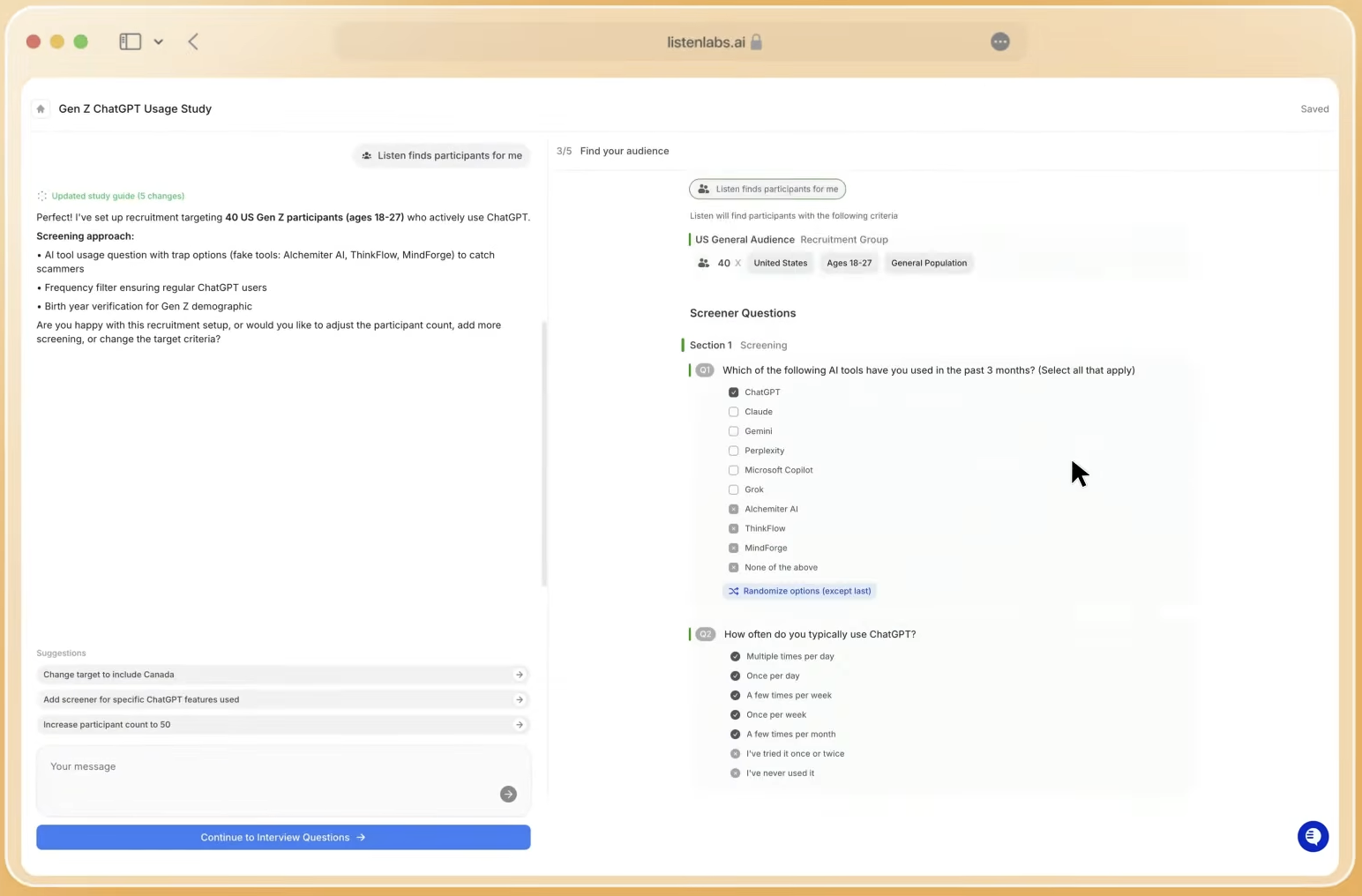
4. Build Semi-Structured Guides with Behavioral Probes
Use a semi-structured interview guide so every session covers the same core topics while still leaving room to follow unexpected threads. Pair each question with at least one behavioral probe such as “Walk me through the last time you…” or “What did you do when…”. Behavioral probes move participants from abstract opinion to concrete memory, which produces richer and more reliable data. Guides structured around behaviors rather than attitudes consistently yield more actionable findings. Limit guides to eight to twelve core questions so a 45–60 minute session still feels like a conversation, not a survey.
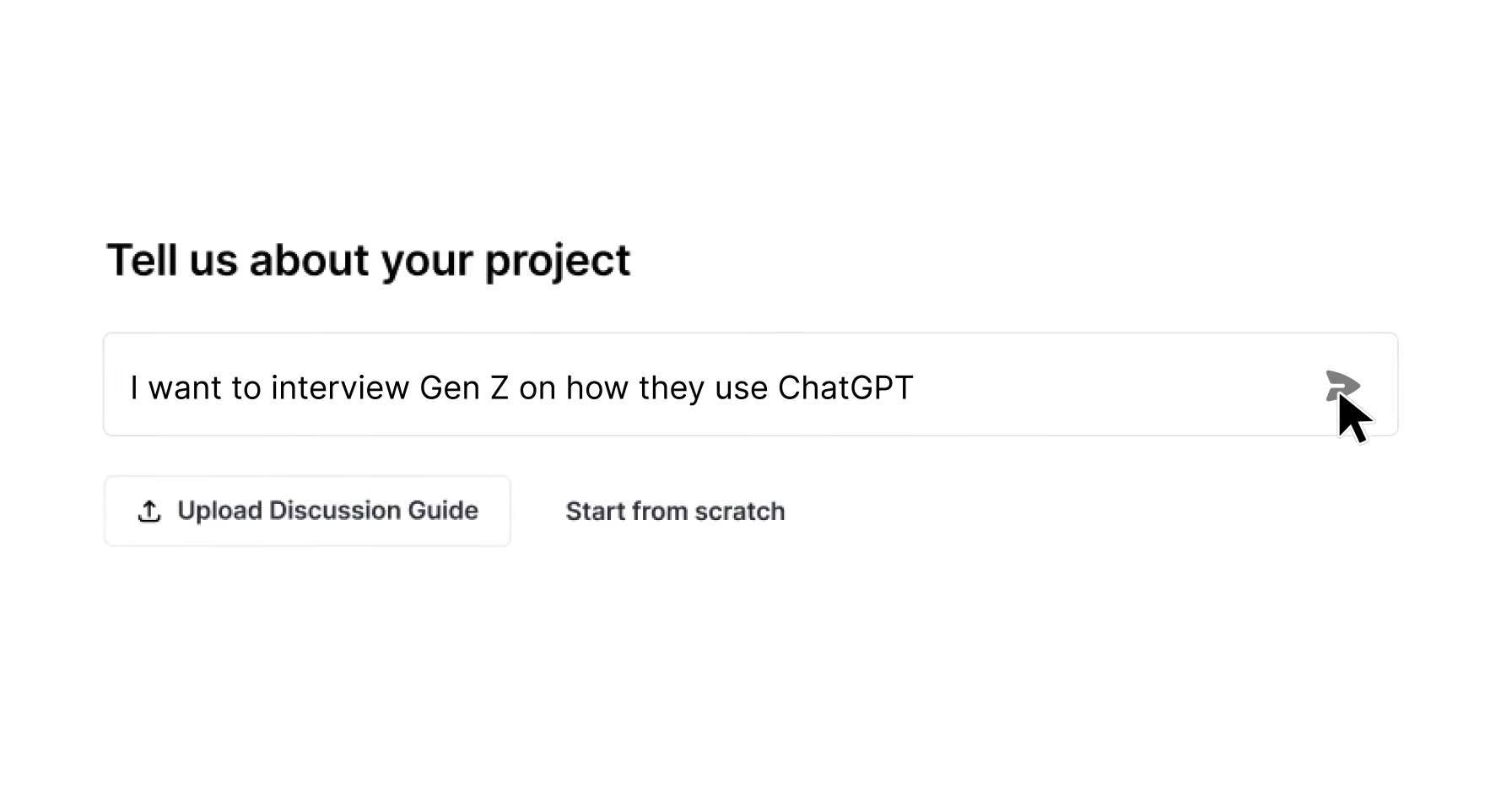
5. Conduct Multi-Stakeholder Interviews Separately
Run separate interviews for economic buyers, technical evaluators, and end users instead of joint sessions or focus groups. This separation removes social desirability bias and hierarchy effects. A procurement director will rarely contradict a CFO in a shared session but will do so in a private one-on-one. Separate sessions also let you tailor the guide to each role’s vocabulary and decision context. In a financial services study on digital onboarding, compliance officers and retail bankers surface entirely different friction points when interviewed independently.
6. Use Contextual Inquiry for Process-Heavy Workflows
Choose contextual inquiry when the research question centers on how people complete a task rather than what they think about it. Contextual inquiry means observing participants in their actual work environment. Contextual inquiry is particularly effective for complex B2B workflows where participants have difficulty articulating tacit knowledge. A tech company studying how enterprise administrators configure security settings will learn more from a 30-minute screen-share observation than from a 60-minute opinion interview. Reserve contextual inquiry for studies where process fidelity is the primary research question.
7. Triangulate with Behavioral Telemetry and CRM Data
Combine qualitative interviews with behavioral telemetry and CRM data so you can compare what people say with what they actually do. Qualitative interviews capture stated behavior and perception, while telemetry and CRM data capture observed behavior. Triangating both sources surfaces contradictions that neither dataset reveals alone. A CPG brand might hear consumers verbally endorse a product’s sustainability claims while purchase data shows no premium willingness. Triangulation does not always require merging datasets; it requires framing the research question so interview findings can be compared against available behavioral signals. Document the triangulation plan before fieldwork begins so analysis stays aligned with those signals.
8. Assess Thematic Saturation Iteratively
Thematic saturation, the point at which additional interviews produce no new themes, is the methodological standard for deciding when a qualitative sample is sufficient. In practice, saturation in homogeneous samples often occurs between 12 and 20 interviews, but heterogeneous samples may require more because each stakeholder segment introduces distinct themes. Because you cannot know in advance exactly when saturation will occur, assess it iteratively by reviewing emerging themes after every five to six interviews rather than waiting until fieldwork closes. This approach lets teams extend or close fieldwork based on evidence instead of arbitrary sample size targets.
9. Separate Recruitment from Moderation
Keep recruitment and moderation roles distinct so acquiescence bias stays low. Conflating recruitment and moderation, where the same team member who sourced participants also conducts their interviews, encourages socially desirable responses. In enterprise studies, this risk grows when participants are existing customers or internal employees. Establish a clear operational separation where one team or system handles participant sourcing and screening, and a separate moderator or AI system conducts the interview. This separation functions as basic quality control that many teams skip when deadlines feel tight.
10. Standardize Transcription and Tagging Protocols
Standardize transcription and tagging so analysts can compare interviews confidently across roles, markets, and time. Inconsistent practices introduce analyst-level variability that undermines cross-interview comparison. Establishing a shared codebook before analysis begins, with defined tags for themes, sentiment, and decision-relevant signals, ensures that two analysts reviewing the same transcript reach comparable conclusions. In enterprise studies involving multiple analysts or global markets, standardized protocols become essential. Automated transcription with human review, combined with a predefined tag taxonomy, reduces analysis time and improves inter-rater reliability.
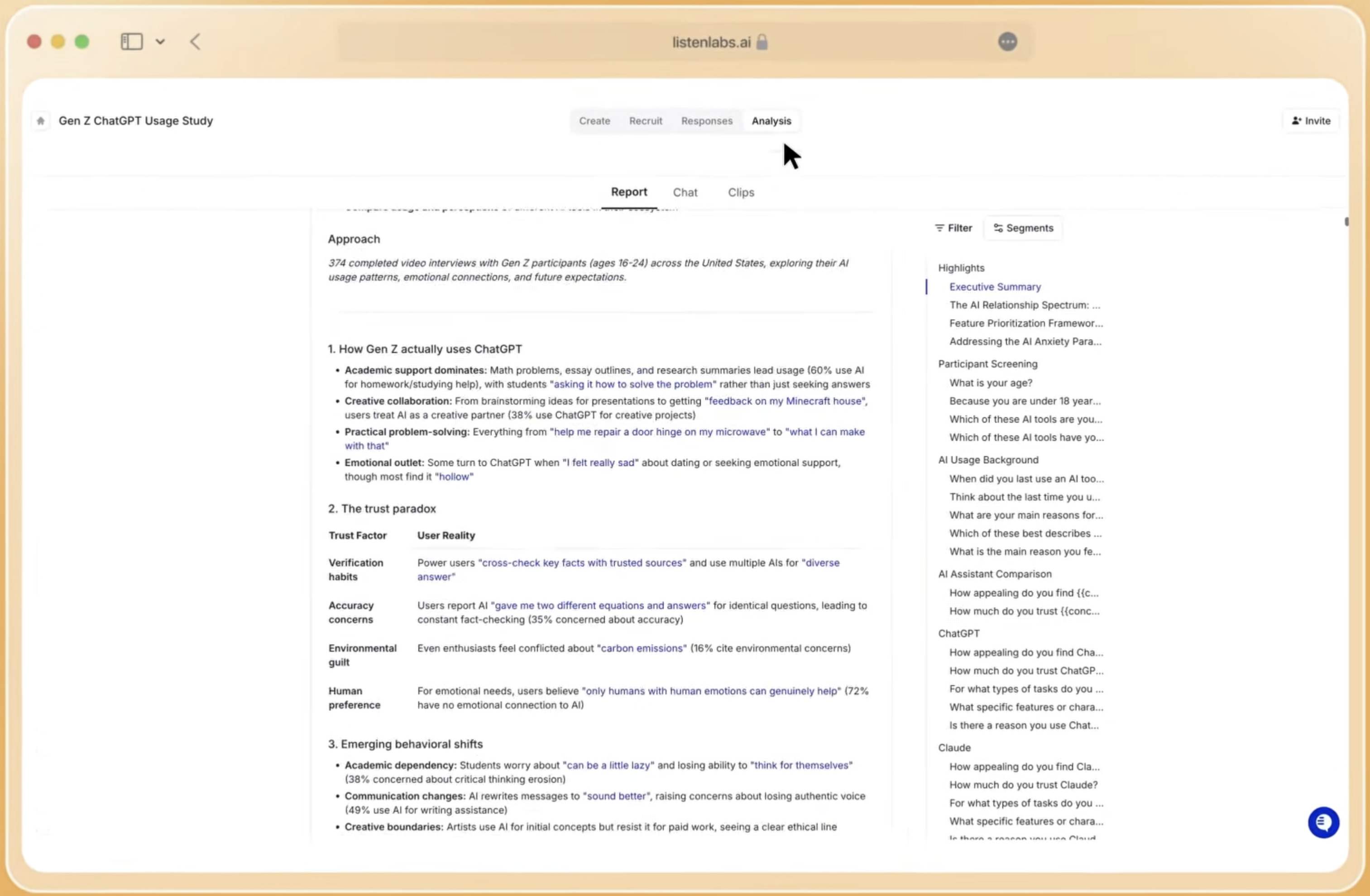
11. Validate Findings with a Stakeholder Debrief
Run a structured debrief session with internal stakeholders before you write the final report so findings gain both accuracy and ownership. The debrief serves two functions. First, it surfaces contextual knowledge that the research team may lack, which supports accurate interpretation. Second, it builds stakeholder ownership of the insights, which increases the probability that findings translate into decisions. To preserve both benefits while maintaining research integrity, frame the debrief as a structured input session rather than a consensus exercise so the research team retains interpretive authority but gains critical context. Plan for 60–90 minutes and bring a draft findings framework instead of a finished report, which signals that stakeholder input will shape the final interpretation.
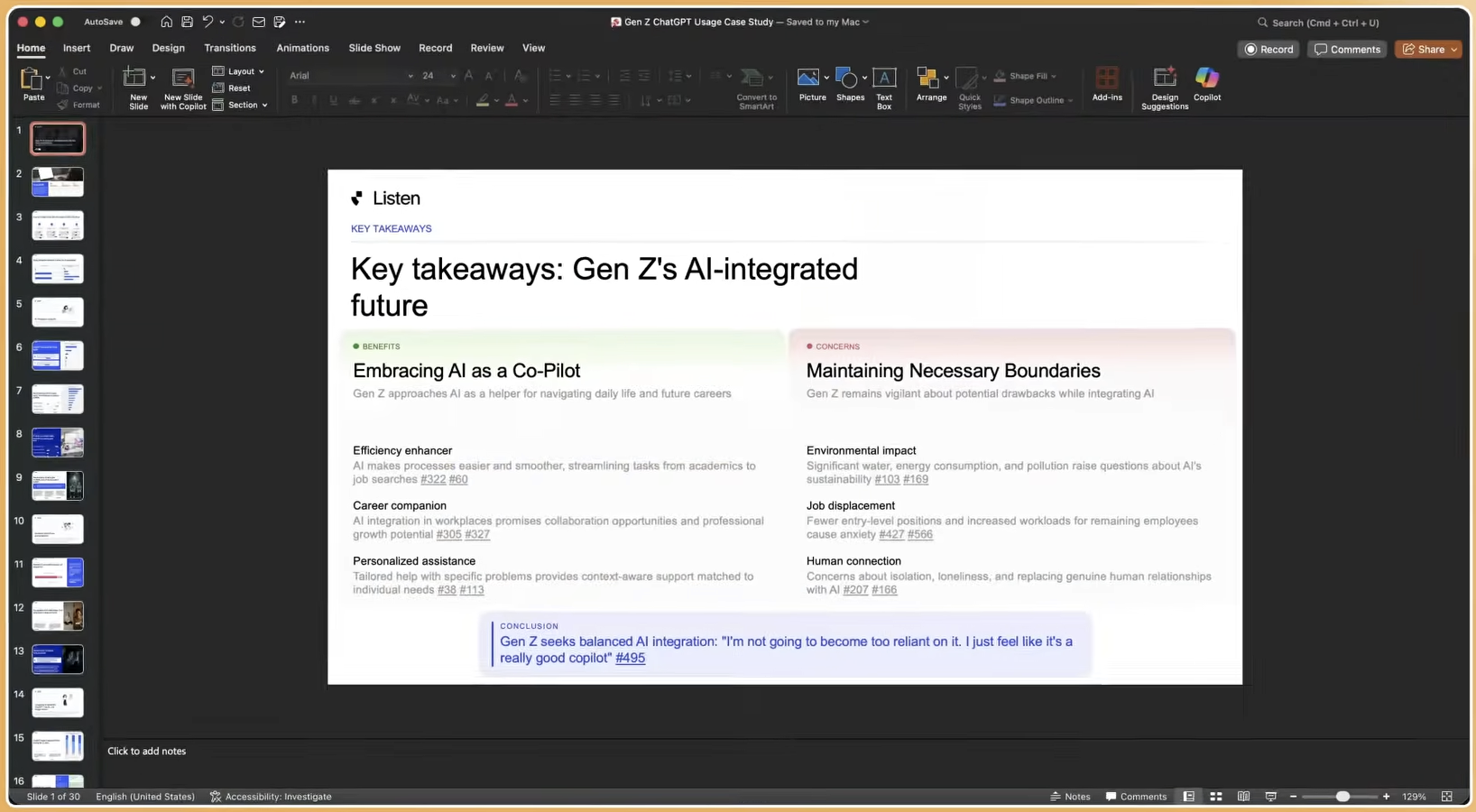
12. Document Methodological Decisions for Replication
Design every enterprise study so future teams can replicate or extend it. Document sampling criteria, quota targets, guide versions, saturation assessments, and triangulation sources in a standardized study record. This record allows future teams to replicate, extend, or compare studies across time and markets. Methodological transparency is the foundation of institutional research credibility. Without it, each study starts from zero, and the organization cannot track whether customer perceptions are shifting or stable over time.
Advanced Capabilities for Enterprise-Scale Qualitative Research
The 12 practices above represent the methodological floor for rigorous enterprise qualitative research, and three emerging capabilities are now reshaping how leading organizations operate. First, qual-at-scale, which means conducting hundreds or thousands of AI-moderated interviews simultaneously, collapses the depth-versus-scale trade-off that historically forced teams to choose between statistical confidence and rich insight. Second, emotional signal capture goes beyond transcripts to analyze tone of voice, word choice, and micro-expressions, which surfaces the gap between what participants say and what they feel, a distinction that matters greatly in creative testing and brand research. Third, always-on research programs replace the episodic study model with continuous customer intelligence so organizations can track shifting perceptions across markets and segments without restarting the research process from scratch each quarter. Platforms that operationalize all three capabilities within a single end-to-end system remove the fragmentation that slows traditional research infrastructure.
Frequently Asked Questions
How long does a rigorous enterprise qualitative study take from brief to final report?
Under traditional research infrastructure, where separate vendors handle recruitment, moderation, transcription, and analysis, a rigorous enterprise qualitative study typically takes the 4–6 weeks mentioned earlier, or longer in large enterprises with internal prioritization queues and budget approval cycles. In some organizations, the timeline can extend to 6 months. Modern AI-moderated platforms that integrate recruitment, moderation, and analysis into a single system can compress the same study to the speed discussed earlier without sacrificing methodological rigor. The critical path usually involves participant recruitment and analysis, both of which automation and large verified panel networks can address.
How many interviews are needed to achieve thematic saturation in a multi-stakeholder enterprise study?
Thematic saturation depends on how heterogeneous the sample is. In a homogeneous single-role sample, saturation often occurs at the 12–20 interview range discussed in Practice 8. Multi-stakeholder enterprise studies typically require more because each role introduces distinct themes. The most reliable approach is iterative saturation assessment: review emerging themes after every five to six interviews and extend fieldwork only if new themes are still appearing. This evidence-based approach is more defensible than fixed sample size rules.
How do enterprise research teams handle compliance and data privacy when conducting qualitative interviews across multiple markets?
Enterprise teams manage compliance and data privacy by combining clear consent, strong security controls, and market-specific protocols. Compliance requirements vary by market but generally require informed consent documentation, data residency controls, and participant anonymization. For studies spanning the EU, GDPR mandates explicit consent and the right to data deletion. Enterprise research platforms should hold SOC 2 Type II, ISO 27001, ISO 27701, and ISO 42001 certifications at minimum. Researchers should verify that transcripts and video recordings are stored with 256-bit encryption and that participant data is never used for AI model training. For studies in regulated industries such as financial services and healthcare, additional sector-specific consent language and data handling protocols are required and should be reviewed by legal counsel before fieldwork begins.
How do you recruit hard-to-reach enterprise decision-makers for qualitative studies?
Recruiting hard-to-reach enterprise audiences requires a multi-channel strategy and rigorous screening. Standard consumer panels rarely reach C-suite buyers, procurement directors, specialized engineers, or healthcare administrators. Effective approaches include B2B panel partners with verified professional profiles, niche community sourcing through industry associations and micro-networks, and self-recruitment from the organization’s own customer or user base. Dedicated recruitment operations teams that can source below 1% incidence rate audiences are particularly valuable when the target persona is highly specific. Screening rigor matters as much as sourcing, so use a detailed screener that verifies role, company size, and decision-making authority to prevent mismatched participants from diluting the sample.
When should an enterprise research team repeat a qualitative study rather than relying on past findings?
Enterprise teams should repeat a qualitative study when the underlying context has shifted enough that past findings may no longer hold. As a general rule, studies should be repeated when a significant product, pricing, or market change has occurred since the last study, when the target audience composition has shifted materially, when past findings are being used to justify a decision with high financial or reputational stakes, or when more than 12–18 months have elapsed in a fast-moving category. Always-on research programs address this problem structurally by replacing episodic studies with continuous interview programs so teams can track sentiment and need shifts in near real time instead of relying on point-in-time snapshots.
Conclusion
Applying these 12 best practices for enterprise qualitative research design, from decision-anchored objectives and quota-controlled sampling through triangulation, saturation assessment, and methodological documentation, gives research teams a framework for findings that are credible, decision-ready, and reproducible. The compounding effect is significant because teams that apply these practices consistently run more studies, generate higher stakeholder trust, and build institutional knowledge that accelerates every subsequent project. Operational speed remains the main constraint. Listen Labs operationalizes all 12 practices within a single end-to-end platform, delivering studies at the speed described earlier while maintaining the methodological rigor that enterprise decisions require.