Written by: Anish Rao, Head of Growth, Listen Labs
Key Takeaways for F&B Insights Leaders
- Traditional 4–6 week qualitative research cycles no longer match the speed required for 2026 F&B decisions driven by GLP-1 shifts, private-label competition, and nostalgia trends.
- Listen Labs delivers full research cycles, including AI-moderated interviews, analysis, and deliverables, in under 24 hours while maintaining qualitative depth that menu analytics and ERP platforms cannot provide.
- The platform captures emotional intelligence through tone, word choice, and micro-expressions, surfacing consumer motivations behind purchase decisions that operational data alone misses.
- Enterprise-grade security (SOC 2 Type II, GDPR, ISO certifications) and a 30M+ verified global respondent network across 100+ languages enable scalable, compliant research without multi-vendor coordination.
- See how Listen Labs can compress your next consumer insights project from weeks to hours by booking a tailored platform walkthrough.
Defining an Enterprise Food and Beverage Insights Platform
An enterprise food and beverage insights platform is a technology solution that helps large F&B manufacturers or restaurant groups systematically collect, analyze, and act on consumer understanding at scale. The category spans a wide spectrum. ERP suites such as Infor CloudSuite handle operational data including inventory management, production planning, compliance, and supply chain visibility, while menu analytics tools surface trend data from restaurant menus and point-of-sale systems. Neither category was designed to explain why consumers behave the way they do. Listen Labs focuses on the consumer understanding criteria that matter for insights leaders: research speed, qualitative depth, sample quality, global reach, language support, emotional intelligence capture, analysis effort, reporting transparency, enterprise security, and scalability.
Research Speed: Replacing 4–6 Week Cycles with 24-Hour Turnarounds
Legacy qualitative research cycles, from study design through recruitment, moderation, transcription, analysis, and final report, take 3–5 weeks and cost $4,000–$12,000 per 90-minute focus group session. ERP and menu analytics platforms deliver operational data faster, but they report on what already happened at the shelf or on the menu, not on the consumer motivations driving those outcomes. By the time a traditional qualitative study closes, the business context has often shifted.
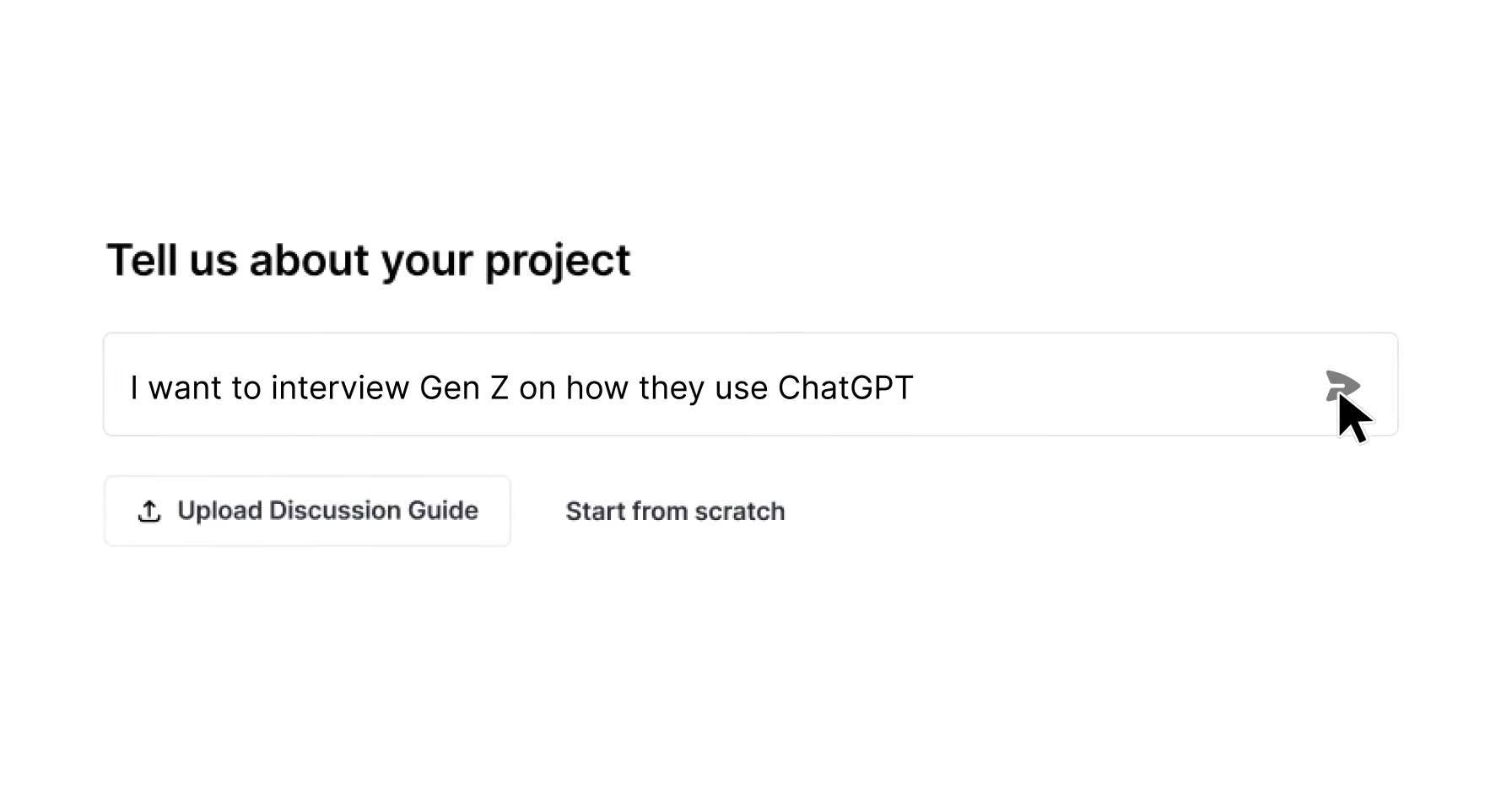
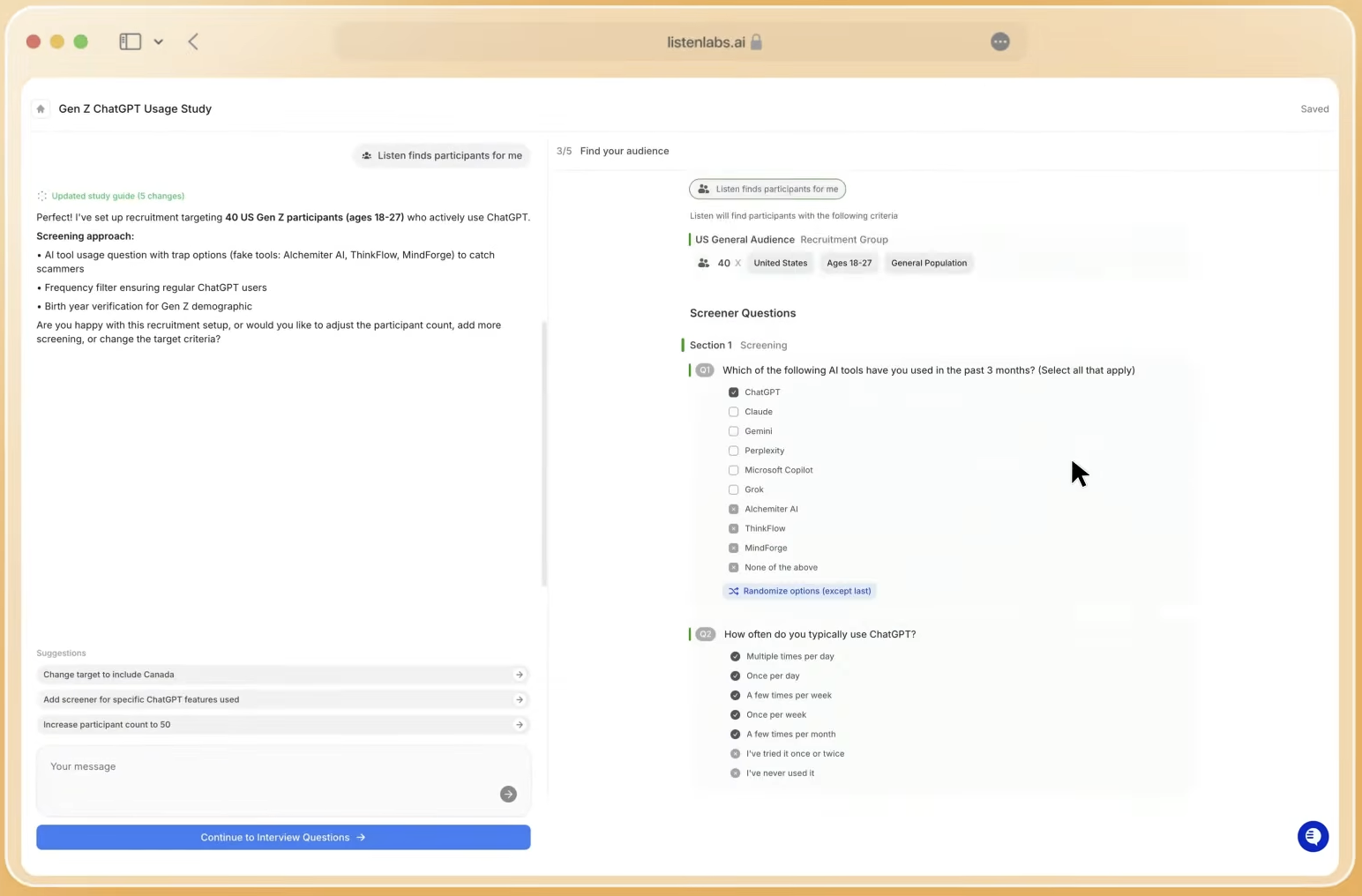
Listen Labs compresses the entire lifecycle, including AI-assisted study design, global recruitment, AI-moderated video interviews, automated analysis, and consultant-quality deliverables, to under 24 hours. Platforms like Listen Labs layer on auto-recruiting, transcription, sentiment tagging, and insight summarization so teams move from question to findings in hours, not weeks. This speed advantage becomes critical when teams respond to fast-moving consumer trends that demand immediate validation.
GLP-1 Users and Rapid Menu Innovation in 2026
One in eight U.S. adults is currently taking a GLP-1 drug, and UBS projects 40 million global GLP-1 users by 2029. AI-moderated interviews conducted through Listen Labs surface the behavioral nuance behind these numbers in real time. Interview data shows GLP-1 users are not simply eating less. They are actively seeking higher protein density, smaller portion formats, and reduced ultra-processed ingredients. EY-Parthenon survey data confirms GLP-1 users reduced snack category consumption by 40–60%. Validating which specific reformulations resonate emotionally, not just nutritionally, requires adaptive, probing conversations that menu analytics cannot conduct. To validate GLP-1 consumer behavior shifts in your category within 24 hours, schedule a platform walkthrough with the Listen Labs team.
Qualitative Depth: Explaining What Menu Analytics Only Signal
Menu analytics platforms excel at identifying which items appear on menus and how frequently, but they cannot explain the emotional drivers behind a consumer’s choice to order or avoid a dish. ERP suites track what sold, yet they do not capture hesitation, ambivalence, or the unarticulated desire that precedes a purchase decision. Qualitative data methods make up for limitations in speed and sample size tenfold in their ability to uncover nuance and complexity in human decision-making.
Listen Labs conducts AI-moderated video interviews with dynamic follow-up questions that probe deeper on short or ambiguous answers. This behavior replicates a trained human interviewer. AI can schedule and conduct the interview, analyze transcripts for themes, and generate quantitative insights from those interviews, all within a single platform session.
Nostalgia and Comfort-Food Choices in 2026
Pinterest Predicts 2026 found that nearly 4 in 10 consumers worldwide are cooking or eating traditional comfort foods, with nostalgia serving as an emotional anchor. Innova research found that 44% of U.S. and Canadian consumers say their food and beverage choices are most influenced by traditional and nostalgic flavors. Interview data from Listen Labs studies reveals that this nostalgia is not uniform. Younger consumers connect comfort foods to identity and social belonging. Older cohorts associate them with safety and predictability during economic uncertainty.
A 2025 Purdue University Consumer Food Insights survey found that 82% of respondents changed their shopping behavior due to high prices, primarily by trading down to cheaper brands and cutting back on non-essential treats. This behavior intersects directly with comfort-food demand. Menu analytics surfaces the trend, while AI-moderated interviews explain the emotional architecture beneath it.
Sample Quality and Global Reach: From Commodity Panels to Verified Respondents
Commodity quantitative panels carry well-documented quality risks such as professional survey-takers, incentive-driven responses, and fraudulent profiles that bias findings before analysis begins. Traditional research agencies address quality through manual recruitment, but that process reintroduces the 4–6 week timeline. Menu analytics tools draw on point-of-sale and menu-database sources that are geographically limited to markets with structured data infrastructure.
Listen Labs operates a global network of 30 million verified respondents across 45+ countries. To ensure quality at this scale, the platform uses a three-layer verification system. Listen Atlas, the AI orchestration layer, first matches participants on behavioral and intent signals rather than self-reported demographics alone, so the right people enter each study. Quality Guard then monitors every interview in real time for fraud, low-effort responses, and repeat respondents, catching quality issues as they occur. Finally, participants are capped at three studies per month to eliminate panel fatigue and prevent degradation from over-surveying the same individuals. Listen Labs has conducted over one million AI-powered customer interviews for companies including Microsoft, Perplexity, and Sweetgreen.
Private-Label and Value Shifts in Brand Perception
Mintel values the U.S. private label food and drink market at $141.2 billion in 2024. NIQ reports that 75% of consumers say private labels offer good value and 72% view them as strong alternatives to national brands. Cross-market interview data from Listen Labs studies shows that brand perception erosion is not uniform across geographies. In some European markets, private-label adoption is driven by quality perception. In U.S. markets, it remains primarily price-driven.
Qual-at-scale is ideal when research requires large sample sizes or broad geographic reach, as AI tools can engage hundreds or thousands of participants remotely and asynchronously. A single Listen Labs study can segment these dynamics by country, income band, and purchase frequency at the same time.
Language Support and Emotional Intelligence for Global Teams
Legacy menu analytics platforms and ERP suites are typically English-first, with limited multilingual capability for consumer-facing research. Traditional research agencies running multilingual studies must coordinate separate moderators, translators, and analysts per market, which multiplies both cost and timeline. Listen Labs supports 100+ languages for interview moderation with automatic translation and transcription. This capability enables a single study to run simultaneously across markets without separate vendor coordination.
Beyond language, Listen Labs’ Emotional Intelligence feature analyzes three signal layers, including tone of voice, word choice, and subconscious micro-expressions, to surface emotions that transcripts alone miss. Built on Ekman’s universal emotions framework, every emotional label is traceable to the exact timestamp, verbatim quote, and reasoning behind it. This capability applies directly to product-claim validation. P&G used Listen Labs to evaluate how men respond to new product claims, surfacing where claims felt exaggerated or unclear before market launch and delivering 250+ interviews with quantified themes and verbatim proof that shaped product and brand strategy. Nestlé has applied the platform to consumer research across multiple markets simultaneously, a task that would require months of coordinated fieldwork through traditional agency channels.
Analysis Effort, Reporting Transparency, and Research Scalability
Manual qualitative analysis is time-consuming, subjective, and prone to confirmation bias. Analysts reviewing interview transcripts may unconsciously emphasize findings that align with pre-existing hypotheses. ERP and menu analytics platforms generate structured reports from structured data, but consumer insight requires interpretation of unstructured conversational data, which does not fit within their architecture.
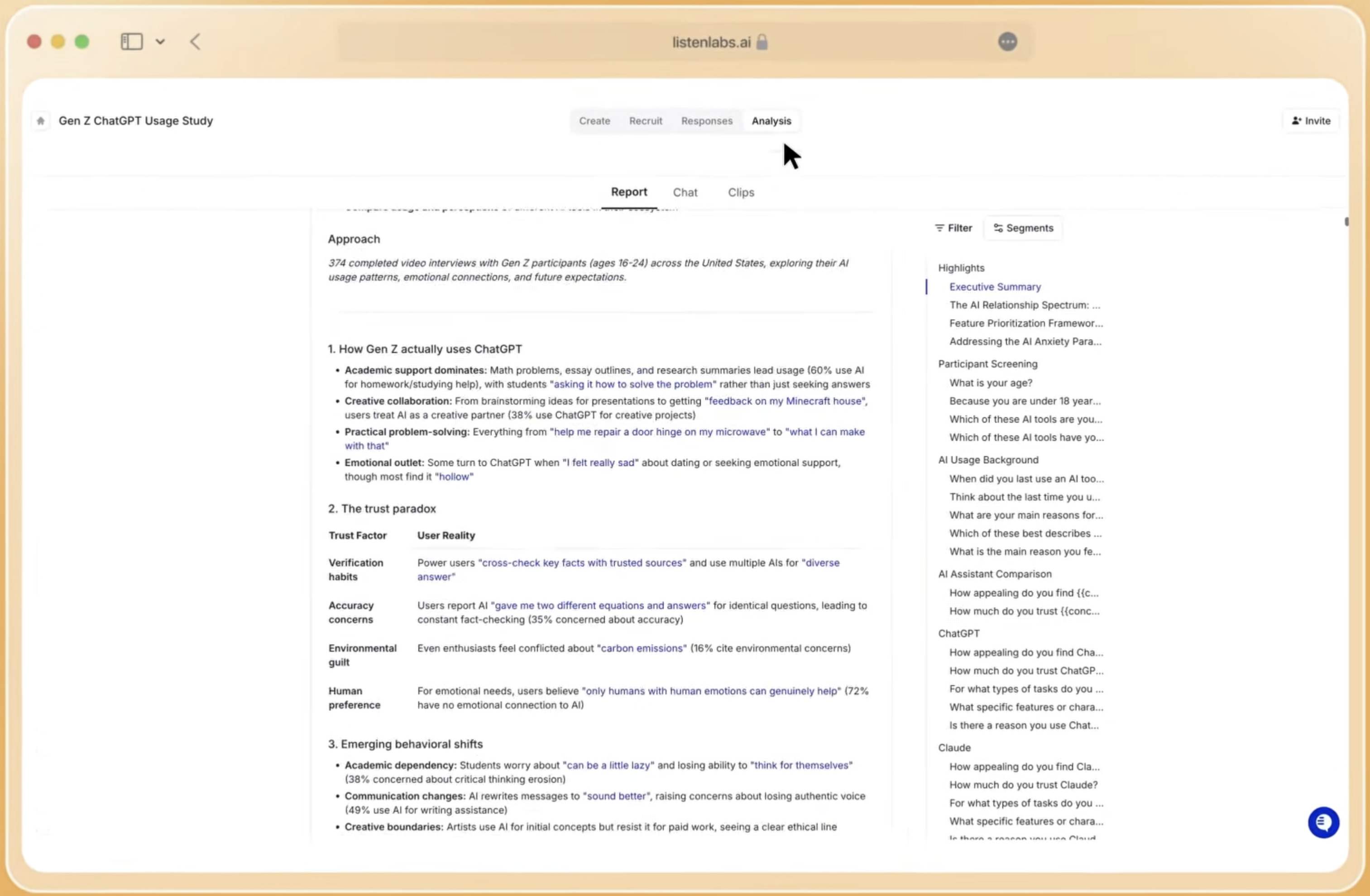
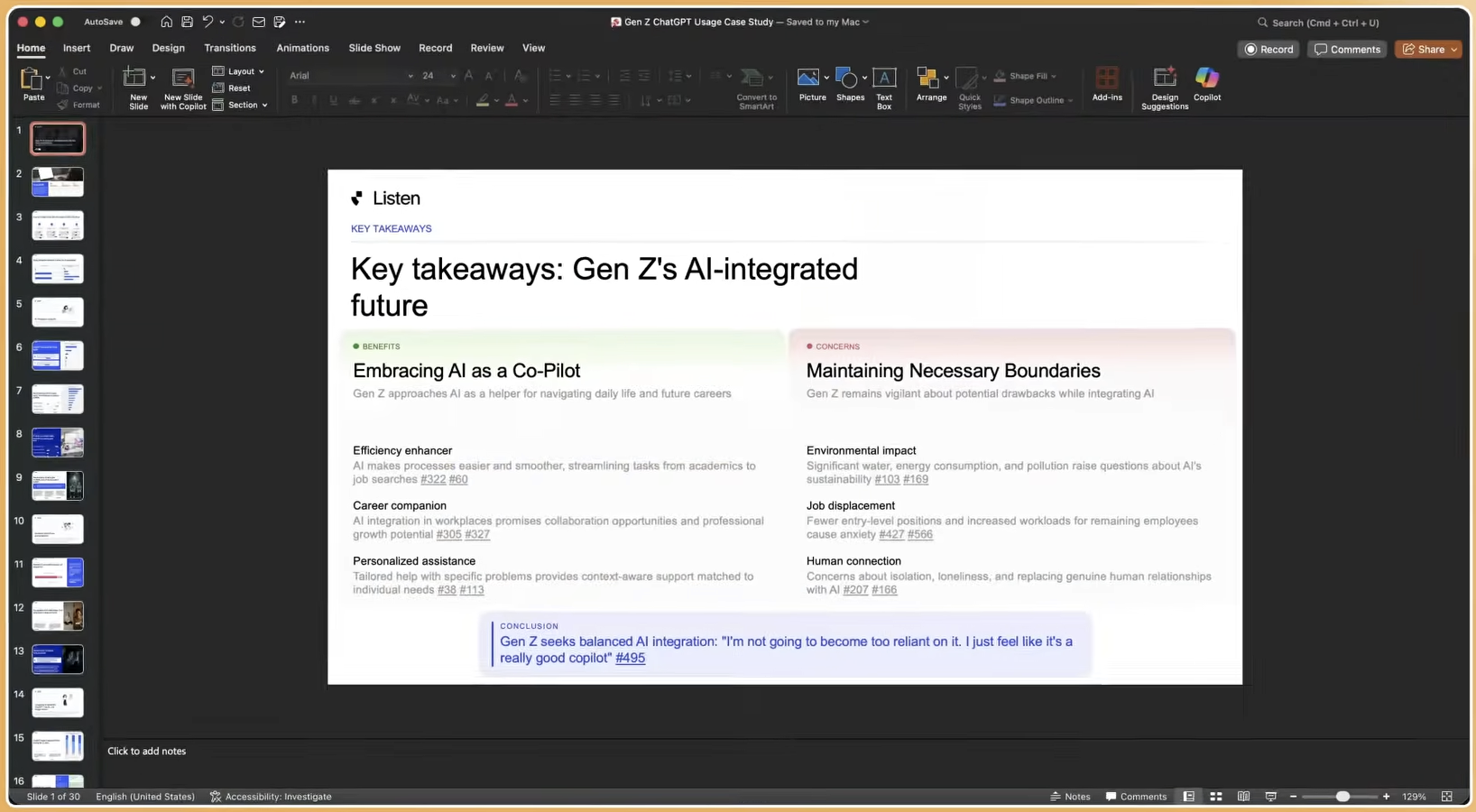
Listen Labs’ Research Agent processes all interview data objectively, identifying patterns and themes across hundreds of responses without human bias. One-click deliverables such as slide decks, memos, video highlight reels, statistical charts, and segmentation breakdowns are generated in under a minute. Every finding is traceable to the source interview, timestamp, and verbatim quote, which provides the reporting transparency that enterprise stakeholders need for decision confidence. Mission Control serves as the organization’s cross-study knowledge base, enabling teams to query past research in seconds and track consumer sentiment over time rather than re-researching the same questions repeatedly. Request a live demonstration of the Research Agent and Mission Control to see automated analysis in action.
Enterprise Security and Compliance for Global F&B Research
Global F&B consumer research involves cross-border data collection subject to a fragmented regulatory landscape. Multinational enterprises must navigate GDPR in Europe, CCPA in the U.S., and sector-specific frameworks, with regulatory convergence limited and overlapping compliance obligations common across countries. This regulatory complexity increases when organizations use fragmented vendor stacks with separate tools for recruitment, scheduling, moderation, transcription, and analysis, because each vendor relationship multiplies the compliance surface area and introduces data handoff risks at every integration point.
Listen Labs consolidates the entire research lifecycle within a single platform certified to SOC 2 Type II, GDPR, ISO 27001, ISO 27701, and ISO 42001 standards. Customer data is never used for AI model training, and 256-bit encryption is applied throughout. Enterprise SSO is supported. A single vendor relationship replaces the compliance overhead of managing five or more point solutions.
Best-Fit Use Cases for Enterprise Insights Teams
Menu-trend validation is a primary application for F&B insights teams. When a trend signal appears in menu analytics data, such as a spike in protein-forward dishes or a surge in fermented ingredients, Listen Labs can field a validation study within hours to determine whether the trend reflects genuine consumer demand or operator experimentation. Product-claim testing, as demonstrated in the P&G engagement, benefits from the platform’s ability to surface emotional reactions to specific language before claims reach packaging or advertising. Brand-perception tracking across markets, as applied by Nestlé, uses the 30M+ respondent network and 100+ language support to run continuous sentiment studies without the coordination overhead of multi-agency fieldwork.
Operational Considerations and Change Management
Adopting an AI interview platform alongside existing ERP and menu analytics infrastructure requires stakeholder alignment across insights, IT, legal, and procurement. The compliance certifications described above address the legal and IT review requirements that often extend enterprise procurement timelines. For insights teams, the primary change management consideration is workflow integration. Listen Labs is designed to complement existing research operations rather than replace them, functioning as a force multiplier that enables the same team to run significantly more studies per quarter.
Mission Control’s cross-study knowledge management reduces the institutional knowledge loss that occurs when research findings are stored in siloed slide decks and individual researchers’ memories.
Risks and Limitations of Traditional and AI-Driven Approaches
Legacy menu analytics and ERP suites carry the risk of insight latency. By the time operational data signals a consumer behavior shift, the window for proactive product or brand response has often closed. Traditional qualitative research compounds this with backlog risk. In large enterprises, internal prioritization and budget approval can extend the research cycle to six months, which can render findings stale on delivery.
AI interview platforms introduce different considerations. Study design quality directly affects output quality, and poorly constructed discussion guides produce shallow findings regardless of platform capability. Listen Labs addresses this through AI-assisted study co-design and an in-house research team with 50+ years of combined expertise that reviews methodology continuously. Organizations bringing niche or proprietary audiences can use self-recruitment at reduced cost, preserving flexibility for studies that require existing customer bases.
Decision Framework: Matching Tools to Research Goals
For operational decisions such as yield optimization, inventory planning, and supply chain compliance, ERP suites remain the appropriate tool. For menu trend monitoring at the category level, menu analytics platforms provide useful signal data. The decision to deploy an AI interview platform is driven by the need to understand consumer motivation, emotional response, and behavioral intent at speed and scale.
If the research question requires knowing what consumers think or feel about a product claim, a menu concept, a brand positioning, or a competitive shift, and the answer is needed in days rather than weeks, an AI interview platform is the appropriate solution. Listen Labs raised $69 million in a Series B round led by Ribbit Capital at a valuation over $500 million, reflecting enterprise confidence in the category’s maturity. With qual-at-scale, the old trade-off between depth and scale is no longer a barrier.
Frequently Asked Questions
How quickly can Listen Labs deliver results compared with traditional F&B research cycles?
Listen Labs compresses the full research lifecycle, including study design, participant recruitment, AI-moderated interviews, analysis, and deliverable generation, to under 24 hours. Traditional qualitative research cycles in enterprise F&B settings typically run 4–6 weeks from brief to final report, and internal prioritization and budget approval processes can extend that to six months in large organizations. The 24-hour turnaround applies to studies using Listen Labs’ 30M+ respondent network. Studies using self-recruited participants from a brand’s own customer base follow a similar timeline at reduced cost.
How does Listen Labs ensure participant quality for niche F&B audiences?
Listen Labs applies three layers of quality control. First, the platform works exclusively with high-quality, non-commodity panel sources, avoiding professional survey-takers. Second, Quality Guard monitors every interview in real time across video, voice, content, and device signals to detect fraud, low-effort responses, AI-generated scripts, and mismatched profiles. Third, a dedicated recruitment operations team adds a human review layer and handles hard-to-reach segments including GLP-1 users, premium grocery shoppers, or specific regional consumer cohorts. The platform enforces the monthly participation cap mentioned earlier to prevent panel fatigue. For audiences below 1% incidence rate, the recruitment operations team partners with niche communities and specialized networks.
What emotional data does the platform capture that menu analytics cannot?
The Emotional Intelligence feature described earlier tracks eight core emotions, including anger, anticipation, disgust, fear, joy, sadness, trust, and surprise, using Ekman’s clinical psychology framework. This capability means an F&B brand can identify not just that a product claim received positive ratings, but whether it triggered genuine trust or masked confusion, a distinction that menu analytics and survey data cannot make. The feature is available across 50+ languages and integrates directly with the Research Agent for natural-language queries and highlight reels of emotionally significant moments.
Which security certifications support global F&B consumer research?
Listen Labs holds SOC 2 Type II, GDPR, ISO 27001, ISO 27701, and ISO 42001 certifications. The platform applies 256-bit encryption throughout, supports enterprise SSO, and does not use customer data for AI model training. These certifications cover the primary compliance requirements for cross-border consumer data collection in North America, Europe, and APAC markets. A single platform relationship replaces the compliance overhead of managing separate vendors for recruitment, moderation, transcription, and analysis.
Can teams bring their own participants instead of using the 30M network?
Teams can bring their own participants instead of relying solely on the 30M+ network. Listen Labs supports self-recruitment, enabling organizations to field studies with their own customer base, loyalty program members, or proprietary panels at a reduced credit cost per participant. Teams can also bring their own panel provider. This flexibility is particularly relevant for F&B brands conducting longitudinal brand-perception tracking with existing customers or testing new product concepts with verified purchasers of a specific SKU. The full platform, including AI-moderated interviews, Emotional Intelligence, Research Agent analysis, and Mission Control knowledge management, applies regardless of whether participants come from the Listen Labs network or a brand’s own database.
Conclusion: Selecting the Right F&B Insights Platform for 2026
ERP suites and menu analytics platforms serve essential operational functions in enterprise F&B organizations, but they were not built to answer the consumer motivation questions that drive product innovation, brand positioning, and menu strategy. Traditional research timelines are no longer compatible with the pace of GLP-1-driven reformulation, private-label competitive pressure, and nostalgia-driven menu trends that define the 2026 F&B landscape. Listen Labs delivers consultant-quality qualitative depth across 30M+ verified respondents, 45+ countries, and 100+ languages in under 24 hours, functioning as a force multiplier for existing insights teams without requiring additional headcount. See how Listen Labs can compress your next consumer insights cycle from weeks to hours by requesting a customized demo.