
Written by: Anish Rao, Head of Growth, Listen Labs
Key Takeaways
-
Listen Labs leads Outset.ai alternatives with end-to-end AI research cycles under 24 hours, 30M+ global participants, and Emotional Intelligence analysis.
-
Outset.ai creates challenges with high costs, rigid structures, and slower timelines compared to newer AI-first research platforms.
-
Alternatives like UserTesting and Prolific excel in UX or recruitment but lack fully integrated AI moderation and deep analysis.
-
Listen Labs delivers one-third traditional costs, under 1% fraud rates, enterprise security, and automated deliverables such as slide decks.
-
Fortune 500 teams including Microsoft and P&G trust Listen Labs for qual-at-scale; see how enterprise teams 10x their research output.
Top 10 Outset.ai Alternatives for 2026
These platforms were evaluated across six dimensions: end-to-end workflow coverage, speed-to-insight, participant quality and fraud prevention, emotional depth analysis, global reach, and enterprise security. They fall into three groups. Listen Labs and UserTesting act as more comprehensive solutions. User Interviews, Prolific, and Respondent focus on recruitment. Dovetail, Qualtrics, SurveyMonkey, Strella, and Glaut lean toward analysis or lighter research needs. Here is how each option compares.
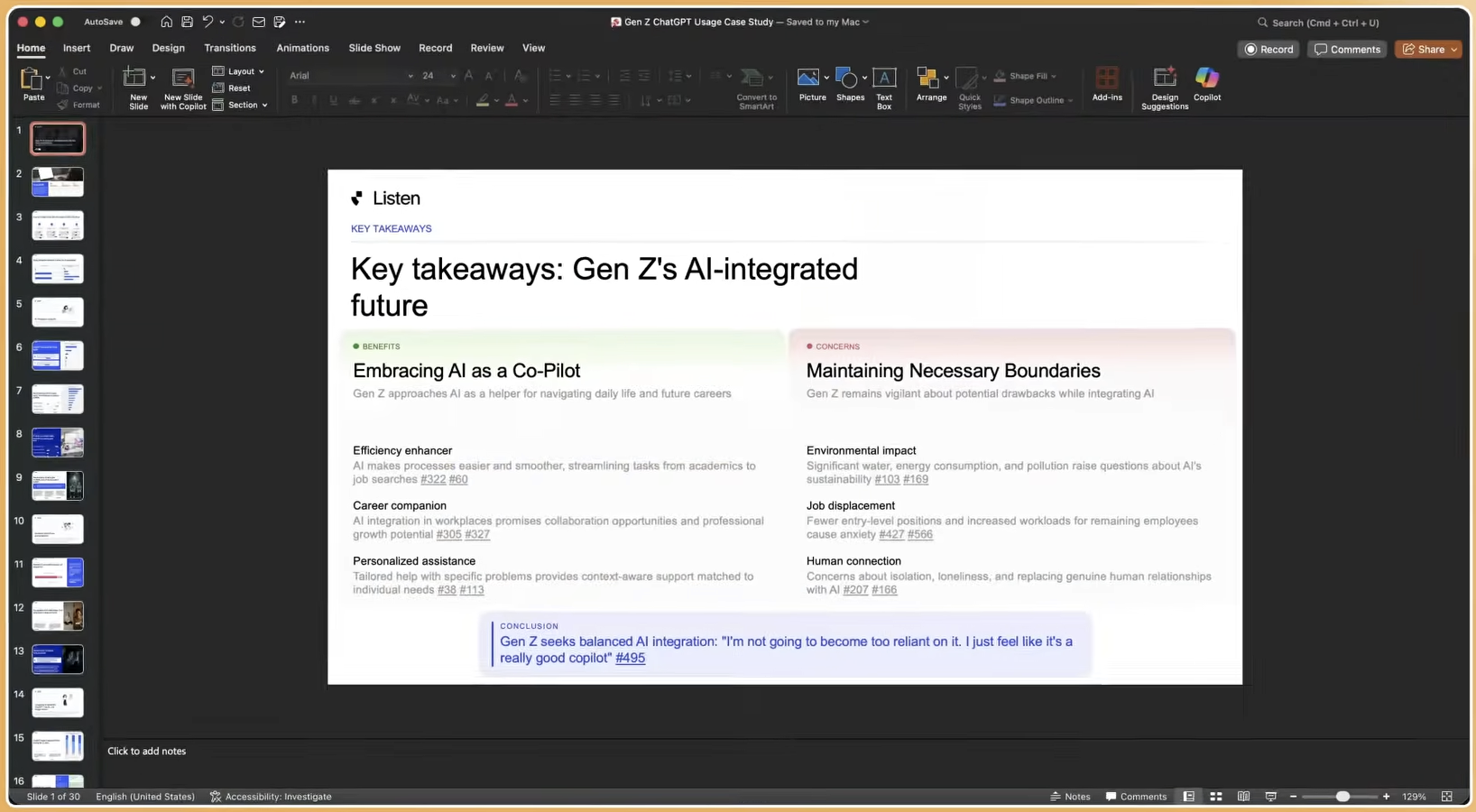
#1 Listen Labs – A full-stack AI research platform that removes the usual trade-off between depth and scale. Listen Labs provides access to a global network of 30M verified participants across 45+ countries, running AI-moderated adaptive interviews with dynamic follow-up questions in 50+ languages. The Emotional Intelligence system reads tone, micro-expressions, and subconscious signals using Ekman’s framework, while Quality Guard fraud controls keep fraud rates below 1%. Listen Labs completes full research cycles in under 24 hours at the cost savings mentioned earlier, with enterprise adoption including Microsoft, Anthropic’s analysis of 300+ churn interviews in 48 hours, and P&G. The Research Agent produces consultant-quality deliverables such as slide decks, highlight reels, and statistical summaries, and Mission Control builds a searchable knowledge base across studies. Security features include SSO, GDPR compliance, and ISO certifications.
#2 UserTesting – Strong for UX research and participant recruitment with familiar workflows. The platform relies on human moderation, which limits scalability and speed. UserTesting offers AI summaries and sentiment analysis but has testing constraints and fewer advanced features than fully AI-moderated platforms. It suits teams that prioritize established UX processes over rapid, high-volume qual.
#3 User Interviews – A recruitment-focused tool that connects teams with participants but does not manage full research execution. It lacks integrated AI moderation and deep analysis, so teams must handle interviewing and synthesis elsewhere. It works best for organizations that already have strong internal research operations and only need sourcing.
#4 Prolific – A panel marketplace that provides participant access without built-in moderation or analysis. Teams must pair Prolific with separate tools for interviews and synthesis, which creates extra steps and slows time-to-insight. It fits budget-conscious teams that accept more manual work.
#5 Respondent – A specialist in niche B2B recruitment. Respondent helps reach specific professional audiences but offers limited end-to-end capabilities. Teams still need additional tools for moderation and analysis, which reduces efficiency for high-volume research programs.
#6 Dovetail – A research repository and analysis hub rather than a data collection tool. Dovetail helps organize and tag existing research but does not run new interviews. It supports teams that already collect data elsewhere and want a better way to store and synthesize it.
#7 Qualtrics – A leader in large-scale quantitative surveys with basic qualitative features. Its qual tools lack the conversational depth and adaptive follow-up needed for rich interviews. It works best when quant tracking is the primary goal and qual plays a supporting role.
#8 SurveyMonkey – A simple survey platform focused on structured questions and basic reporting. It does not offer AI moderation or deep qualitative analysis. It is suitable for straightforward feedback collection rather than strategic customer understanding.
#9 Strella – A newer tool that delivers fast synthesis and an efficient interface. It has limited global reach and fewer enterprise controls. Smaller teams that need quick directional insights and lighter governance find it useful.
#10 Glaut – A platform for multilingual hybrid voice and text interviews with support for over 50 languages. It still trails full-stack alternatives on scale, emotional depth, and enterprise security.
See how end-to-end AI research transforms your workflow with a platform that removes the usual trade-offs between depth and scale.
Outset.ai Pricing Compared to Alternatives
Outset.ai’s enterprise pricing model often blocks teams from scaling qualitative research. Buyer reports describe high base costs plus additional usage fees. Outset.ai supports recruitment from over 1 billion participants across 80+ countries, custom panels, and bespoke projects, which further increases spend for complex studies.
Listen Labs uses a credit-based system that achieves the one-third cost reduction by bundling recruitment, AI moderation, and analysis into a single workflow. Teams can also use self-recruitment to lower costs further. User Intuition charges $20 per audio interview with no annual contracts, while platforms like Prolific charge per participant without integrated analysis.
Outset.ai Speed Limitations
Outset.ai’s weeks-long research cycles slow decisions for product, marketing, and strategy teams. Traditional focus groups take 3-5 weeks and cost $4,000-$12,000 per session, and Outset.ai’s async video prompts with fixed sequences often stretch timelines further.
Listen Labs compresses the full research cycle to under 24 hours through AI orchestration, automated recruitment, and instant analysis. User Intuition typically delivers results in 48-72 hours but still depends on human effort. Strella offers fast synthesis but lacks the depth and global reach of more comprehensive platforms.
Participant Quality and Fraud Risks
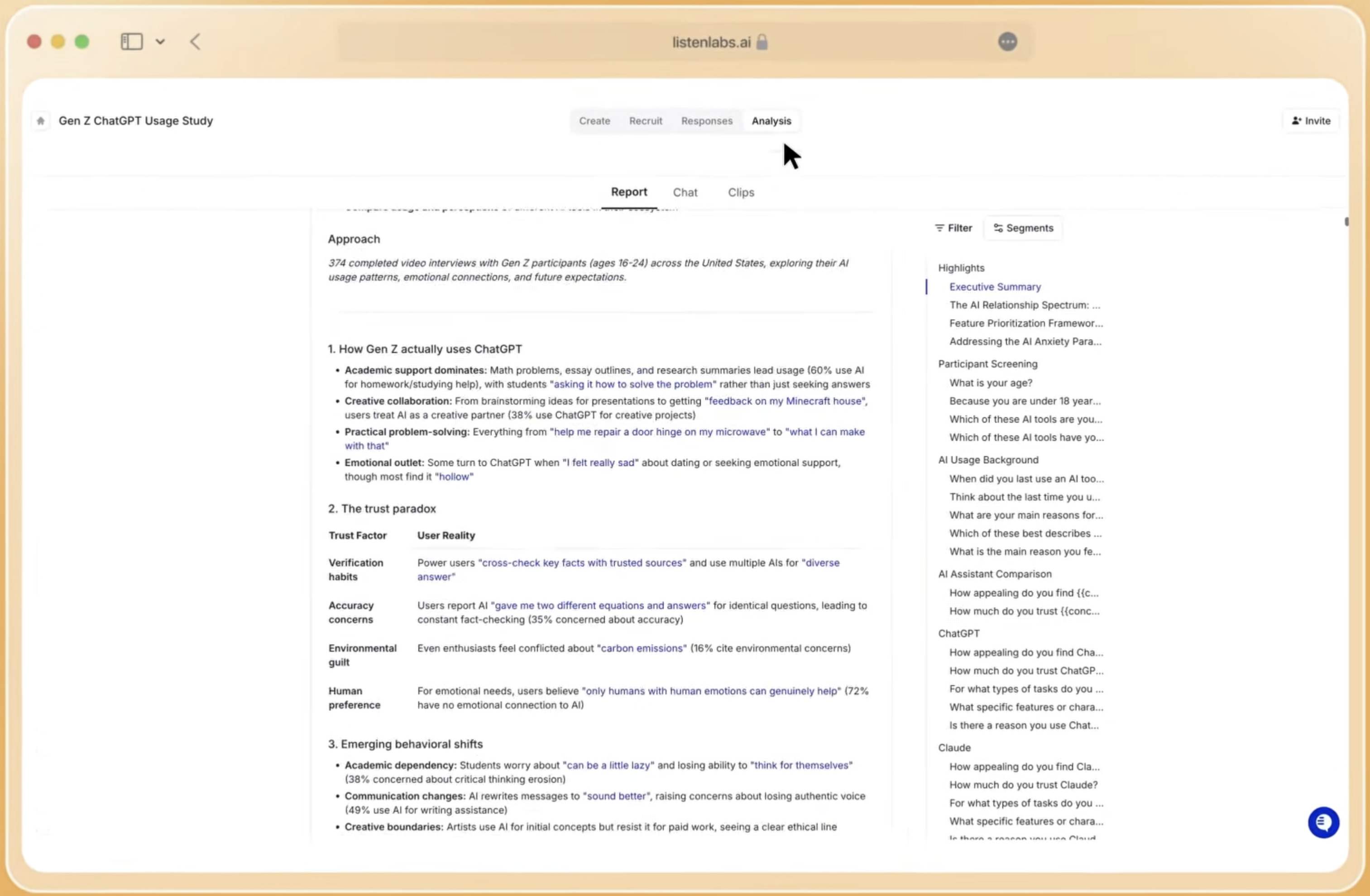
Many alternatives rely on commodity panels filled with professional survey-takers and fraudulent accounts, which undermines data quality. Listen Labs addresses this with a three-layer quality system. First, Atlas AI orchestration matches participants using behavioral patterns beyond basic demographics so the right people enter each study. Second, Quality Guard monitors video, voice, and content signals in real time to flag suspicious behavior as it happens. Third, dedicated recruitment operations limit each participant to three studies per month, which prevents professional survey-takers from dominating the panel.
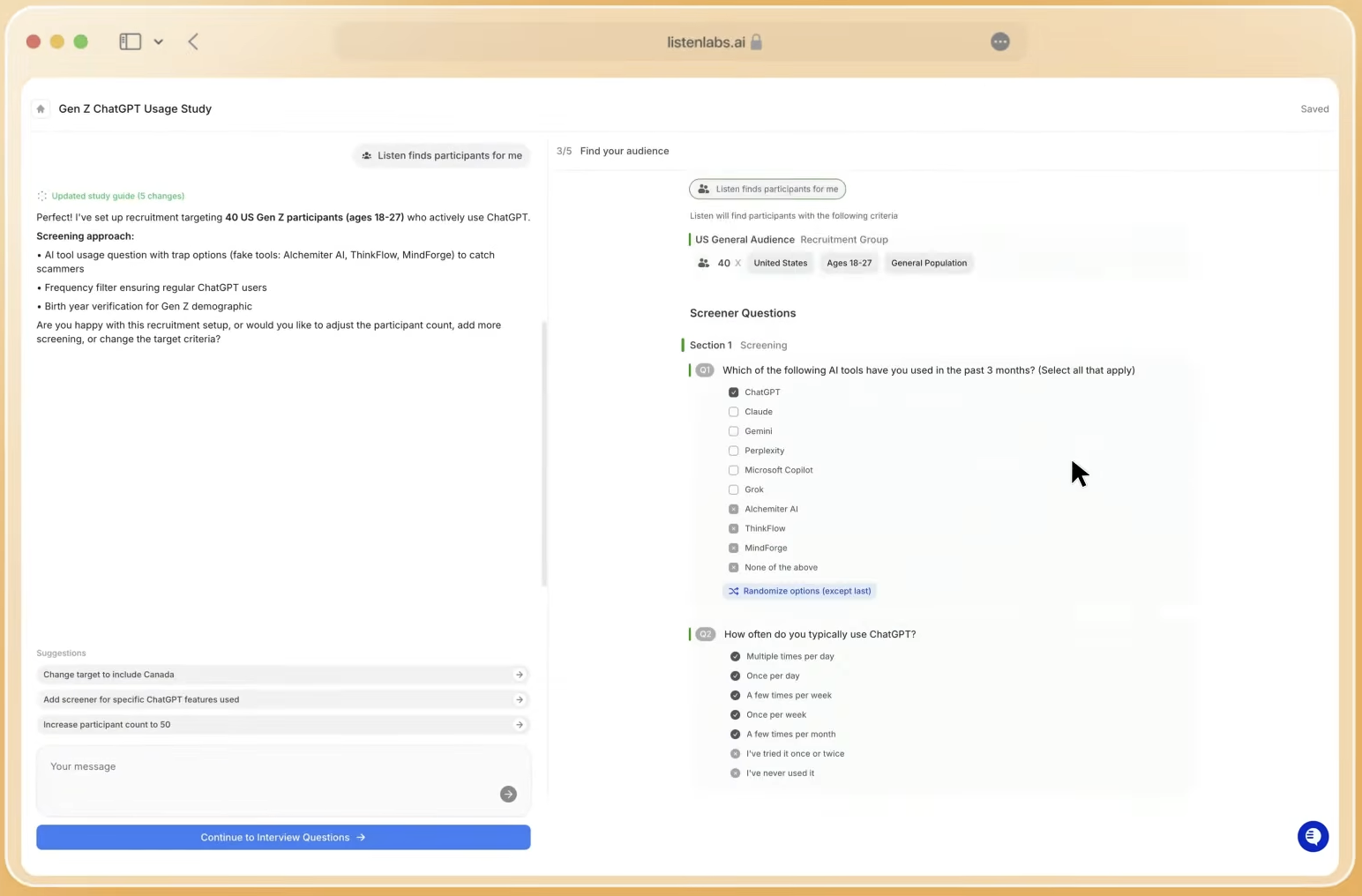
This layered approach keeps fraud rates below 1% while drawing on the verified global network mentioned earlier. User Intuition reports 98% participant satisfaction with built-in fraud controls, while platforms like Prolific and Respondent depend more heavily on commodity panels with higher risk.
Emotional Depth and Analysis Capabilities
Outset.ai’s transcript-first approach often misses emotional cues that drive real behavior. Listen Labs’ Emotional Intelligence system reads tone of voice, word choice, and micro-expressions using Ekman’s universal emotions framework. The platform quantifies emotions for every question with timestamps and clear reasoning, and supports this analysis across 50+ languages.
Glaut offers hybrid analysis features but with less traceability and weaker enterprise integrations than dedicated emotional intelligence platforms.
Best-Fit Use Cases by Team Type
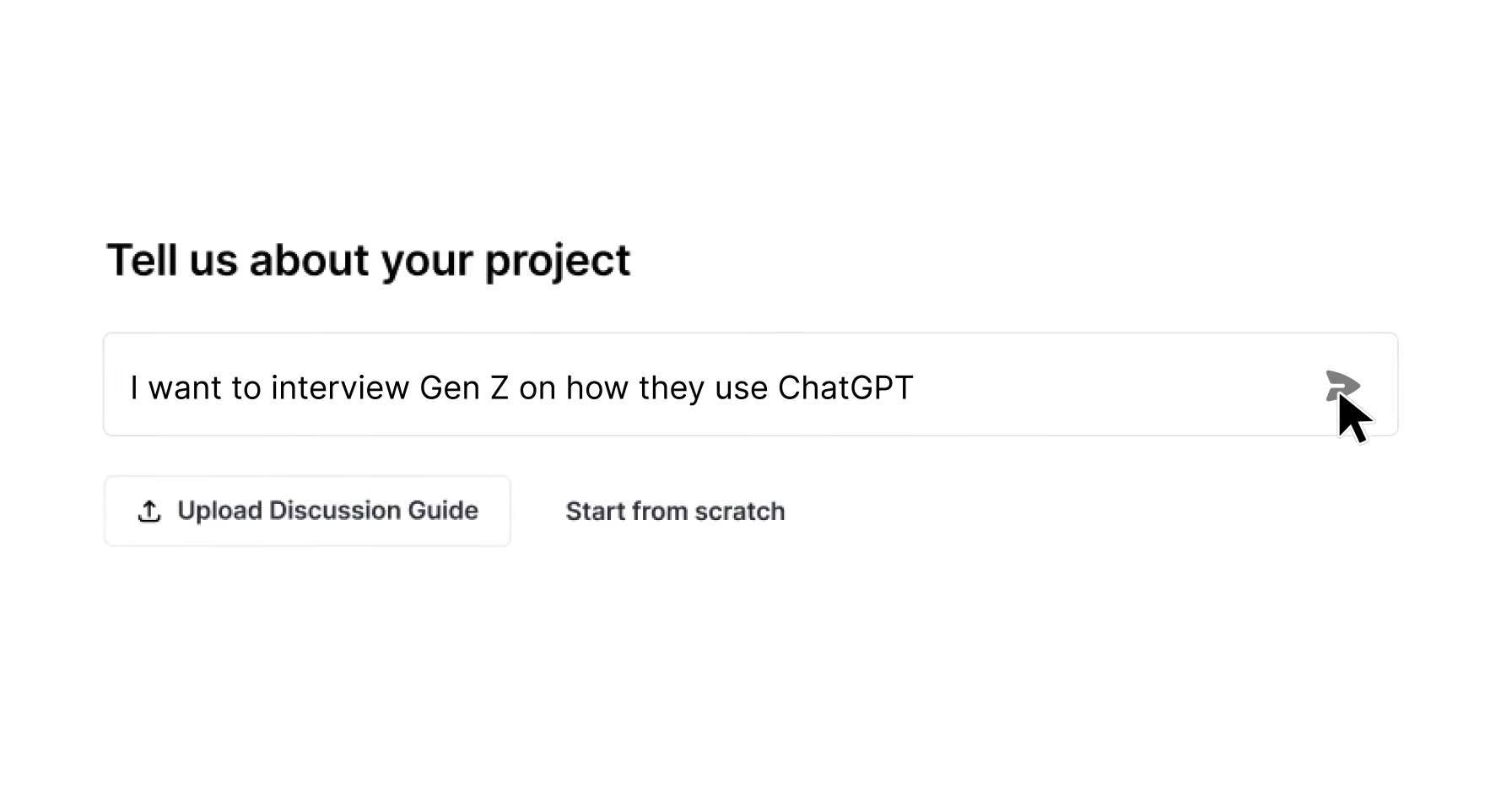
Enterprise insights leaders use Listen Labs to clear research backlogs through scalable end-to-end workflows that run continuously. The same automation lets UX research leads run usability tests with hundreds of participants using screen-sharing instead of traditional 5–10 user sessions. Product managers rely on self-serve study setup with AI-assisted design and natural language analysis, which removes bottlenecks that once required dedicated researchers. Consultancies and agencies tap into niche recruitment for specialized audiences such as enterprise decision-makers and healthcare workers.
Operational Considerations and Platform Risks
Listen Labs offers enterprise-grade security with SSO, GDPR compliance, and ISO certifications to satisfy corporate requirements. Organizations that prefer their own panels can use self-recruitment while keeping the same security standards and workflow controls. The platform’s methodology design draws on 50+ years of combined research expertise, which helps mitigate AI empathy limitations in highly sensitive contexts. Operational backup systems and strict quality controls reduce panel dependency risks that could otherwise delay studies.
Decision Framework: Choosing Your Outset.ai Alternative
Teams that need end-to-end scale, global reach, and strong security should prioritize Listen Labs as their primary Outset.ai alternative. Organizations focused only on recruitment can look at Prolific or User Interviews, while those that mainly need a repository may consider Dovetail. For teams that want to multiply research output while protecting quality, Listen Labs remains the only option in this list that removes trade-offs between depth, scale, speed, and cost.
FAQ
What are the key differences between Outset.ai and Listen Labs?
Listen Labs completes research cycles in under 24 hours, while Outset.ai typically takes weeks. Listen Labs covers recruitment, AI moderation, emotional intelligence analysis, and automated deliverables in one workflow, instead of rigid async video prompts. It also operates at roughly one-third of traditional research costs, while Outset.ai relies on higher enterprise pricing. Outset.ai supports recruitment from over 1 billion participants across 80+ countries, custom panels, and bespoke projects.
Is Outset.ai worth the investment in 2026?
For teams that prioritize speed, scale, and integrated workflows, Outset.ai’s slower cycles, higher costs, and partial automation reduce its appeal. Organizations that need rapid insights, global reach, and efficient scaling usually gain more value from end-to-end AI platforms with proven enterprise adoption.
Which platform offers the strongest enterprise security features?
Listen Labs provides comprehensive enterprise security with SOC 2, ISO 27001, ISO 27701, and ISO 42001 certifications, SSO integration, and GDPR compliance. It also supports self-recruitment for organizations that want to use their own participant databases while keeping strict security controls.
How does Listen Labs handle niche audience recruitment?
Listen Labs combines Atlas AI orchestration with dedicated recruitment teams to reach hard-to-find segments such as enterprise decision-makers, healthcare workers, and consumers below 1% incidence. The verified global network across 45+ countries uses behavioral matching to improve fit beyond simple demographics.
What makes Listen Labs’ AI interviewer quality comparable to human researchers?
Listen Labs’ AI moderation follows adaptive conversation flows with dynamic follow-up questions based on respondent answers. These flows are built on methodology frameworks created from 50+ years of combined research experience. The system probes deeper on meaningful responses while running hundreds of interviews at once.
How do pricing models compare across platforms?
Listen Labs uses credit-based pricing at roughly one-third of traditional research costs by bundling recruitment, moderation, and analysis. Outset.ai relies on per-seat enterprise contracts plus usage fees. User Intuition charges per interview, and platforms like Prolific use pay-per-participant models without integrated analysis.
What multilingual capabilities do these platforms offer?
Listen Labs supports 100+ languages for interviews and analysis with automatic translation and transcription. Glaut supports over 50 languages, and User Intuition offers 50+ languages with localization. Outset.ai supports about 40 languages with more limited global coverage.
What is involved in switching from Outset.ai to an alternative?
Most enterprise teams start with a pilot to test new platforms on real research objectives. Listen Labs runs demo sessions and pilot studies to show speed, quality, and cost advantages. The transition usually includes migrating study templates, training teams on new workflows, and connecting the platform to existing tools. Explore your switching options with a pilot study that demonstrates these advantages on your own use cases.
Conclusion: Scale Qual Research with the #1 Alternative
Outset.ai’s rigid prompts, high costs, and long timelines now slow many insights teams. Modern qual-at-scale platforms remove the old trade-off between depth and scale so organizations can run hundreds of rich interviews at once with emotional intelligence built in.
Listen Labs leads this shift as an end-to-end platform that combines global recruitment, AI moderation, emotional analysis, and automated deliverables in under 24 hours. The Fortune 500 adoption detailed throughout this guide shows how teams multiply output while cutting costs and improving insight quality. Start transforming your research workflow with the platform that enterprise teams trust for qual-at-scale.