
Written by: Anish Rao, Head of Growth, Listen Labs
Key Takeaways for Media Research Leaders
- Traditional agencies, surveys, and social listening tools force trade-offs between speed, depth, participant quality, and emotional nuance that media research teams can no longer accept in 2026.
- Listen Labs is the only end-to-end AI platform that delivers hundreds of AI-moderated qualitative interviews with Ekman-based emotional intelligence in under 24 hours.
- AI-moderated interviews produce 39% more words and 36% more themes than surveys while eliminating fraud and low-quality responses through verified participant networks and real-time quality controls.
- Listen Labs combines 30 million verified respondents across 45 or more countries, support for over 100 languages, SOC 2 Type II and ISO certifications, and an automated Research Agent that generates consultant-quality deliverables in minutes.
- Media and brand teams ready to replace weeks-long cycles and fragmented vendors can Book a demo with Listen Labs to see how the platform compresses research without sacrificing depth.
How This Comparison Evaluates Media Insights Platforms
Eight criteria structure the comparison that follows.
- Research speed
- Depth versus scale
- Participant quality and fraud controls
- Emotional signal capture
- Global and multilingual reach
- Analysis and reporting effort
- Security and compliance
- Total cost of ownership
Research Speed Across Agencies, Surveys, and AI Platforms
Traditional agency consumer insights studies typically require six to twelve weeks total, covering scoping, recruitment, fieldwork, transcription, coding, and reporting. Multi-market studies often extend to eight to twelve weeks. Online quantitative surveys compress the timeline to two to four weeks, but that window still includes data cleaning, cross-tabulations, and reporting before insights reach a decision-maker.
Listen Labs compresses the entire research lifecycle to less than 24 hours. When Microsoft needed to collect global customer stories for its 50th anniversary campaign, the team used Listen Labs to gather user video stories within a single day. A Director of Data Science at Microsoft noted: “Our leadership team was very thrilled at both the speed and the scale that Listen Labs enabled. I can reach out to hundreds of users at one third of the cost.” When Anthropic needed to understand why Claude users were canceling their subscriptions, Listen Labs delivered 300 or more user interviews in 48 hours. The team surfaced churn drivers about five times faster than traditional methods.
AI-moderated qualitative interviews therefore achieve a total timeline of 24 to 48 hours. For media teams operating on campaign or content cycles measured in days, that speed difference directly determines whether insights shape decisions or arrive after launch.
Depth Versus Scale in Media Audience Understanding
Qualitative data methods move slowly and reach smaller samples, but they excel at uncovering nuance and complexity in human decision-making. Traditional agencies deliver that nuance but cap sample sizes at 15 to 30 participants per study because human moderators cannot scale further. Quantitative survey platforms invert the trade-off. They reach thousands of respondents but rely on pre-set questions with no adaptive follow-up, which produces surface-level data that cannot explain the “why” behind audience behavior.
A controlled study from the University of Mannheim found that AI-moderated interviews produced 39% more words per response and 36% more identified themes than traditional online questionnaires. The study reported zero nonsensical responses in AI interviews compared to a 10% gibberish rate in surveys. A 2024 Glaut comparative study also found that AI-moderated interviews delivered significantly more words per response and higher completion rates than traditional surveys.
These findings show that AI moderation preserves qualitative depth while enabling scale. Listen Labs operationalizes this by conducting hundreds of adaptive AI-moderated interviews simultaneously. Qual-at-scale suits research that requires large sample sizes or broad geographic reach, because AI tools engage hundreds or thousands of participants remotely and asynchronously. For creative testing and campaign validation, teams gain statistical confidence across audience segments along with verbatim emotional context that only a conversation can surface. Procter & Gamble used Listen Labs to conduct 250 or more interviews with quantified themes and verbatim proof, shaping product and brand strategy in hours rather than weeks.
Participant Quality and Fraud Controls in Practice
Industry analysis indicates that 15 to 45% of online survey responses can contain fraudulent or low-quality data. Commodity panels introduce persistent risks such as professional survey-takers focused on incentives, repeat respondents, and AI-generated scripts that pass basic screening.
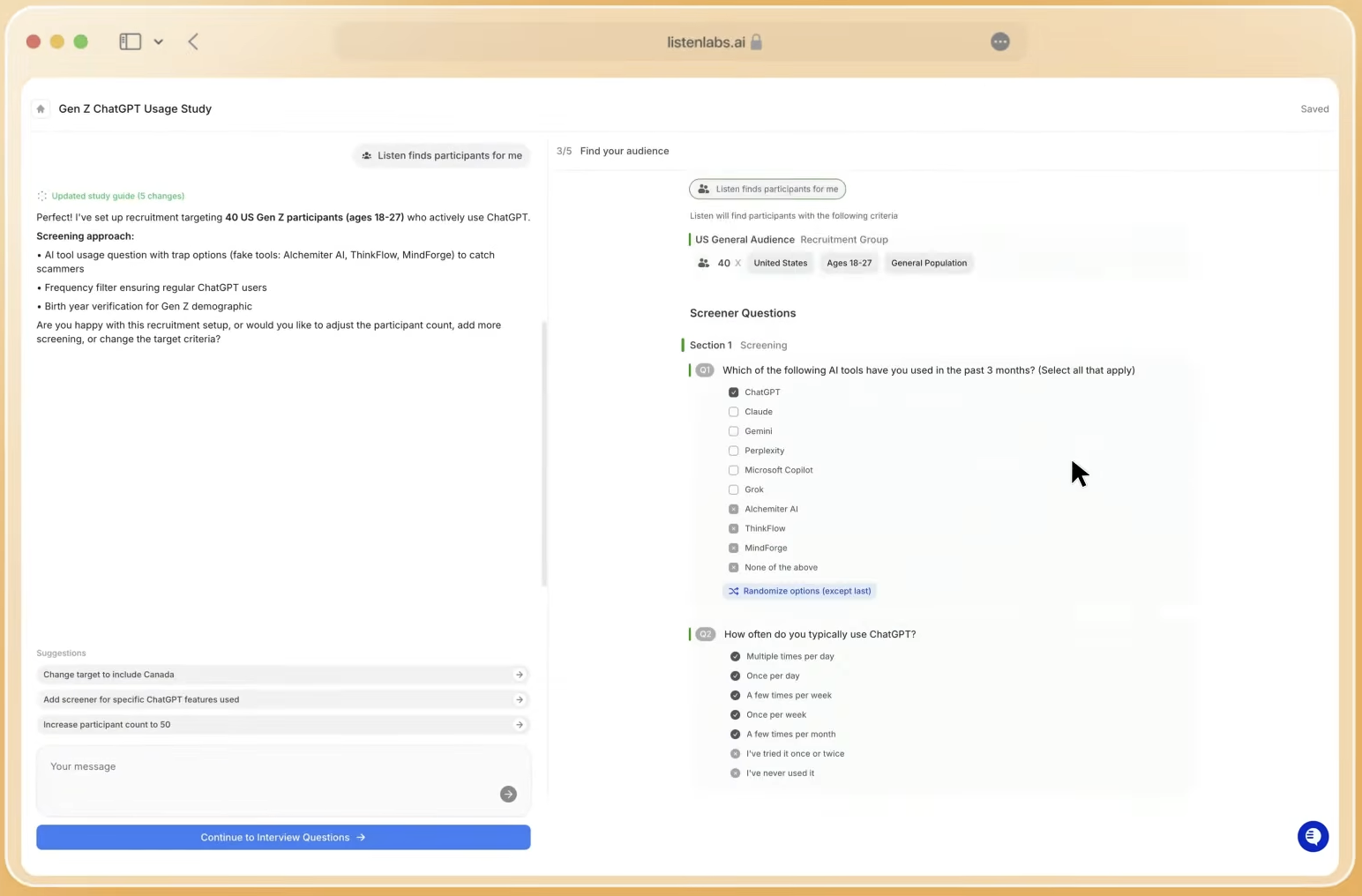
Listen Labs addresses this through three reinforcing layers, and each layer closes a gap the previous one cannot solve alone. First, Listen Atlas, its AI orchestration layer, matches participants across behavioral and intent data rather than self-reported demographics alone, drawing from a network of 30 million verified respondents across more than 45 countries. Even verified panels can still include participants who pass screening yet deliver low-effort responses during the actual interview. Quality Guard therefore monitors every interview in real time for fraud, low-effort responses, and mismatched profiles, and limits participants to three studies per month to prevent panel fatigue. For the hardest audiences, including sub-1% incidence segments such as enterprise decision-makers, healthcare workers, and highly specialized consumer groups, commodity panels often fail entirely. A dedicated recruitment operations team adds a human review layer and partners with niche communities and specialized networks to source exactly the right participants.
Emotional Signal Capture Beyond Self-Reported Scores
Most media consumer insights software captures only what participants say. Self-reported ratings and survey scales compress nuanced emotional reactions into discrete categories that a PLOS ONE study found produce significant information loss by forcing nuanced opinions into categories that resist simplification. Social listening tools apply sentiment scoring to public text, and modern sentiment analysis models often reach 85 to 90% accuracy for English-language content. These tools still cannot capture the micro-expressions, tone shifts, or hesitations that occur during a consumer’s first encounter with a new ad or product concept.
Multimodal emotion analysis, which combines voice tone, facial expressions, and text, improves emotion classification accuracy beyond text-only sentiment scoring. This capability helps explain why the global AI-powered emotion analytics platform market is valued at USD 8.77 billion in 2025 and projected to reach USD 34.70 billion by 2033 at a CAGR of 18.83% from 2026 to 2033. Enterprises increasingly recognize that understanding how customers feel requires more than reading what they say.
Listen Labs’ Emotional Intelligence analyzes three signals: tone of voice, word choice, and subconscious micro expressions. It is built on Ekman’s universal six emotions framework, the same standard used in clinical psychology and UX research, tracking anger, disgust, fear, happiness, sadness, surprise, and neutral. Every emotion is quantified per question and concept, with every label traceable to the exact timestamp, verbatim quote, and AI reasoning behind it. For media teams running creative testing or brand sentiment analysis, this distinction clarifies why two ads with similar positive ratings can perform very differently. One may trigger genuine delight, while the other produces flat or confused expressions at a specific moment.
Global and Multilingual Reach for Media Research Programs
Many social listening and survey platforms concentrate coverage in English-language markets or require separate vendor relationships for each region. GWI tracks behaviors, attitudes, and interests of 3 billion consumers across 50 or more markets via continuous proprietary surveys, but that breadth comes through aggregated survey data rather than adaptive qualitative conversations.
Listen Labs takes a different approach. Rather than aggregating survey responses, it supports research across more than 45 countries in the Americas, Europe, APAC, and MEA, with interview moderation in over 100 languages and automatic translation and transcription built into the platform. Emotional Intelligence is available across 50 or more languages, so emotional signal capture extends well beyond English-language markets. For global media brands running simultaneous campaign validation across multiple regions, this unified coverage removes the coordination overhead of managing separate regional vendors.
Analysis and Reporting Effort for Media Teams
Traditional qualitative synthesis can take several weeks, while AI-native analysis can deliver similar depth in hours at much larger sample sizes. This speed gap has turned manual coding into a competitive liability. A 2026 GRIT Insights Practice Report found that many brand-side analytics professionals now use agentic AI to prepare and integrate data and to create and update reports and dashboards. Teams that still rely on manual workflows deliver insights weeks after their peers have already acted.
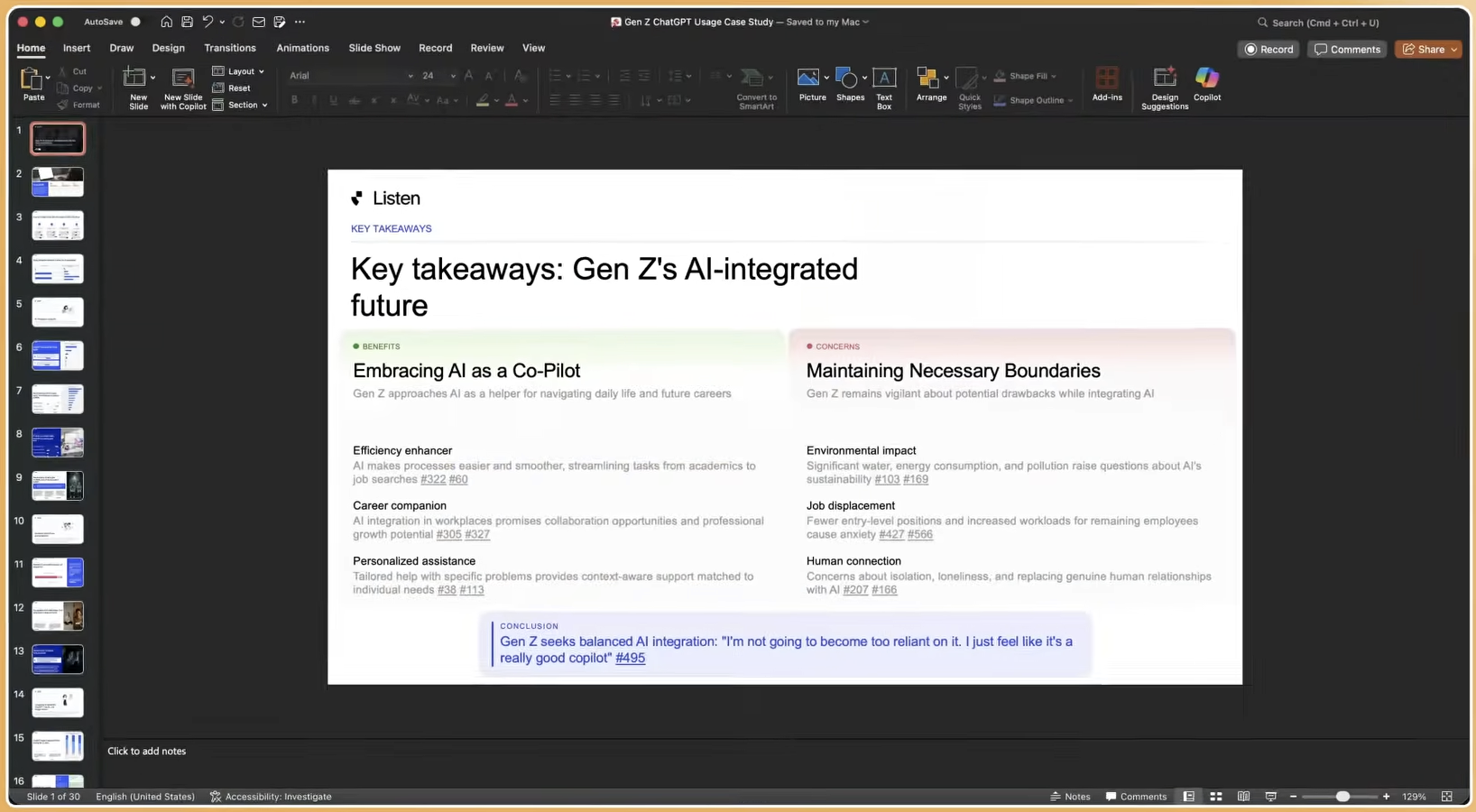
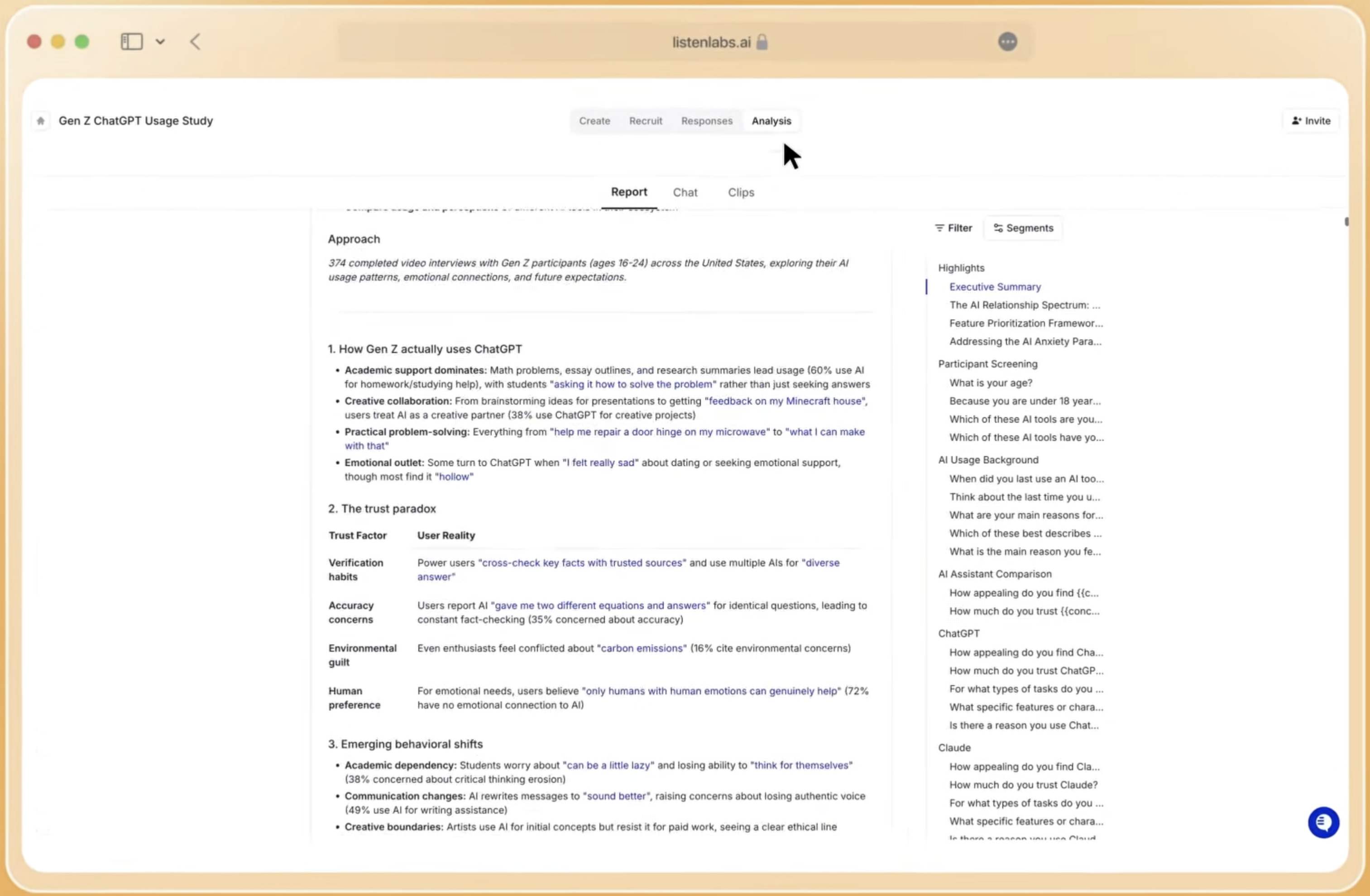
Listen Labs’ Research Agent handles the full analysis workflow, from raw data to final output. It generates consultant-quality slide decks, memo-style reports, video highlight reels, statistical charts, and segmentation breakdowns in under a minute. Researchers can query the full dataset in natural language, asking for example which audience segment showed the most confusion during a specific ad sequence, and receive answers with traceable evidence rather than subjective analyst interpretation. To see the Research Agent generate a complete insights deck from a live study, book a demo.
Security and Compliance for Enterprise Media Brands
Media brands handling sensitive audience data, creative assets under NDA, and proprietary brand tracking data require enterprise-grade security as a baseline, not a premium add-on. Listen Labs holds SOC 2 Type II, ISO 27001, ISO 27701, and ISO 42001 certifications, supports enterprise SSO, and uses 256-bit encryption. Customer data is never used for AI model training. These certifications align with the compliance requirements that Fortune 500 legal and procurement teams apply to any vendor handling first-party audience data.
Total Cost of Ownership for Different Research Approaches
Traditional qualitative research can cost tens of thousands of dollars and take four to eight weeks. Traditional multi-market qualitative research often costs substantially more and takes eight to twelve weeks. Pre-campaign focus groups of two to three groups cost $10,000 to $25,000 in the US.
Listen Labs replaces multiple vendors, including recruitment, moderation, transcription, analysis, and reporting, with a single platform. Enterprises run more studies at roughly one-third the cost of the traditional research approach. Large AI-moderated studies generate strategic findings at a significantly lower cost per actionable insight than traditional IDI studies. The platform supports both one-off studies and continuous always-on research programs, which removes the per-project vendor negotiation that inflates multi-vendor costs.
Operational Considerations and Change Management for Adoption
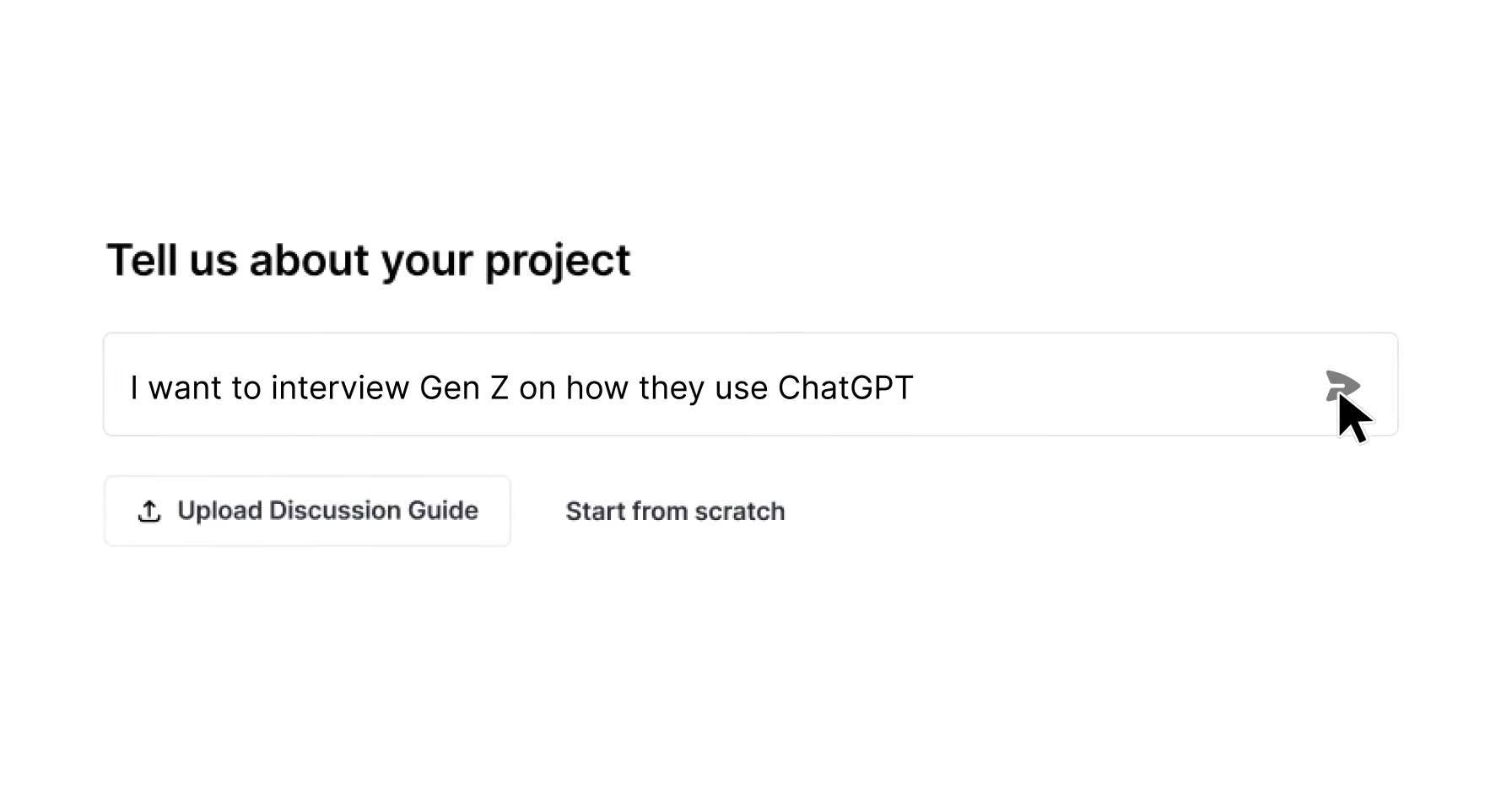
Adopting any new research platform requires integration with existing workflows, stakeholder alignment, and a transition period. Listen Labs functions as a force multiplier for existing research teams, not a replacement. The platform’s AI-assisted study design accepts research goals in natural language and drafts structured objectives and questions, which reduces the expertise barrier for non-researcher stakeholders who need to commission studies independently.
Mission Control serves as the organization’s source of truth for all past studies, enabling cross-study queries and trend tracking that prevent repeated research on the same questions. For media teams running continuous brand tracking or campaign measurement programs, this institutional knowledge layer compounds in value over time. Listen Labs supports both ad-hoc studies and always-on research programs within the same platform, which removes the tool fragmentation that characterizes most enterprise research stacks.
Risks and Limitations of AI-Moderated Interview Platforms
AI-moderated interview platforms introduce a learning curve. Teams accustomed to agency-managed research need to develop internal fluency with study design, participant targeting, and output interpretation. A Nielsen Norman Group study highlights that AI interviewers have limitations on highly sensitive or emotionally complex topics. In those situations, a skilled human moderator’s ability to read the room still provides an advantage.
Participant pool quality also varies significantly across platforms. The fraud risks documented in commodity panels, where a significant portion of responses may be low-quality, apply to any platform that sources from undifferentiated panels. Verified participant infrastructure therefore becomes a differentiating capability rather than a commodity feature.
Self-reported ratings and emotional signal capture represent distinct data types that complement each other. A participant who rates an ad positively may still exhibit micro-expressions of confusion or disengagement at specific moments. This example illustrates why platforms that rely exclusively on self-reported scales miss a critical layer of insight, and why multimodal emotional analysis has become a differentiating capability for media effectiveness research.
Decision Framework for Selecting Media Insights Software
The right approach depends on three variables: timeline, audience difficulty, and need for emotional nuance. These variables map directly to the eight criteria outlined earlier, especially speed, depth, participant quality, and emotional signal capture.
Traditional agencies remain appropriate for highly sensitive research requiring deep human rapport, longitudinal ethnographic work, or studies where regulatory requirements mandate human moderation. In these cases, the depth and compliance requirements justify the higher investment. However, those same budget and timeline constraints make agencies unsuitable for iterative campaign testing or always-on brand tracking, where cost per study and weeks-long turnaround create a bottleneck that blocks rapid iteration.
Quantitative survey platforms serve validation use cases well. They confirm hypotheses generated elsewhere, track NPS or CSAT trends, and size audience segments. These platforms do not suit work that requires unexpected insights, emotional reactions, or detailed reasoning behind audience behavior, because fixed questions and limited follow-up restrict depth.
Social listening tools provide real-time signal detection from public conversations and support trend monitoring and competitive benchmarking. Social listening captures unprompted, real-world conversation at scale, while surveys and interviews provide structured, statistically representative measurement. Social listening therefore complements but does not replace structured consumer research for creative testing, concept validation, or brand sentiment studies that require verified participant samples.
Media consumer insights needs that require sub-24-hour speed, verified participant quality, emotional signal capture across more than 50 languages, and consultant-quality deliverables without analyst overhead align best with Listen Labs. It is the only platform that combines a 30 million verified participant network, Ekman-based Emotional Intelligence, AI-moderated interviews at scale, and an automated Research Agent in a single end-to-end solution.
Frequently Asked Questions
How quickly can media market research software deliver results?
Turnaround time varies significantly by platform type. As detailed in the Research Speed section, traditional agency studies often require several weeks, and multi-market work can extend even longer. Online quantitative surveys reduce this to a few weeks but still require data cleaning and analysis before insights become actionable. AI-moderated interview platforms like Listen Labs complete the entire cycle in under 24 hours, including recruitment from a verified participant network, hundreds of simultaneous adaptive interviews, automated thematic analysis, and generation of slide decks, highlight reels, and reports. For media teams on campaign timelines, this difference often determines whether insights inform a launch or arrive after decisions are locked.
Where does Listen Labs source participants for audience measurement studies?
Listen Labs sources participants through Listen Atlas, the 30 million respondent network described earlier in the Participant Quality section. Beyond that verified network and its real-time fraud controls, the platform combines three sourcing approaches. The Listen Atlas network covers general audiences, a dedicated recruitment operations team partners with niche communities for sub-1% incidence segments, and a bring-your-own-participant option lets organizations recruit from their existing user base at reduced cost. This flexibility prevents teams from being locked into a single panel provider’s limitations.
How does Listen Labs protect data in brand sentiment analysis projects?
Listen Labs maintains enterprise-grade security with 256-bit encryption across all data in transit and at rest. The platform holds SOC 2 Type II, ISO 27001, ISO 27701, and ISO 42001 certifications and supports enterprise SSO for access control. Customer data is never used to train Listen Labs’ AI models, which matters for media brands handling proprietary creative assets, unreleased campaign materials, or sensitive brand tracking data. GDPR compliance is built into the platform’s data handling architecture, covering participant consent, data residency, and right-to-erasure requirements across the more than 45 countries where Listen Labs operates.
How do AI-moderated interviews differ from surveys for capturing emotional reactions?
Surveys capture what participants state in response to fixed questions but cannot probe vague answers or detect hesitation, confusion, or delight during real-time reactions to creative. AI-moderated interviews conduct adaptive conversations where the AI probes deeper on short or interesting answers, asks follow-up questions based on what the participant actually said, and captures video, audio, and text simultaneously. Listen Labs’ Emotional Intelligence layer adds multimodal analysis by reading tone of voice, word choice, and subconscious micro-expressions to quantify emotions that transcripts alone miss. Built on Ekman’s universal emotions framework, every emotional label is traceable to the exact timestamp, verbatim quote, and AI reasoning. Media teams testing two ad concepts can therefore see not only which ad received higher stated ratings but also which one triggered genuine joy versus confusion at specific moments.
Conclusion: Choosing the Right Media Consumer Insights Software
The depth-versus-scale trade-off that has defined consumer insights for decades reflects a platform limitation rather than a methodology flaw. Traditional agencies, quantitative surveys, social listening tools, and point-solution panels each solve part of the problem while creating new constraints on speed, depth, participant quality, or emotional nuance.
Listen Labs resolves this trade-off by combining capabilities that previously required multiple vendors. Its 30 million verified participant network, Ekman-based Emotional Intelligence, sub-24-hour delivery, AI-moderated interviews at scale, automated Research Agent, and enterprise security certifications sit in a single end-to-end platform that media research teams can deploy without adding headcount or waiting weeks for insights.
For consumer insights leaders evaluating media consumer insights software against 2026 enterprise benchmarks, Listen Labs is the only platform that delivers all eight criteria, including speed, depth, scale, participant quality, emotional signal capture, global reach, automated analysis, and enterprise compliance, without forcing trade-offs between them. Book a demo to see how Listen Labs can compress your research cycle, eliminate vendor fragmentation, and deliver the emotional depth your media research program requires.