
Written by: Anish Rao, Head of Growth, Listen Labs
Key Takeaways
-
Listen Labs delivers fast, global customer insights using a 30M participant panel, outperforming academic tools like Elicit and Consensus for customer research.
-
Academic AI assistants excel at literature reviews but lack participant recruitment, live interviews, and enterprise-ready customer research workflows.
-
Listen Labs supports end-to-end research with AI-moderated interviews, Emotional Intelligence analysis, and automatically generated deliverables.
-
Traditional tools like UserTesting and Dovetail move more slowly and struggle to scale compared to Listen Labs’ qualitative-at-scale approach.
-
Enterprise leaders such as Microsoft rely on Listen Labs for rapid, high-quality customer insights; explore a Listen Labs demo to modernize your research process.
Best AI Research Assistant Comparison Chart 2026
Choosing the right AI research assistant depends on whether you need an academic literature review or customer insights at scale. Academic tools like Elicit and Consensus excel at paper discovery, while platforms like Listen Labs specialize in end-to-end customer research. The landscape of AI research assistants varies dramatically in speed, depth, and cost depending on the use case.
Atlasworkspace.ai’s April 2026 evaluation tested seven AI research assistants across paper discovery, data extraction accuracy, cross-source synthesis, citation quality and verifiability, and usability on real research scenarios. The table below highlights the core tradeoff: academic tools favor rapid literature review, while Listen Labs focuses on deep, scalable customer conversations.
|
Tool |
Speed/Scale |
Depth/Quality |
Cost |
|---|---|---|---|
|
Listen Labs |
hours for large-scale interviews |
lower than traditional |
|
|
Elicit |
Strong data extraction |
$12/month Plus |
|
|
Consensus |
Seconds for answers |
Evidence-based only |
paid Premium plan |
|
Perplexity |
Real-time search |
Moderate synthesis |
$20/month Pro |
This comparison reveals a clear gap. Academic tools handle literature review efficiently, yet none can execute customer research at scale. Listen Labs fills this gap with end-to-end platform capabilities that connect automation, recruitment, and analysis into one workflow.
Listen Labs Advantages: The platform’s Research Agent automation manages the workflow from study design through analysis, while global participant recruitment opens access to diverse audiences. These capabilities work with AI-moderated interviews to scale qualitative insights without sacrificing depth, so teams gain both breadth and richness in a single platform.
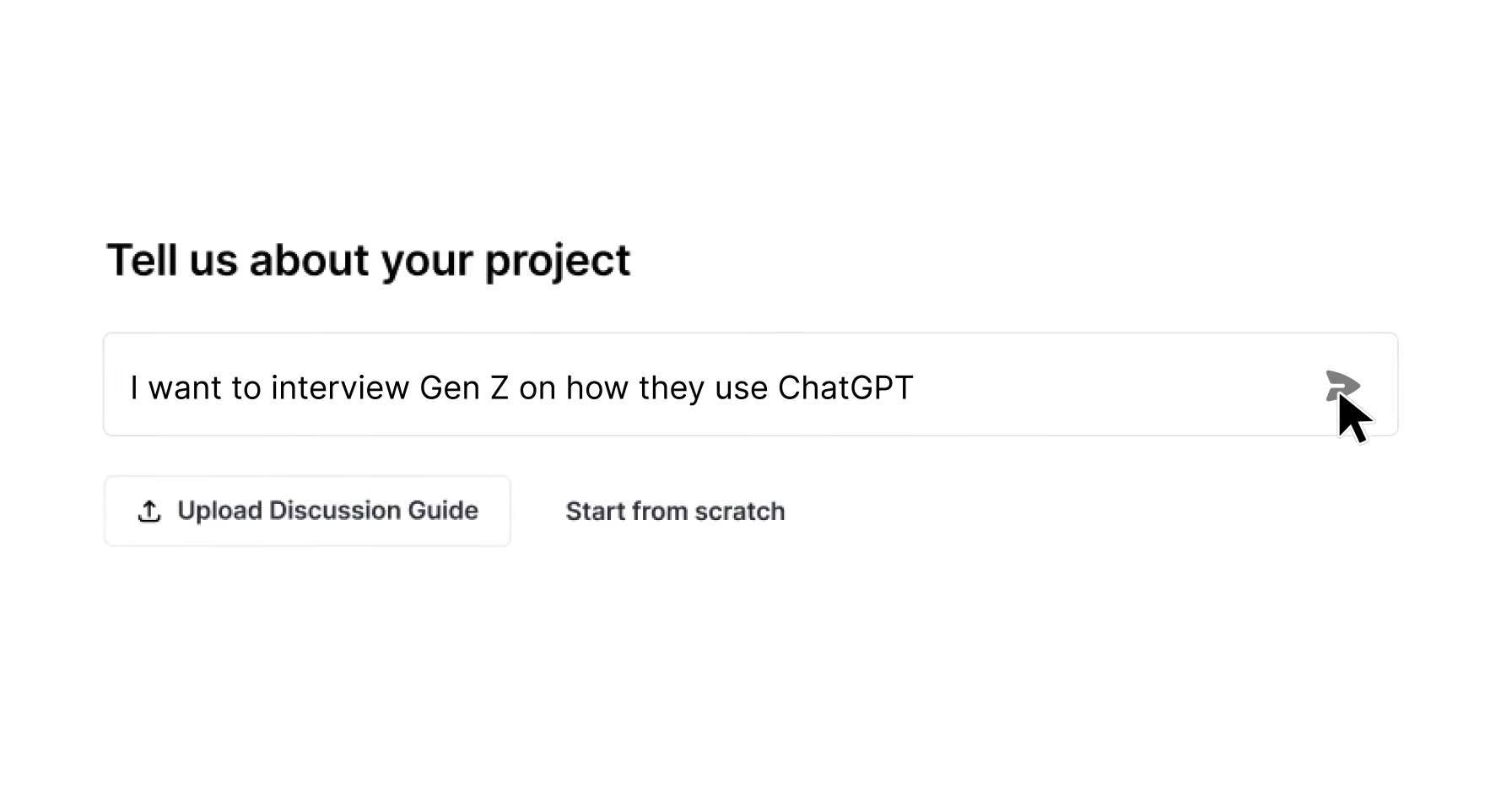
Academic Tool Limitations: Elicit and Consensus excel at literature analysis but cannot recruit participants, conduct interviews, or deliver customer insights at enterprise scale. They support background research, yet they do not replace a full customer research stack.
Perplexity AI for Fast Professional Research
Perplexity’s Pro Search feature supports multi-step analysis with inline citations, which makes it effective for rapid research queries. Atlasworkspace.ai’s 2026 evaluation rated Perplexity as best for fast professional questions, but with variable citation quality for rigorous academic work.
Perplexity Strengths: Natural language queries, focus modes for academic research, and collections for organization work together to support exploratory research and quick fact-checking. Users can move from a broad question to a focused answer, then save and revisit key threads without rebuilding context.
Perplexity vs Listen Labs: Perplexity excels at real-time information synthesis across the open web. Listen Labs focuses on end-to-end customer research workflows that Perplexity does not provide, from participant recruitment through AI-moderated interviews to automated analysis and deliverables. Teams often use Perplexity for background context, then rely on Listen Labs for original customer data.
Best AI Combinations for Deep Research Workflows
The Perplexity comparison illustrates a broader pattern. Most AI research tools excel at one stage of research but require pairing with other platforms to cover the full process. Effective research workflows in 2026 often combine multiple AI tools. Atlasworkspace.ai recommends stacking discovery tools like Semantic Scholar with synthesis tools like Atlas for comprehensive academic research.
Listen Labs stands apart as a complete solution for customer research rather than a single-stage tool. Microsoft uses Listen Labs to collect global customer stories within a day, cutting research wait time from weeks to hours. This type of workflow shows how a single platform can replace multiple vendors while maintaining quality.
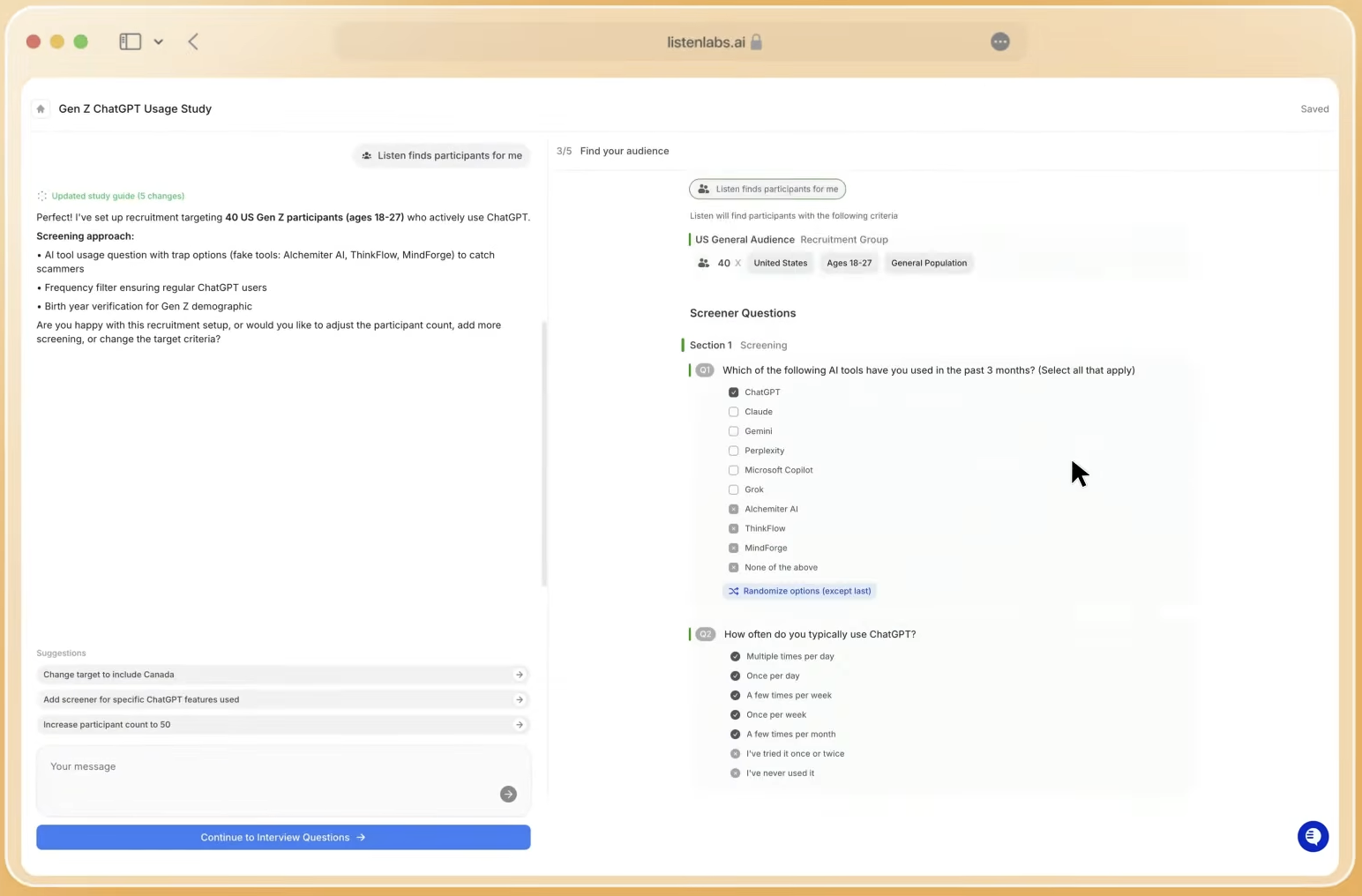
Teams that want similar speed and consistency can follow Microsoft’s lead. Schedule a workflow-focused demo to see how Listen Labs automates recruitment, interviews, and analysis in one place.
Head-to-Head: Listen Labs vs. UserTesting, Dovetail, Prolific
The speed and scale advantages of Listen Labs become clearer when compared directly with traditional customer research platforms. The table below contrasts time to results, scale, reach, and analysis approach across leading tools.
|
Feature |
Listen Labs |
UserTesting |
Dovetail/Prolific |
|---|---|---|---|
|
Time to Results |
24 hours |
hours |
several weeks |
|
Scale |
100s qual interviews |
5-15 participants |
Limited by manual processes |
|
Global Reach |
30M panel, 45+ countries |
Regional limitations |
Fragmented sourcing |
|
Analysis |
AI-automated insights |
Manual analysis |
Repository only (Dovetail) |
Listen Labs removes the usual tradeoff between depth and scale. The platform delivers qualitative richness and statistical confidence together through AI-moderated interviews that adapt and probe like experienced researchers. Researchers gain nuanced stories and quantifiable patterns in the same study.
Listen Labs: End-to-End Customer Research at Enterprise Scale
Listen Labs’ competitive moat extends beyond individual features and covers the entire research infrastructure. The platform’s Research Agent handles the full analysis workflow from raw data to final output, while Quality Guard maintains zero fraud through real-time monitoring across video, voice, content, and device signals.
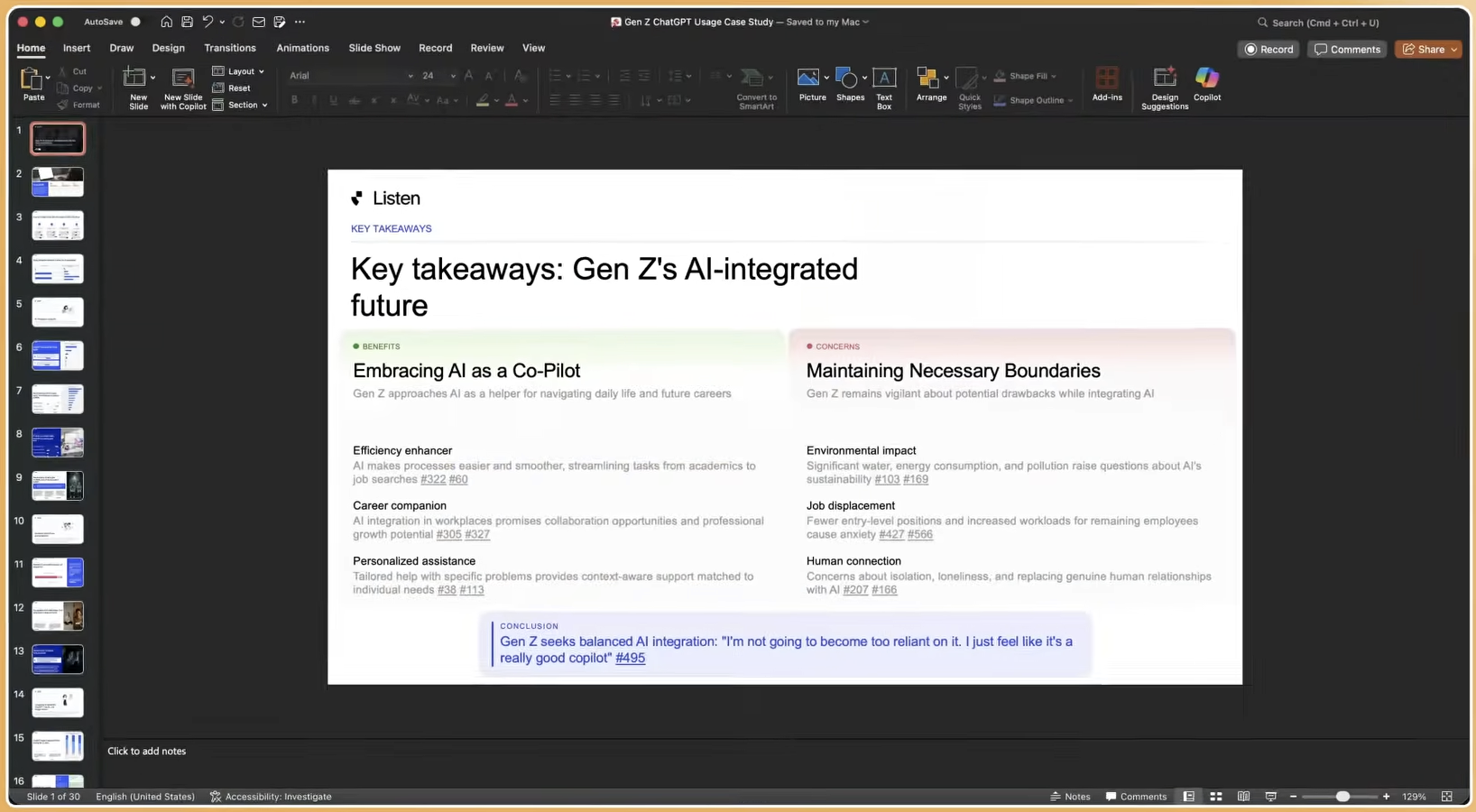
Unique Capabilities: Listen Labs’ 30M verified participants across 45+ countries and 90+ languages ensure access to almost any target audience worldwide. The platform’s Emotional Intelligence analyzes tone, word choice, and micro expressions to uncover meaning that simple transcripts miss. Automated deliverable generation then converts these rich insights into slide decks, highlight reels, and statistical comparisons, which removes the manual synthesis bottleneck for research teams.
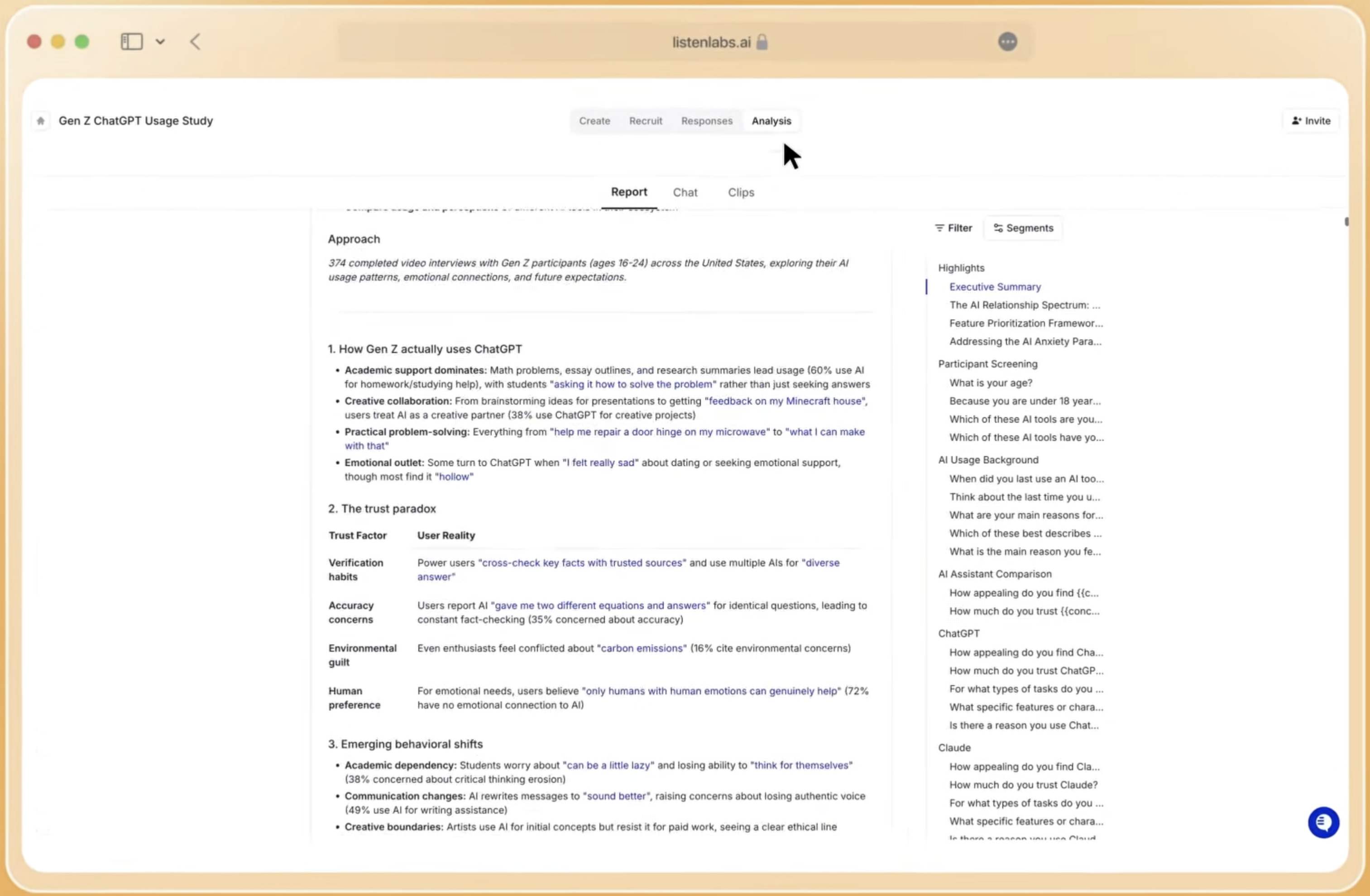
Enterprise Validation: Beyond the Microsoft example referenced earlier, leading enterprises use Listen Labs, which demonstrates reliability and scale for complex global programs.
Decision Matrix: Matching Tools to Your Research Goals
This decision matrix summarizes where each tool fits best so teams can align their choice with specific research goals. Use it to distinguish between customer insight needs and academic literature work before selecting a platform.
|
Criteria |
Listen Labs |
Elicit |
Consensus |
Perplexity |
|---|---|---|---|---|
|
Customer Insights |
Excellent |
Poor |
Poor |
Limited |
|
Academic Research |
Good |
Excellent |
Excellent |
Good |
|
Speed to Results |
24 hours |
Minutes |
Seconds |
Real-time |
|
Enterprise Scale |
Proven |
Limited |
Limited |
Moderate |
Organizations that prioritize customer insights and enterprise scale gain the most from Listen Labs. Academic researchers who focus on literature should consider Elicit or Consensus for paper-centric work, then pair those tools with Listen Labs when they need direct customer input.
FAQ
What is the best AI research assistant for literature reviews?
Elicit and Consensus lead for academic literature reviews. Elicit offers semantic search across over 138 million papers with structured data extraction, while Consensus provides evidence-based answers with study agreement indicators. Elicit achieves 94% accuracy for screening in relevant papers according to published systematic reviews.
Can AI research assistants match human research quality?
AI research assistants excel at specific tasks but still require human oversight for interpretation and critical analysis. Listen Labs combines 50+ years of research expertise with AI automation to maintain methodological rigor while dramatically increasing speed and scale. The platform delivers consultant-quality insights with full traceability back to source data.
Which AI research assistant handles customer insights at scale?
Listen Labs uniquely addresses customer insights at enterprise scale. The platform conducts hundreds of AI-moderated qualitative interviews simultaneously, analyzes responses through Emotional Intelligence, and generates deliverables automatically. Traditional academic tools like Elicit and Consensus cannot recruit participants or conduct customer interviews, so they cannot replace Listen Labs for this use case.
How do AI research assistants ensure data accuracy?
Accuracy varies significantly by platform and use case. Academic tools like Scite classify citations as supporting, contrasting, or mentioning to verify claims. Listen Labs uses Quality Guard for real-time fraud detection and maintains participant limits to protect response quality. All platforms still require human validation of AI-generated insights.
What is the cost difference between AI research assistants?
Academic tools range from free options such as Semantic Scholar to paid monthly plans such as Scite. Listen Labs uses enterprise subscription pricing with per-participant credits, which delivers customer research at a lower cost than traditional methods while providing results about five times faster. The ROI comes from replacing multiple vendors and sharply reducing time-to-insight.
Listen Labs stands out as the definitive choice for organizations that need customer insights beyond academic literature review. The platform’s end-to-end capabilities and proven enterprise scale reshape how teams understand their customers, supported by rapid delivery of insights.
Schedule your personalized demo to experience this new standard for customer research.