
Written by: Anish Rao, Head of Growth, Listen Labs | Last updated: July 4, 2026
Key Takeaways
- Qualitative research at enterprise scale works when teams use rigorous, repeatable methods that deliver actionable results in days, not 4–6 weeks.
- Effective enterprise workflows start with clear business questions, recruit for diversity of experience, and combine interviews with behavioral and support data to expose the gap between what customers say and what they do.
- AI-moderated adaptive interviews, emotional signal capture, and systematic bias-resistant coding deliver consistent depth across hundreds of conversations while maintaining rigor comparable to human researchers.
- Separating symptoms from root causes and framing findings as opportunity statements helps insights translate directly into business actions, supported by automated deliverables and a searchable institutional knowledge base.
- Listen Labs enables enterprise teams to complete the full workflow, from brief to consultant-quality insights, in under 24 hours; see the 24-hour workflow in action to understand how the platform multiplies research output without adding headcount.
These outcomes become repeatable when enterprise teams follow a structured workflow that embeds rigor at every stage. The following 10 steps translate qualitative research best practices into a practical enterprise process.
10-Step Practical Enterprise Workflow
1. Start with strategic business questions
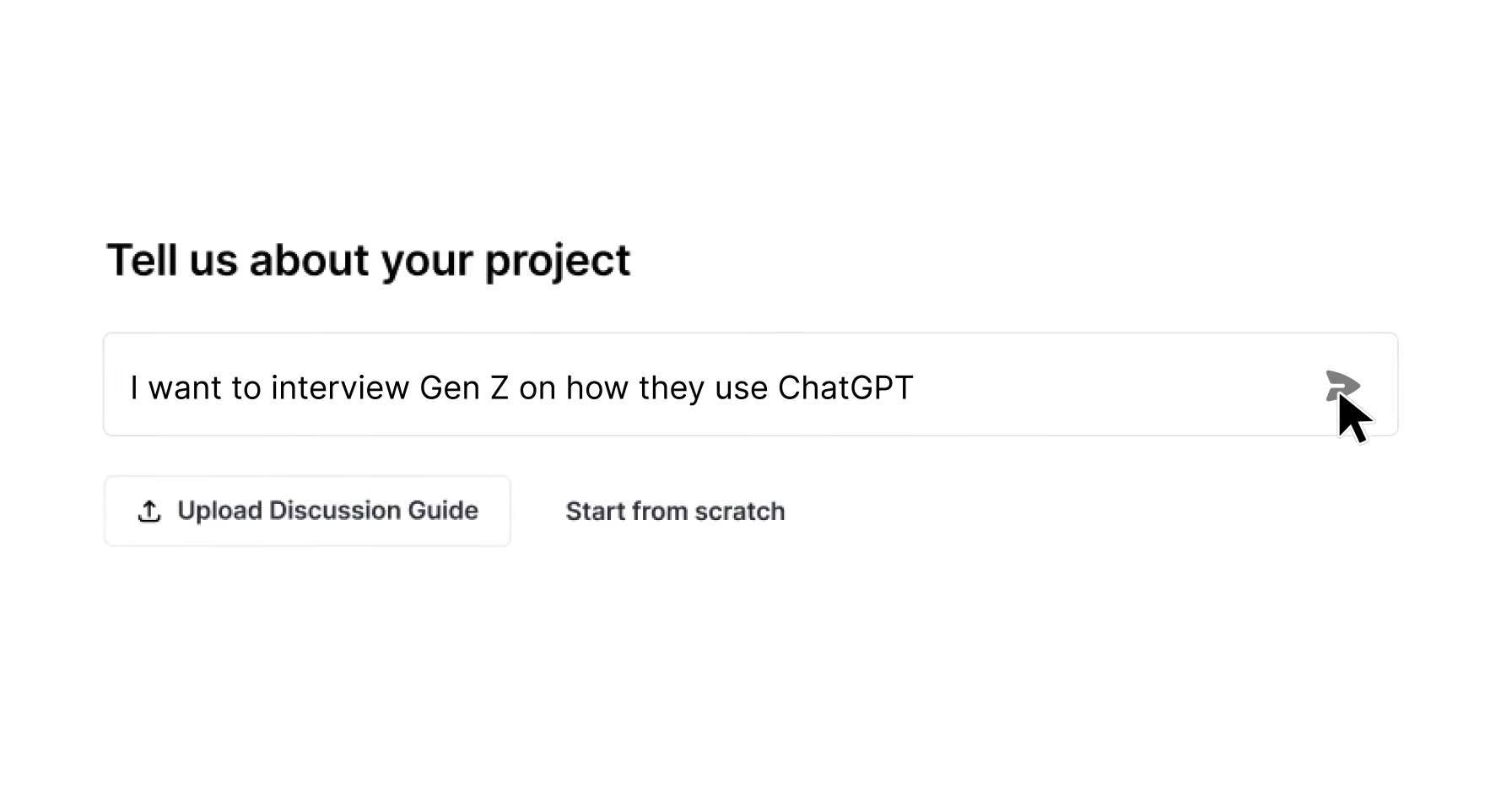
Every rigorous study begins with a business question tied to a measurable outcome, such as churn reduction, feature prioritization, expansion opportunity, or claim validation. Vague briefs produce vague findings. Before a single interview is designed, the insights leader must align with product, brand, and commercial stakeholders on the decision the research will inform. This alignment step traditionally requires multiple meetings and repeated brief revisions. Listen Labs’ AI-assisted study co-design compresses that process by translating natural-language briefs into structured objectives and question guides in seconds, anchoring every study to a specific business outcome from the start.
2. Recruit for diversity of experience, not demographics
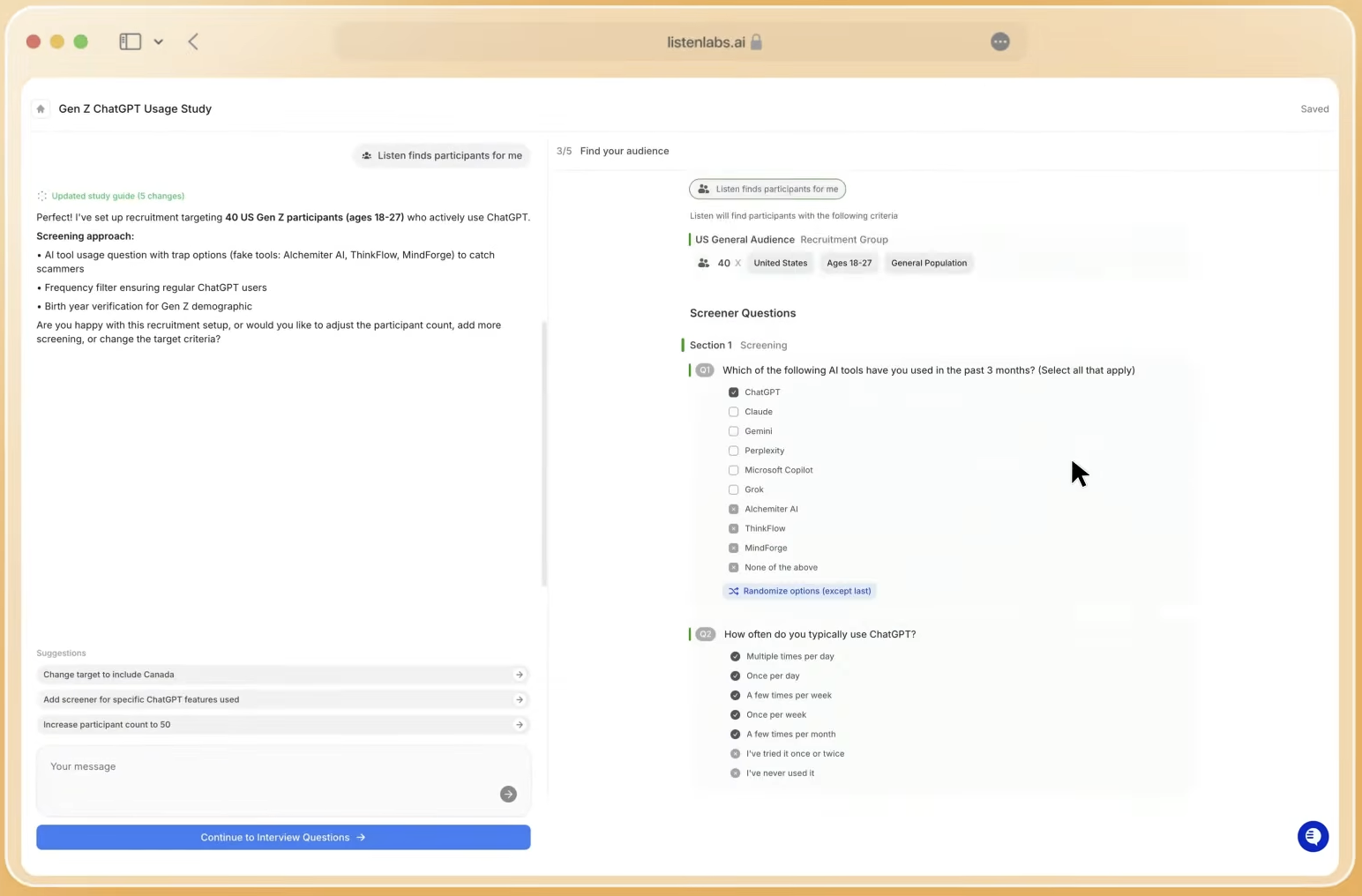
Representative samples need diversity of experience, not just demographic quotas. Qualitative trustworthiness frameworks emphasize transferability, which is the degree to which findings apply beyond the immediate sample. Transferability requires variation in context, experience, and relationship with the category. Listen Labs’ Listen Atlas panel of 30M verified respondents uses behavioral and intent matching, not only self-reported demographics, to surface participants whose lived experiences create the most informative variation.
3. Combine interviews with support, sales, and behavioral data
Interviews capture what customers say, while behavioral data captures what they do. Triangating both surfaces the gap between stated preference and actual behavior, which is where the most actionable insights live. Enterprise insights teams should pull CRM signals, support ticket themes, and product usage data before fieldwork begins, then use that context to sharpen interview probes. Historically, this triangulation approach was practical only for small-sample studies because human moderation could not scale. With qual-at-scale, the old trade-off between depth and scale is no longer a barrier, making triangulation realistic even across hundreds of simultaneous interviews.
4. Use AI-moderated adaptive conversations
Adaptive probing in AI-moderated interviews enables follow-up questions that change based on participant responses. This approach replicates the depth of skilled human moderation across hundreds of parallel conversations. Listen Labs’ AI interviewer adapts follow-ups in real time, probes deeper on short or unexpected answers, and maintains consistent pacing across sessions in 100+ languages, which removes the scheduling bottleneck that often pushes enterprise teams toward surveys. Ninety-two percent of participants report top comfort levels in AI-moderated sessions, matching the comfort reported in human-moderated sessions.
5. Capture emotional signals alongside verbatim responses
Verbatim responses and emotional signals provide different but complementary data. A participant may rate a concept positively while displaying micro-expressions of confusion or hesitation that signal a deeper concern. Listen Labs’ Emotional Intelligence layer analyzes tone of voice, word choice, and subconscious micro-expressions across every interview, built on Ekman’s universal emotions framework. Every emotion label is traceable to the exact timestamp, verbatim quote, and reasoning, giving insights teams evidence they can defend in stakeholder meetings.
6. Apply systematic, bias-resistant coding
Preregistration of analysis plans protects against confirmation bias, hindsight bias, and outcome bias by clarifying whether coding decisions were planned in advance. Human analysts often emphasize findings that confirm pre-existing hypotheses without realizing it. Structured coding tasks show that AI can achieve intercoder reliability comparable to human coders when the schema is well defined and prompts are iteratively refined. Listen Labs’ analysis engine processes all interview data against a proprietary schema built from tens of thousands of completed studies. This approach identifies patterns across hundreds of responses while reducing analyst-introduced bias.
7. Distinguish symptoms from root causes
Participants describe symptoms such as “the checkout is confusing” or “the packaging feels cheap,” not root causes. Rigorous analysis adds a second layer of interpretation that connects surface complaints to underlying motivations, mental models, or unmet needs. In a pharmaceutical concept-testing example, an AI moderator recorded positive sentiment but missed nonverbal hesitation signals that revealed deep concerns about packaging stigma. That insight only surfaced through deeper probing. Listen Labs’ Research Agent separates surface themes from root-cause patterns and flags emotionally significant moments for human review, so the final analysis reflects what customers mean, not only what they say.
8. Turn themes into opportunity statements
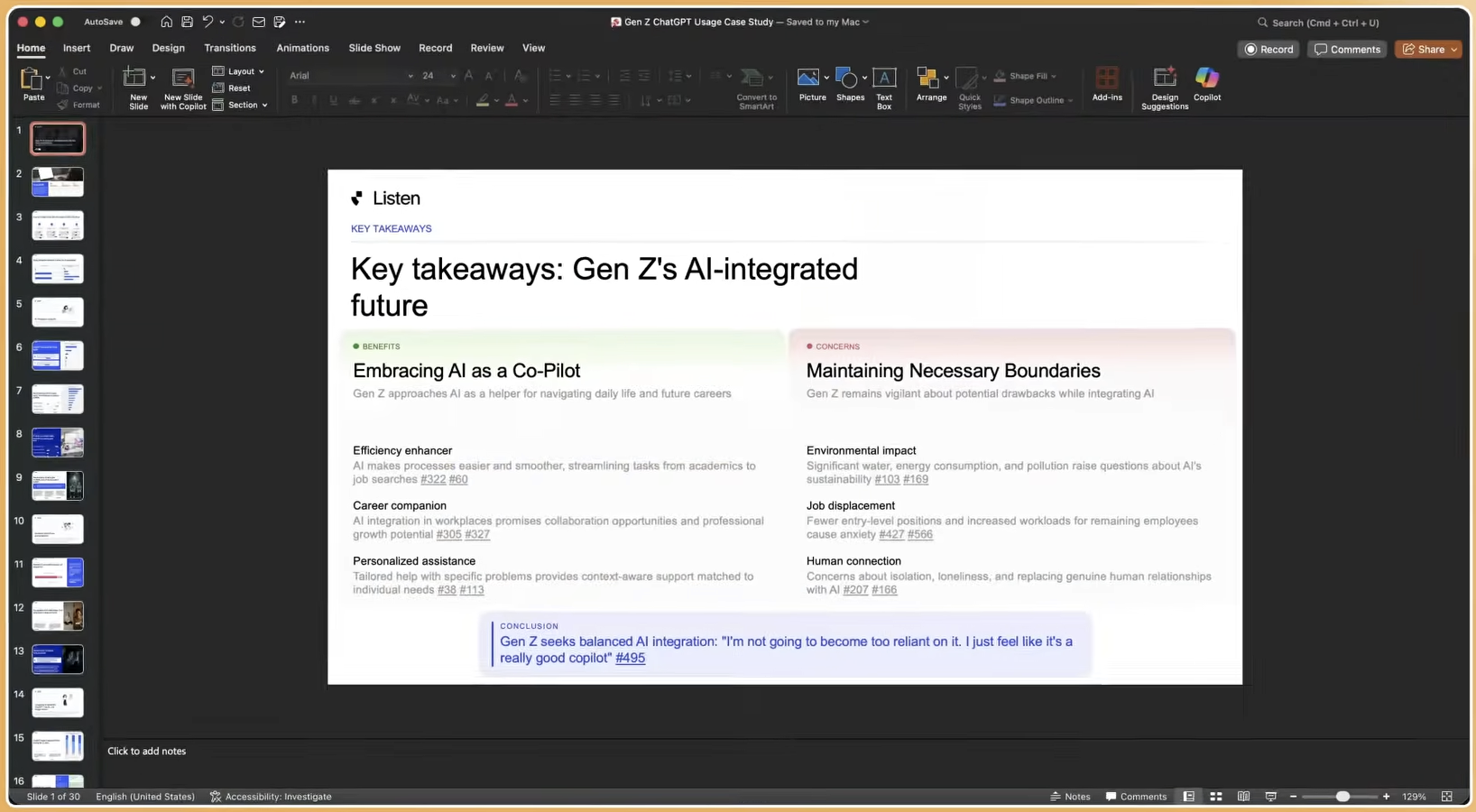
A theme is an observation, while an opportunity statement is a directive. For example, “Users who view prediction markets as entertainment re-engage 2.4x more frequently, so design the experience around entertainment, not income.” Every insight delivered to a stakeholder should appear as an opportunity statement that connects a customer truth to a business action. Listen Labs’ Research Agent generates consultant-quality slide decks, memos, and highlight reels in under a minute, with findings pre-framed for product, brand, and commercial audiences.
9. Build a searchable institutional knowledge base
Enterprise research teams often re-investigate the same questions because past findings sit in slide decks and individual researchers’ memories. Mission Control, Listen Labs’ cross-study intelligence layer, serves as the organization’s source of truth for everything learned from customers. Each new study grows the knowledge base and enables natural-language queries across all past research in seconds, which reduces redundant fieldwork.
10. Run research as a continuous program
Qual-at-scale works well when research requires large sample sizes or broad geographic reach, with AI tools engaging hundreds or thousands of participants remotely and asynchronously. One-off studies produce point-in-time snapshots. A continuous program tracks how customer sentiment, unmet needs, and competitive perceptions shift over time, giving insights leaders the trend data needed to anticipate business problems rather than react to them. Listen Labs supports always-on research infrastructure that runs studies in parallel without adding headcount.
See the full workflow running live on your research brief and understand how each step translates to your team’s backlog.
Listen Labs workflow benefits for enterprise teams
Listen Labs enables enterprise teams to move from brief to actionable insights in under 24 hours instead of the traditional six-week cycle. The platform combines AI-moderated interviews, behavioral panel matching at 30M-respondent scale, emotional signal analysis, and automated deliverable generation so research leaders can run continuous customer intelligence programs without adding headcount. One platform replaces the multi-vendor coordination typically required for recruitment, moderation, transcription, and synthesis.
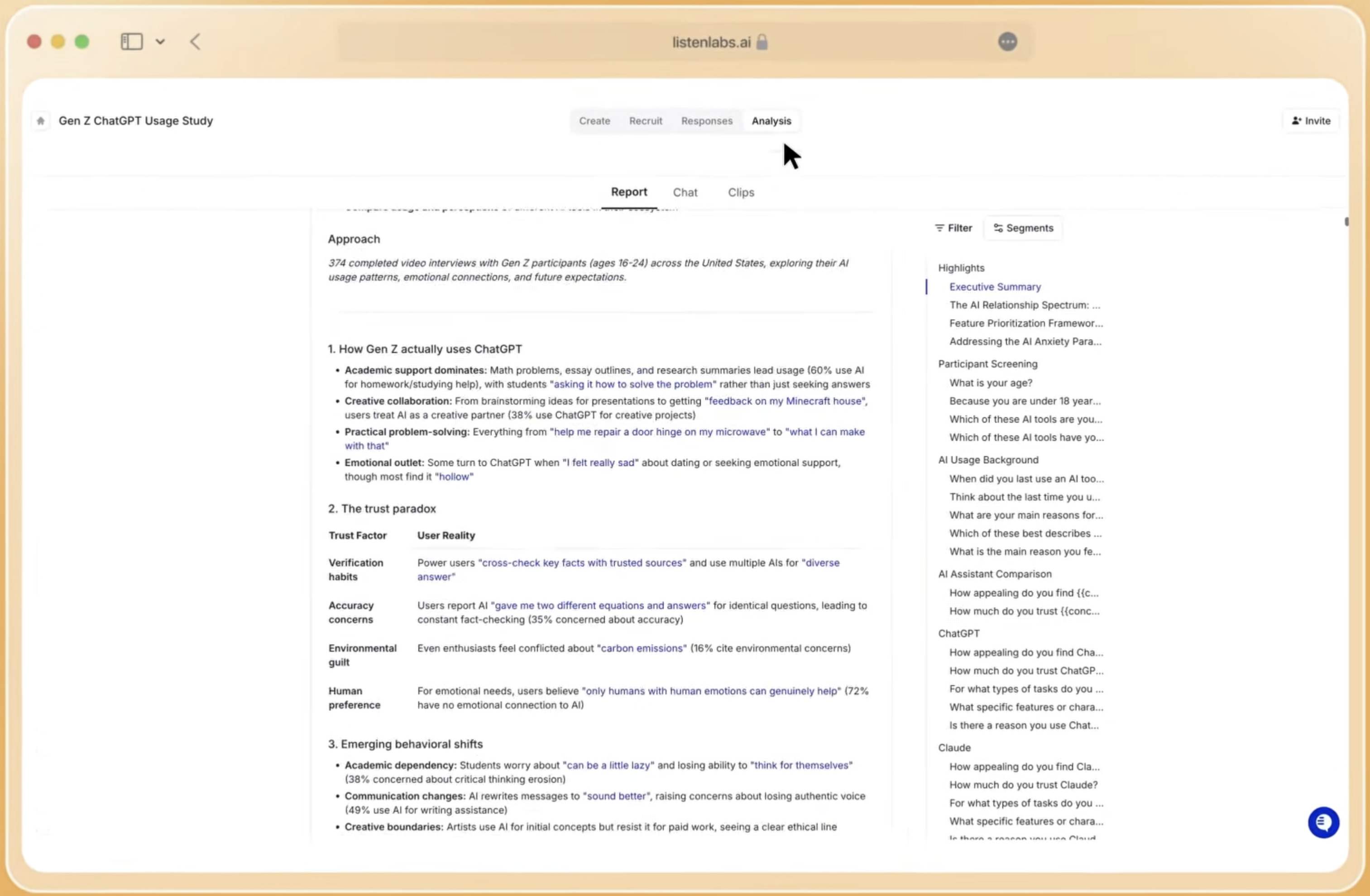
This unified workflow connects directly to the 10 steps above, turning qualitative research best practices into a single, repeatable system that fits enterprise timelines.
Enterprise outcomes at Fortune 500 scale
Microsoft used Listen Labs to collect global customer stories for its 50th anniversary celebration within a single day. The Director of Data Science at Microsoft noted, “I can reach out to hundreds of users at one third of the cost.” Anthropic ran 300+ churn interviews in 48 hours through Listen Labs, surfacing where former Claude users migrate and delivering a prioritized list of 10 must-fix items. The Director of Product Strategy described the work as delivering “a level of clarity and speed we’ve never had before.” Procter & Gamble used Listen Labs to conduct 250+ interviews evaluating how men respond to new product claims, surfacing where claims feel exaggerated before they reach market and shaping product and brand strategy in hours. Platforms like Listen Labs layer on auto-recruiting, transcription, sentiment tagging, and insight summarization so teams jump from question to findings in hours, not weeks.
These outcomes illustrate how the workflow and platform capabilities translate into real impact for global brands operating at Fortune 500 scale.
Frequently Asked Questions
Is the AI interviewer as rigorous as a trained human researcher?
Listen Labs maintains methodological rigor equivalent to an experienced in-house research team for the vast majority of enterprise consumer insights use cases. The platform’s AI interviewer adapts follow-up questions in real time, probes deeper on short or unexpected answers, and conducts sessions in 100+ languages with consistent pacing across every participant. Listen Labs’ in-house research team, with 50+ years of combined expertise, continuously reviews and refines the moderation methodology. For enterprise teams running concept tests, claim validation, churn analysis, brand perception studies, and continuous customer intelligence programs, the AI delivers comparable quality at much greater speed and scale, freeing human researchers to focus on strategic interpretation and stakeholder communication rather than logistics.
How does Listen Labs prevent participant fraud?
Three integrated layers protect data quality. First, Listen Labs works exclusively with high-quality, non-commodity panel sources, avoiding professional survey-takers from commodity quant panels. Second, Quality Guard monitors every interview in real time across video, voice, content, and device signals to detect fraud, low-effort responses, AI-generated scripts, and mismatched profiles. Third, a dedicated recruitment operations team adds a human review layer, and participants are limited to three studies per month to reduce panel fatigue and repeat-respondent bias. This compounding quality flywheel means the more studies Listen Labs runs, the stronger its audience quality becomes, creating a structural advantage competitors cannot easily match.
What data security certifications does Listen Labs hold?
Listen Labs holds SOC 2 Type II, GDPR, ISO 27001, ISO 27701, and ISO 42001 certifications. All customer data is protected with 256-bit encryption and is never used for AI model training. The platform supports enterprise SSO and meets the data governance requirements of Fortune 500 legal, security, and compliance teams operating across multiple jurisdictions, including the Americas, Europe, APAC, and MEA.
Does Listen Labs replace existing research teams?
Listen Labs acts as a force multiplier for existing research teams, not a replacement. The platform handles the logistics-intensive stages of the research lifecycle, including study design, recruitment, moderation, transcription, coding, and initial deliverable generation. Researchers can then focus on strategic analysis, stakeholder communication, and business decision support. Enterprise teams using Listen Labs run significantly more studies with the same headcount, clear research backlogs, and reduce wait times for internal stakeholders in product, brand, and marketing without adding headcount or budget proportionally.
What types of studies can Listen Labs support at enterprise scale?
Listen Labs supports the full range of enterprise consumer insights study types, including concept and prototype testing, creative and ad testing, claim validation, brand perception research, consumer journey mapping, churn and win-back analysis, multi-market segmentation studies, usability testing with screen sharing, pricing research, and continuous customer intelligence programs. The platform handles both one-off studies and always-on research programs, with support for monadic and sequential randomization, quotas, branching logic, stimuli display such as images, video, PDFs, and live URLs, and mixed qualitative-quantitative formats within a single interview.
Next-step checklist for Consumer Insights leaders
1. Audit your current research backlog. Count the number of unfulfilled or delayed research requests from the past quarter. That number represents the cost of the current model.
2. Identify one high-priority study to pilot. Choose a study currently queued for 4–6 weeks and run it through a continuous program model instead. Measure time-to-insight and stakeholder satisfaction against your baseline.
3. Evaluate platforms against three criteria: speed, quality, and governance. Speed means results in under 24 hours. Quality means bias-resistant coding, emotional signal capture, and verified participant recruitment. Governance means SOC 2, GDPR, ISO 27001, ISO 27701, and ISO 42001 compliance with no PII exposure risk.
4. Map your institutional knowledge gaps. Identify research questions your team has answered more than once in the past 18 months. A searchable knowledge base eliminates redundant fieldwork and compounds the value of every study conducted going forward.
5. Book a demo. See the full 10-step enterprise workflow, from AI-assisted study design through emotional signal analysis and one-click deliverables, running on a real research brief in under 24 hours.
See how Listen Labs multiplies your team’s research output without adding headcount or budget proportionally.