Written by: Anish Rao, Head of Growth, Listen Labs
Key Takeaways
- AI-visibility tools and traditional monitors solve different problems. AI-visibility tracks how generative engines cite or misrepresent brands. Traditional monitors track social and web mentions plus sentiment.
- By 2026, brands that ignore AI-visibility will miss a major shift in discovery traffic as search volume moves toward ChatGPT, Gemini, and Google AI Overviews.
- Startup, mid-market, and enterprise AI-visibility tools use different pricing tiers and prompt-volume limits. Those limits restrict competitive tracking for multi-brand or multi-market teams.
- AI-visibility tools and traditional monitors show where perception is shifting but not why. A validated primary-research layer is required to turn signals into decisions.
- Listen Labs pairs with any monitoring stack to deliver same-day, AI-moderated qualitative research across 100+ languages. See how leading brands close the loop between visibility data and customer truth.
What AI-Visibility Tracking Actually Measures
AI-visibility tracking captures citation logs, source-domain performance, topic-level visibility matrices, and model-by-model breakdowns across generative engines. It answers where ChatGPT recommends your brand, which URLs Perplexity cites when a buyer asks about your category, and where engines hallucinate your products. Traditional monitoring answers a different question. It measures how often your brand is mentioned on social and the open web and whether sentiment trends positive or negative. The two data streams do not overlap. AI-visibility platforms support global and multi-language prompt tracking, share-of-voice measurement across multiple LLMs, and action-oriented reporting with optimization workspaces, which traditional monitors do not provide.
The urgency is clear. Gartner predicted that by 2026 traditional search engine volume will drop 25% as search share shifts toward AI chatbots and virtual agents, and ChatGPT holds roughly 17% of digital search volume with hundreds of millions of users. Organic click-through rates for top-ranking pages can drop by 35% or more when AI Overviews are present. Brands that only monitor social mentions are flying blind on the channel that is absorbing their discovery traffic.
The tools that close this visibility gap fall into three tiers with clear trade-offs between cost and coverage. Startup platforms keep entry prices low but restrict prompt volume. Mid-market tools expand coverage and brands but raise cost per prompt. Enterprise suites remove most limits yet bundle AI visibility inside broader SEO stacks, which inflates spend for single-function needs.
Startup AI-Visibility Tools: Cost-Controlled Coverage
Startup-tier tools focus on affordability and basic coverage. That focus creates a predictable ceiling once teams track multiple products, markets, or competitors.
- Peec.ai — Starter at €89/month for 25 prompts, Pro at €199/month for 100 prompts, Enterprise at €499+/month for 300+ prompts, with a 7-day free trial. Limitation: prompt caps make coverage tight for brands tracking several product lines at once.
- Otterly AI — Lite at $29/month for 15 prompts, Standard at $189/month for 100 prompts, Premium at $489/month for 400 prompts. Limitation: the Lite tier’s 15-prompt ceiling cannot support meaningful competitive category tracking.
- Profound — Starter at $99/month tracking 50 prompts on ChatGPT only, Growth at $399/month covering 100 prompts across three AI platforms. Limitation: the Starter tier locks to a single engine and misses Gemini and Perplexity.
- LLM Pulse — Starter at €49/month for 1 project and 40 prompts, Growth at €99/month for 2 projects and 100 prompts, Scale at €299/month for 5 projects and 300 prompts. Limitation: the project-based structure creates friction for brands managing multiple sub-brands under one account.
Mid-Market AI-Visibility Tools: Scaling Prompts and Brands
Mid-market tools respond to startup-tier limits by raising prompt caps and supporting more brands and engines. That expansion improves coverage while pushing monthly spend into a higher band.
- SE Visible — Core at $189/month for 450 prompts and 5 brands, Plus at $355/month for 1,000 prompts and 10 brands, Max at $519/month for 1,500 prompts and 15 brands, with unlimited user seats. Limitation: pricing scales by prompt volume, so high-frequency tracking across many markets increases cost quickly.
- Nightwatch AI add-on — Base plans from $39–$699/month with AI tracking available as an add-on from $99–$495/month for 100–500 prompts. Limitation: AI tracking functions as an add-on, not a native module, which fragments reporting for teams that want unified dashboards.
- Writesonic Brand Tracker — Professional at $199/month (annual) or $249/month (monthly), Advanced at $399/month (annual) or $499/month (monthly), Enterprise custom. Limitation: the platform is primarily a content generation suite, so brand tracking competes with many other modules and feels less focused for dedicated monitoring.
Ready to turn AI-visibility signals into validated customer insight? See how mid-market brands close the loop between what generative engines say and what customers actually think.
Enterprise AI-Visibility Tools: Suite-Based Monitoring
Enterprise tools bundle AI-visibility into broader SEO and analytics suites. This structure removes many volume constraints but raises total cost for teams that only need AI monitoring.
- SEOClarity — Quote-based pricing starting at $2,500/month for Research & Content, $3,200/month for Technical SEO, and $4,500/month for full Enterprise tiers. Limitation: no published annual discount and high total cost of ownership for teams that want AI-visibility as a standalone capability.
- Semrush AI Visibility — Integrated into the Semrush platform. Semrush requires testing thousands of prompts via real UI interactions rather than APIs alone to capture non-text formats like tables and maps, which increases operational overhead at scale. Limitation: best suited for teams already embedded in the Semrush ecosystem, since standalone AI-visibility buyers pay for unused capabilities.
- Sight AI — Enterprise-tier tool with custom pricing. Limitation: limited public documentation on pricing and model coverage makes independent evaluation difficult without engaging sales.
Traditional Social and Web Monitors to Compare
Traditional monitors still matter because they track human conversation across social and the open web. They do not, however, see inside generative engines.
- Brand24 — Entry-level pricing accessible for SMBs, covering social, news, and web mentions with sentiment scoring. Limitation: does not track brand presence inside generative AI outputs.
- YouScan — Visual and text-based social listening with strong image recognition. Limitation: coverage is social-first and excludes generative engine monitoring.
- Meltwater — Broad media intelligence platform covering earned, social, and consumer intelligence. Limitation: enterprise pricing and complexity feel heavy for mid-market teams with focused monitoring needs.
- Qualtrics Brand Tracker — Continuous quantitative brand tracking via survey panels with audience segmentation. Enterprise configurations are priced for large organizations. Limitation: quantitative tracking surfaces what metrics are shifting but cannot explain why perception is changing, which leaves a gap that qualitative research must close.
Value-for-Money Analysis Across Tiers
Startup AI-visibility tools such as Peec.ai, LLM Pulse, and Otterly AI run roughly €49–€499/month and deliver citation and share-of-voice data across generative engines. That low entry cost comes with a binding constraint. Prompt caps between 15 and 100 per month limit competitive tracking for brands operating in several categories or markets. Mid-market tools like SE Visible, the Nightwatch add-on, and Writesonic cost $189–$519/month and expand multi-brand and multi-engine coverage. Enterprise tools such as SEOClarity and Semrush start around $2,500/month and bundle AI visibility inside broader SEO suites, which inflates cost for teams with a single-function need.
Traditional monitors occupy a wide pricing band. Traditional full-service agency brand trackers can cost tens of thousands of dollars per year, while enterprise panel products like YouGov BrandIndex carry custom annual pricing typically ranging from $50,000 to $200,000+. Neither category explains the why behind shifting brand metrics. A primary research layer is required for that.
Multilingual Support for Monitoring and Research
AI-visibility tools vary significantly in language coverage. Most startup-tier tools support English-language prompt tracking by default, with European language support available on higher tiers. Leading AI-visibility platforms support global and multi-language prompt tracking, yet teams in APAC or MEA should confirm per-language prompt availability before committing to a plan. Traditional monitors like Meltwater and YouScan offer broader multilingual social listening, though depth still varies by region.
For primary research across global markets, Listen Labs supports 100+ languages for AI-moderated interviews with automatic translation and transcription, covering 45+ countries across the Americas, Europe, APAC, and MEA. No AI-visibility tool or traditional monitor matches this footprint at the research layer.
How These Tools Fit into SEO and Research Stacks
AI-visibility tools integrate most naturally with SEO platforms. SE Visible and Nightwatch connect to existing rank-tracking workflows. Semrush AI Visibility sits inside a suite that already manages keyword research, backlink analysis, and content audits. Traditional monitors like Meltwater connect to CRM and social publishing tools. Neither category integrates natively with primary research platforms, which creates a gap between the signal, meaning what generative engines say about your brand, and the validated insight, meaning what customers actually think and why.
2026 Outlook and Emerging AI-Visibility Capabilities
AI search traffic has grown substantially year-over-year, and visitors referred by AI platforms spend 68% more time on websites than visitors from traditional organic search. This pattern signals that AI-driven traffic, though lower in volume, carries higher intent. A growing number of people are expected to have AI personal assistants capable of making purchases, so brand tracking tools will need to monitor how AI agents recommend and evaluate brands, not just how humans search. Beyond the 25% search volume shift Gartner forecasts, the firm also predicts that by 2027, 20% of brands will deliberately promote their lack of AI in product development. Tracking tools will therefore need to distinguish AI-adoption positioning from AI-avoidance positioning as separate brand signals. Persona-based prompt generation, as seen in tools like Gumshoe.AI, which generates prompts from defined target personas including roles, objectives, and challenges, represents the next capability frontier for AI-visibility platforms.
Pairing AI Visibility Tools with Primary Research Platforms
AI-visibility tools show that generative engines cite a competitor more often or hallucinate your product attributes. Traditional monitors show that social sentiment dipped eight points last quarter. Neither tool explains why customers feel that way, which words they use to describe the problem, or which message would shift perception. That explanatory layer requires validated primary research, and most brand and insights teams leave this gap open.
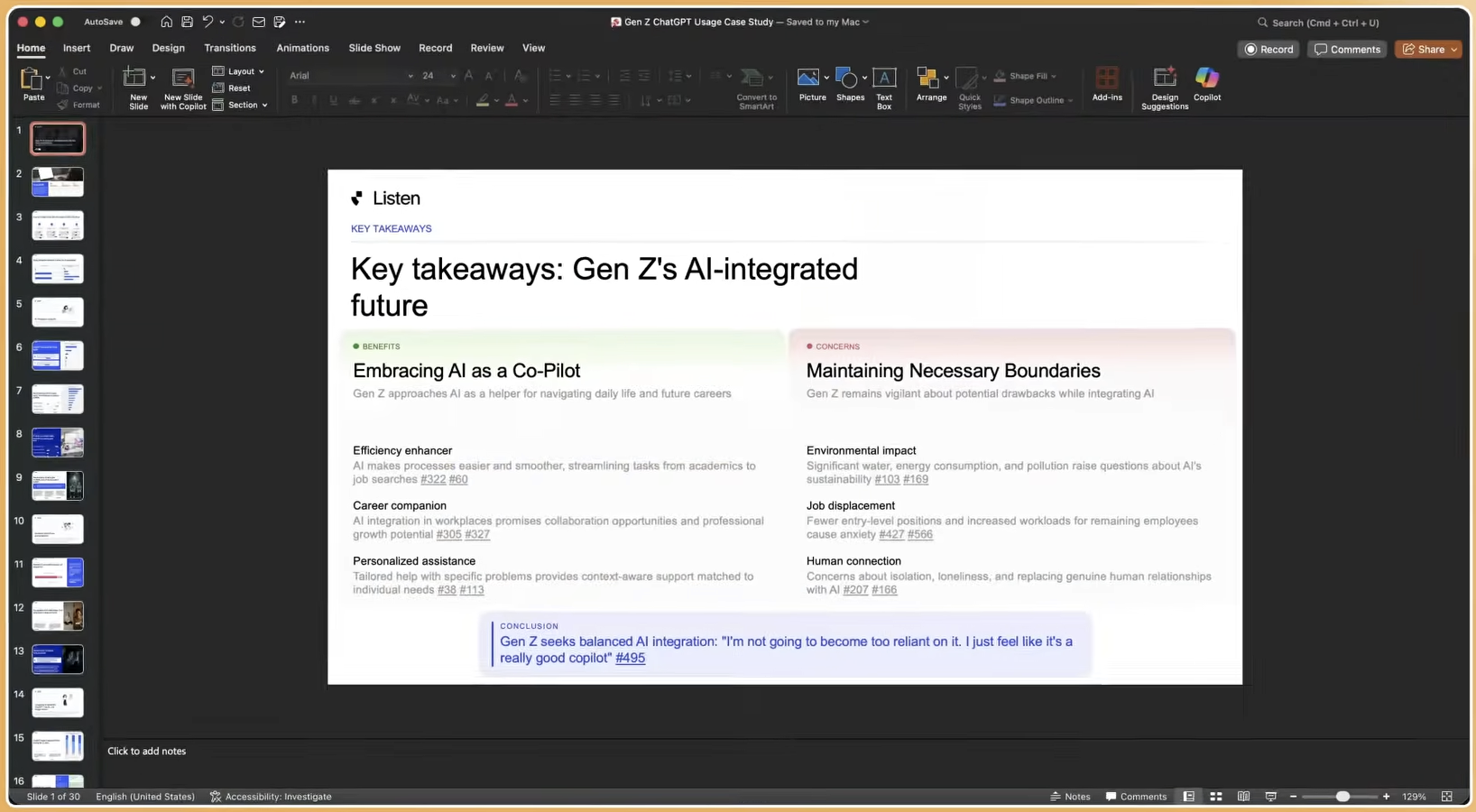
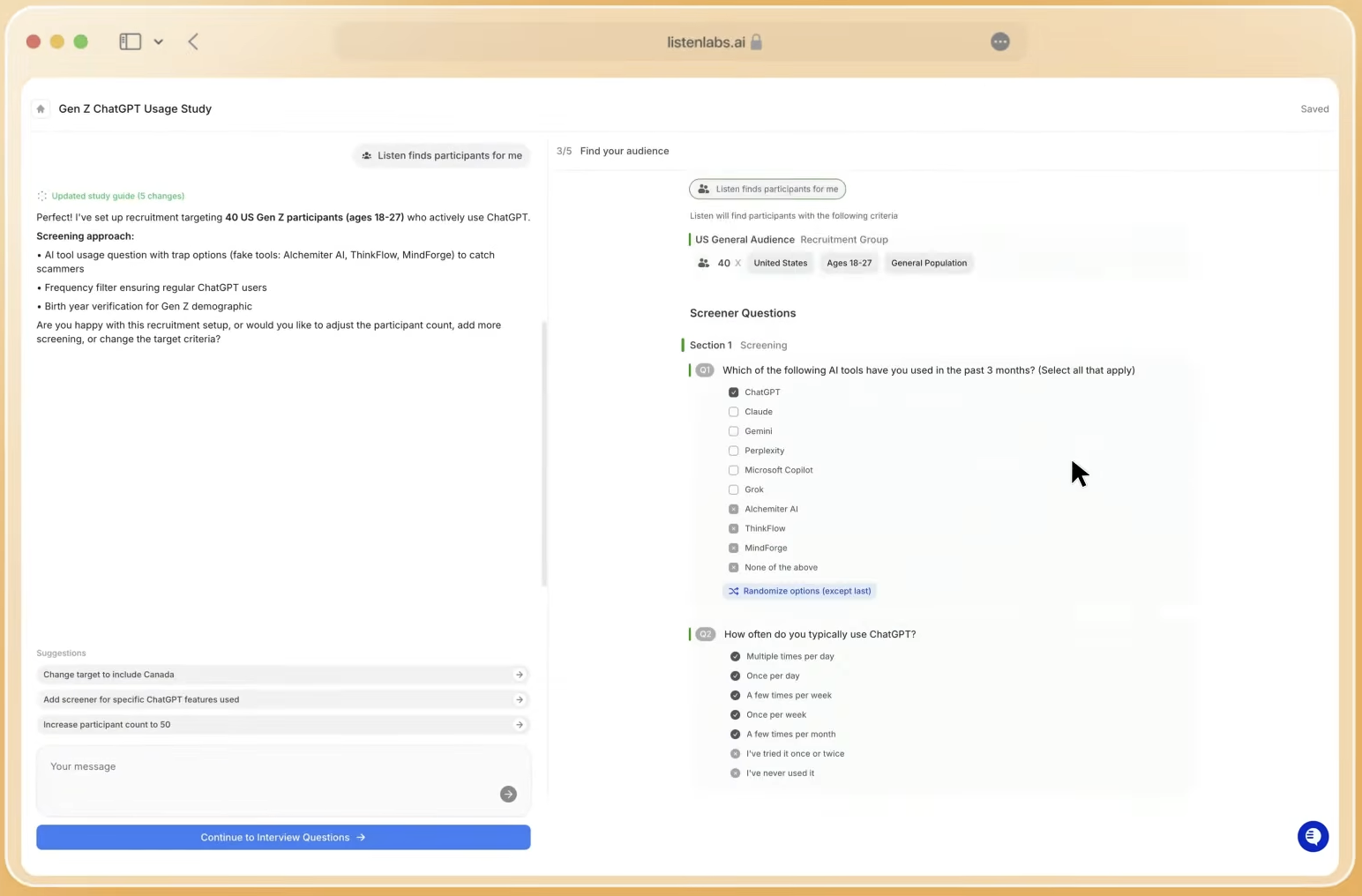
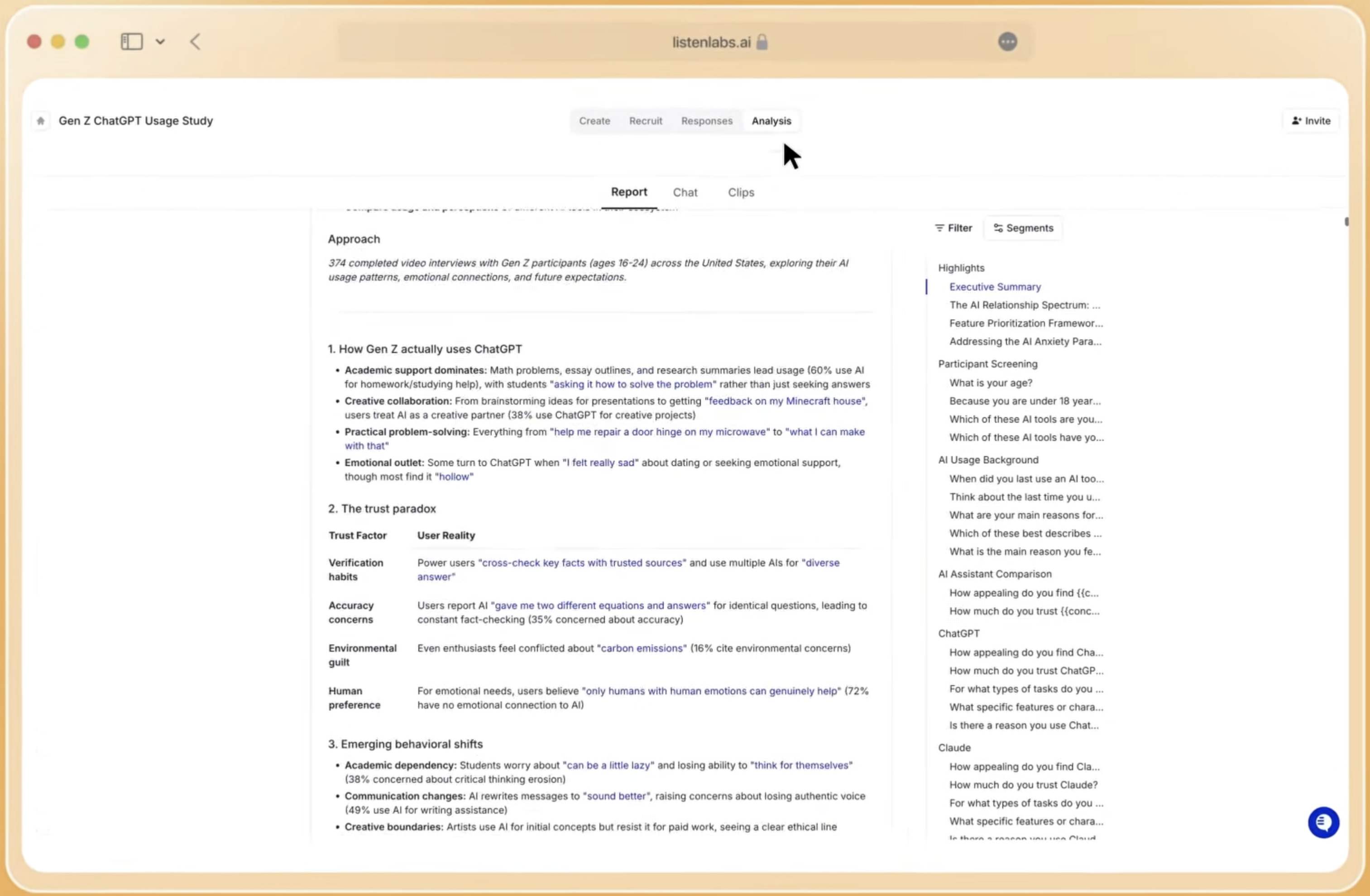
Listen Labs closes that gap. It is an end-to-end AI research platform that sources participants from a network of 30M+ verified respondents, conducts thousands of AI-moderated in-depth interviews simultaneously, and delivers consultant-quality reports, slide decks, and video highlight reels in under 24 hours. When an AI-visibility tool surfaces a citation gap or a sentiment anomaly, Listen Labs converts that signal into a validated research question and returns answers the same day, not in four to six weeks.
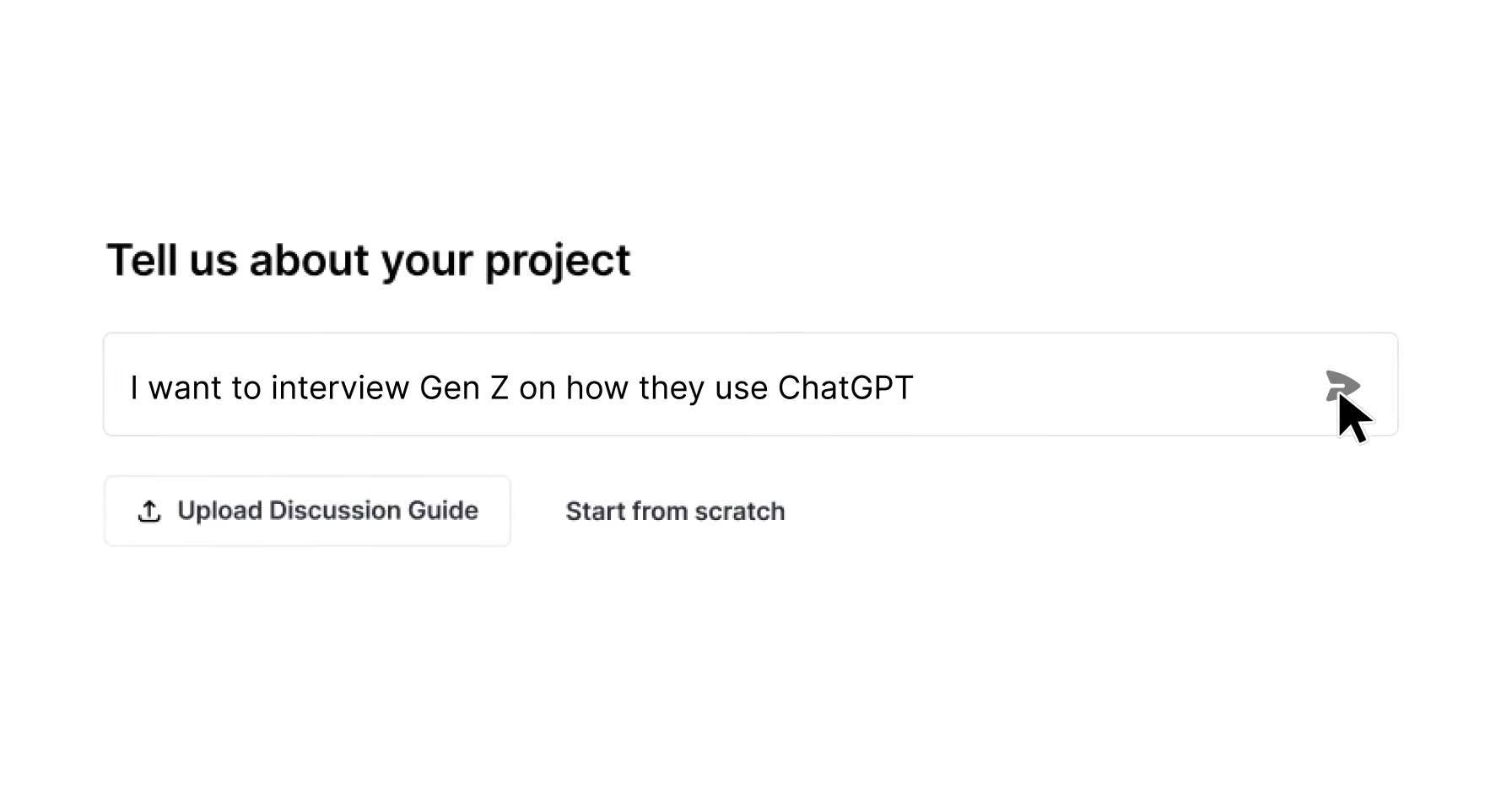
The workflow is direct. An AI-visibility tool flags that Perplexity is recommending a competitor for a high-intent query in your category. Listen Labs deploys a targeted study to 200+ verified buyers in that segment, surfaces the specific language and unmet needs driving the preference, and delivers a prioritized action list before the next planning cycle. Microsoft used Listen Labs to collect global customer stories within a single day. Anthropic’s Claude team ran 300+ user interviews in 48 hours to surface churn drivers. P&G used it to evaluate product claim resonance with 250+ interviews before market launch. The research cycle that once took six weeks now takes less than 24 hours.
See how Listen Labs pairs with your existing AI-visibility stack. Get a live walkthrough of how the platform converts visibility signals into validated customer insight.
Decision Checklist by Company Size
Startup teams ($0–$10M revenue, limited research budget): Start with Otterly AI or LLM Pulse for AI-visibility under €100/month. Pair with Brand24 for social listening. Use Listen Labs for on-demand qualitative studies when a monitoring signal needs explanation.
Mid-market teams ($10M–$500M revenue, 30-day selection window): Choose SE Visible or the Nightwatch AI add-on for AI-visibility. Use Meltwater or YouScan for traditional monitoring. Add Listen Labs as the primary research layer that validates what both tools surface. This stack converts monitoring data into concrete decisions.
Enterprise teams ($500M+ revenue, global brand programs): Use SEOClarity or Semrush AI Visibility for enterprise-grade citation and share-of-voice tracking. Add Qualtrics Brand Tracker or YouGov BrandIndex for continuous quantitative benchmarking. Use Listen Labs for rapid qualitative depth at scale, replacing the 4–6 week agency research cycle with same-day insight across the global coverage described earlier.
Across all buyer sizes, the pattern stays consistent. AI-visibility tools and traditional monitors generate signals. Listen Labs generates understanding. The brands that will lead in 2026 will treat primary research as a continuous closed loop triggered by the signals their monitoring stack surfaces every week.
Do not leave your monitoring stack without a research layer. See how fast validated customer insight can move with Listen Labs.
Frequently Asked Questions
What is the difference between AI-visibility tracking and traditional brand monitoring?
AI-visibility tracking measures how generative AI engines such as ChatGPT, Gemini, Perplexity, Claude, and Google AI Overviews cite, mention, or misrepresent your brand inside their outputs. It tracks citation frequency, source-domain performance, share of voice across LLMs, and hallucination instances. Traditional brand monitoring tracks mention volume, sentiment trends, and alerts across social media platforms and indexed web content. The two categories measure different surfaces. A brand can have strong social sentiment and still be absent from or misrepresented in generative AI outputs, and the reverse can also occur. In 2026, a complete brand intelligence stack requires both.
Why do AI-visibility tools and traditional monitors both fail to explain why brand perception is shifting?
Both categories are observational. AI-visibility tools show that a competitor is cited more frequently in a topic cluster. Traditional monitors show that sentiment dropped after a product launch. Neither tool can conduct a conversation with a customer to understand motivation, specific language, or unmet needs driving the shift. That explanatory layer requires primary research, specifically in-depth qualitative interviews with verified participants. Listen Labs fills this role by conducting thousands of AI-moderated interviews simultaneously and delivering validated findings in under 24 hours, which turns monitoring signals into actionable insight instead of unanswered questions.
How does Listen Labs integrate with an existing AI-visibility and monitoring stack?
Listen Labs operates as the primary research layer that sits alongside, not instead of, AI-visibility tools and traditional monitors. When those tools surface a signal such as a citation gap, a sentiment anomaly, or a competitor gaining share of voice in generative outputs, Listen Labs deploys a targeted research study to the relevant audience segment. The platform handles study design, participant recruitment from its 30M+ verified respondent network, AI-moderated interviews, analysis, and delivery of consultant-quality reports and slide decks, all within 24 hours. The result is a closed loop where monitoring tools detect the signal and Listen Labs explains it with validated customer evidence.
What should mid-market brand teams prioritize when selecting tools within a 30-day window?
Mid-market teams with $10M–$500M in revenue and a 30-day selection window should evaluate three criteria in order. First, assess coverage of the surfaces that matter most to buyers, meaning generative AI engines, social, or both. Second, compare prompt or mention volume limits against the number of brands and markets that need tracking. Third, confirm the presence of a primary research capability to explain what monitoring data surfaces. For AI-visibility, SE Visible and the Nightwatch AI add-on offer strong mid-market value-for-money balance. For traditional monitoring, Meltwater and YouScan cover broad social and web surfaces. Listen Labs should be evaluated as the research layer that makes both investments actionable, because without it, monitoring data accumulates without generating decisions.
How quickly can Listen Labs deliver research findings after an AI-visibility signal is detected?
Listen Labs compresses the entire research cycle, from study design through participant recruitment, AI-moderated interviews, analysis, and final deliverables, to less than 24 hours. This speed advantage replaces the traditional 4–6 week qualitative research cycle mentioned earlier. When an AI-visibility tool flags an unexpected citation pattern or a traditional monitor surfaces a sentiment shift, a Listen Labs study can be designed, fielded, and analyzed before the next business day. Anthropic’s Claude team ran 300+ user interviews in 48 hours. Microsoft collected global customer stories within a single day. The platform supports studies across the 100+ languages and global footprint described earlier, which makes it viable for brand teams responding to signals across multiple markets simultaneously.