
Written by: Anish Rao, Head of Growth, Listen Labs
Key Takeaways for 2026 AI Research Budgets
- AI customer research platforms use per-study, per-query, and SaaS subscription pricing. Subscriptions give predictable budgets for high-volume enterprise teams.
- Traditional agencies charge $15,000-$27,000 per study with 6-12 week cycles, while AI tools deliver comparable insights at one-third the cost in under 24 hours.
- Audience complexity, geography, and niche segments such as enterprise decision-makers drive pricing variations and can double or triple base rates.
- Listen Labs’ hybrid subscription-plus-credits model and 30M participant network deliver 5x faster projects and 3x ROI improvement compared with fragmented tools.
- Enterprises scaling qualitative research should model custom pricing in a pilot session to evaluate enterprise-grade insights.
Choosing the Right AI Research Pricing Model
Choosing the wrong pricing model can inflate your research budget or leave capacity unused. Understanding these three structures helps you match pricing to your team’s research cadence and avoid overspending.
Per-Study Pricing varies by audience complexity and geographic reach. This model fits organizations that run occasional projects and want clear, project-based costs. It becomes expensive when teams move toward weekly or monthly studies at scale.
Per-study pricing usually includes participant recruitment, AI moderation, basic analysis, and standard reporting. Teams gain simplicity on a project level but sacrifice flexibility when research demand spikes.
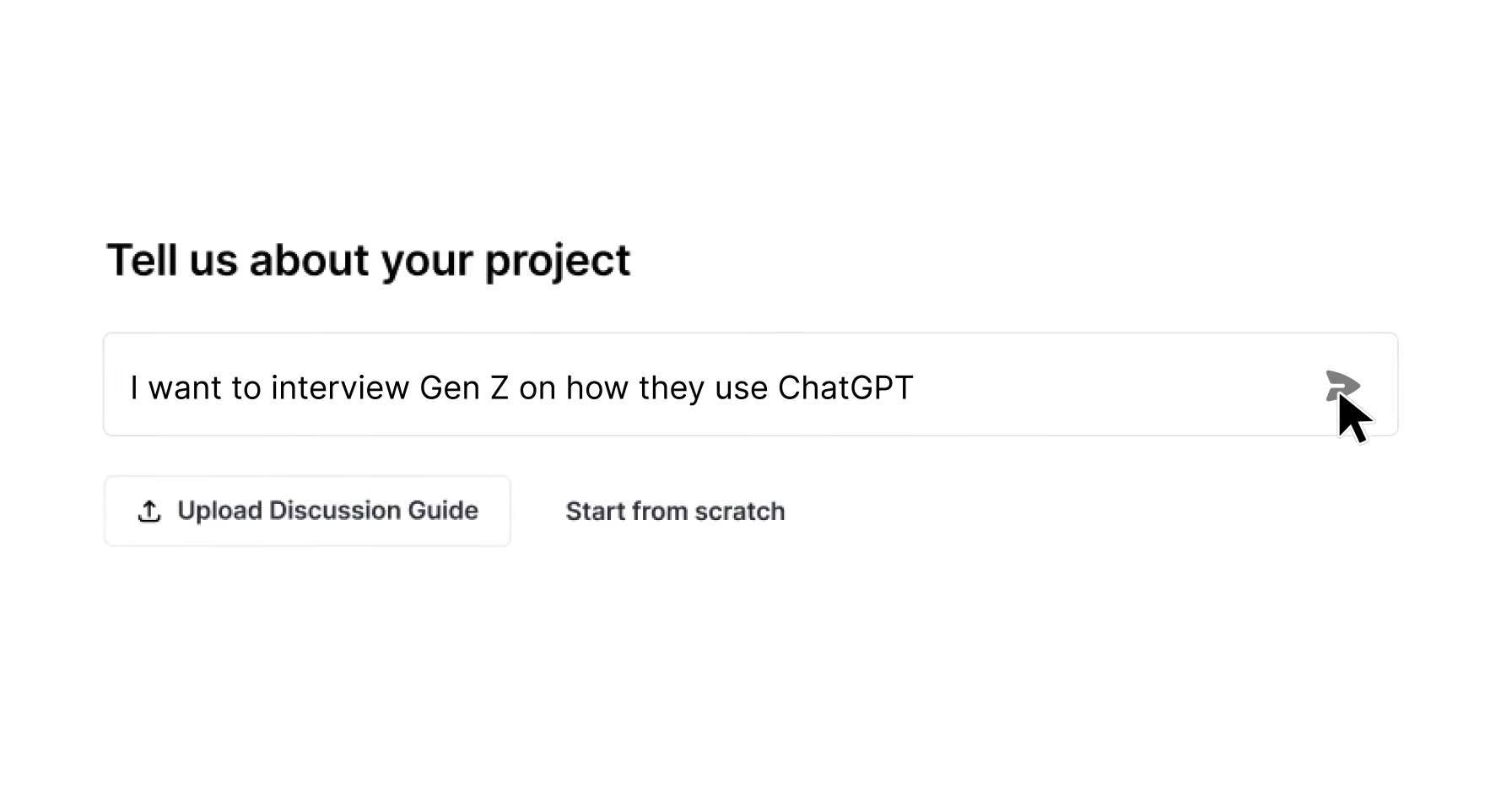
Per-Query Pricing charges for each AI interaction used for analysis or insight generation. This granular model suits teams that analyze existing data or run lightweight surveys. Costs rise quickly for deep qualitative work that relies on long interviews and rich follow-up questions.
SaaS Subscription Tiers offer $5–$49 monthly plans with included study credits and platform access. Subscription models provide budget predictability and support a regular research rhythm across product, marketing, and CX teams.
General population studies cost less across all models. Niche B2B audiences and specialized demographics cost more because they are harder to recruit and verify. Enterprise decision-makers, healthcare professionals, and consumers below 1% incidence rates often double or triple base pricing.
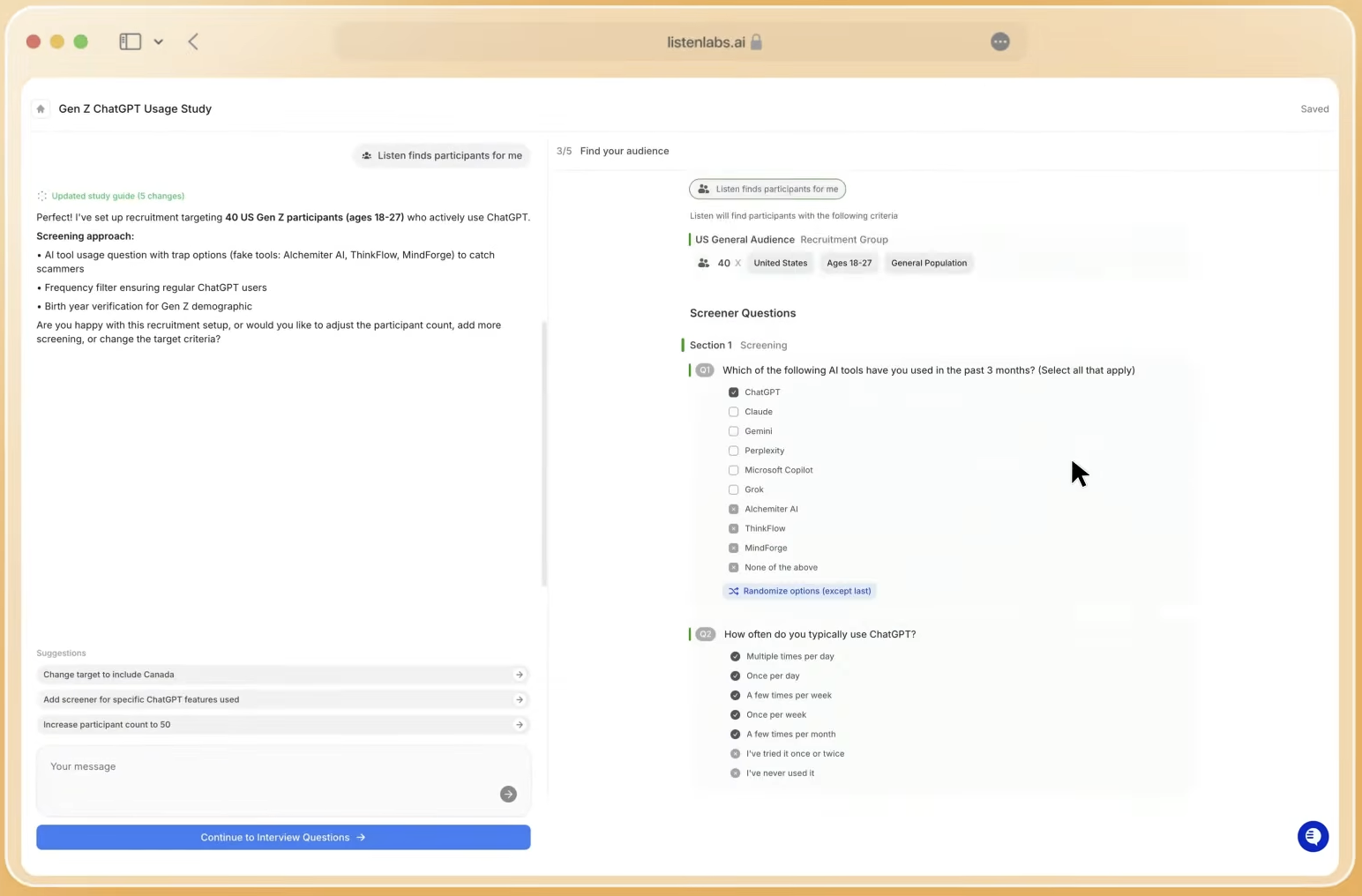
Given these structural differences, enterprise teams eventually face a core choice: commit to a subscription or pay per study as needs arise.
SaaS Subscription vs. Per-Study Costs for Enterprise Teams
Subscription models starting at $5 monthly for starter plans and scaling to $49 monthly for professional tiers create budget stability and spread research access across more teams. This structure works well for organizations that run ongoing discovery, concept testing, and UX studies.
Subscription caps can limit volume during peak research periods or major launches. Teams that expect large bursts of activity may outgrow fixed limits and face overage negotiations or delayed projects.
Per-study and credit-based pricing give more flexibility for organizations with variable research demand. Listen Labs uses a hybrid model that combines platform access with variable credit consumption. This approach lets teams scale volume up or down while still forecasting spend at the portfolio level.
Traditional competitors such as UserTesting rely on human moderators, which increases delays and per-study costs. Prolific’s pricing includes participant rewards set by the researcher at a minimum of $8 per hour plus a platform fee of 33.3% (academia and non-profits) or 42.8% (corporate), and teams still need separate tools for moderation, analysis, and reporting. This fragmented stack raises total cost of ownership and introduces quality risks at each handoff.
Listen Labs supports the full research lifecycle in a single platform, delivering 5x faster turnaround than traditional methods while maintaining enterprise-grade quality. Model your cost scenarios and volume requirements in a personalized consultation.
What Drives AI Customer Research Pricing Differences
Audience complexity acts as the primary pricing driver across AI research platforms. General population studies cost significantly less than niche segments, because enterprise decision-makers, healthcare workers, and specialized professionals require harder sourcing and stronger verification.
Geographic and language coverage adds another cost layer. Supporting 100+ languages and running research across many markets increases infrastructure complexity and quality assurance work. AI moderation costs also shift by industry, reflecting compliance needs and required interview depth.
Integration capabilities and enterprise features push pricing higher. Platforms that provide API access, single sign-on, advanced security certifications, and custom reporting charge more than basic interview tools. The real cost includes per-study fees plus implementation, training, and ongoing administration.
Infrastructure expenses set pricing floors because AI providers must fund processing, inferences, and data storage. At least one pricing metric usually maps directly to cost drivers such as tokens, API calls, or compute hours. This alignment keeps unit economics sustainable as usage grows.
Traditional vs. AI Customer Research Costs
Traditional research agencies charge $15,000-$27,000 per study with 6-12 week delivery cycles. These premium rates reflect human moderators, manual analysis, and coordination across multiple vendors. Large enterprises such as P&G historically accepted this structure because scalable alternatives did not exist.
AI platforms now deliver comparable insight quality at far lower cost and speed. AI-powered tools compress research cycles to under 24 hours, cutting spend to roughly one-third of traditional costs and improving speed by 10-20x. Teams can shift from quarterly projects to continuous customer intelligence.
Quantitative survey tools like Qualtrics have a median annual cost of $28,758 but sacrifice conversational depth and adaptive probing. These tools collect structured responses to preset questions and miss emotional nuance or unexpected themes that emerge in live conversations.
UserTesting’s human-dependent moderation model creates bottlenecks and inconsistent quality across moderators. Listen Labs’ AI moderation delivers consistent interviews and uses its 30M verified participant network to reach global audiences. This participant network removes many of the recruitment delays that slow traditional approaches.
These cost and speed advantages show up differently by industry. The next section illustrates how CPG, technology, and financial services teams apply these gains in practice.
Industry Benchmarks and Why Listen Labs Leads
Consumer packaged goods companies such as P&G run multiple interview studies to validate product claims and messaging before launch. This validation-heavy approach contrasts with technology companies, which prioritize speed and rely on rapid feedback loops to guide sprints and feature decisions. Financial services sit at the high-cost end of the spectrum because compliance and security needs increase per-study costs while delivering essential regulatory insight.
Microsoft used Listen Labs to collect hundreds of customer stories daily for its 50th anniversary celebration. The team reached global audiences and captured emotional depth that traditional methods could not match on the same timeline. Skims validated premium consumer segments overnight, removing weeks of recruitment delays while preserving sample quality for board-level decisions.
How Listen Labs Creates a Structural Advantage
Listen Labs uses a subscription plus credits model that scales from broad consumer studies to highly niche B2B recruitment. The full-stack platform removes vendor fragmentation costs, and its 30M participant network maintains consistent sample quality across demographics and regions.
Comprehensive analysis features, including Emotional Intelligence and automated reporting, remove manual steps that slow traditional workflows. This speed advantage enables a fundamental shift, as enterprise customers move from periodic projects to continuous customer intelligence. Product and marketing teams can incorporate fresh customer input into everyday decisions.
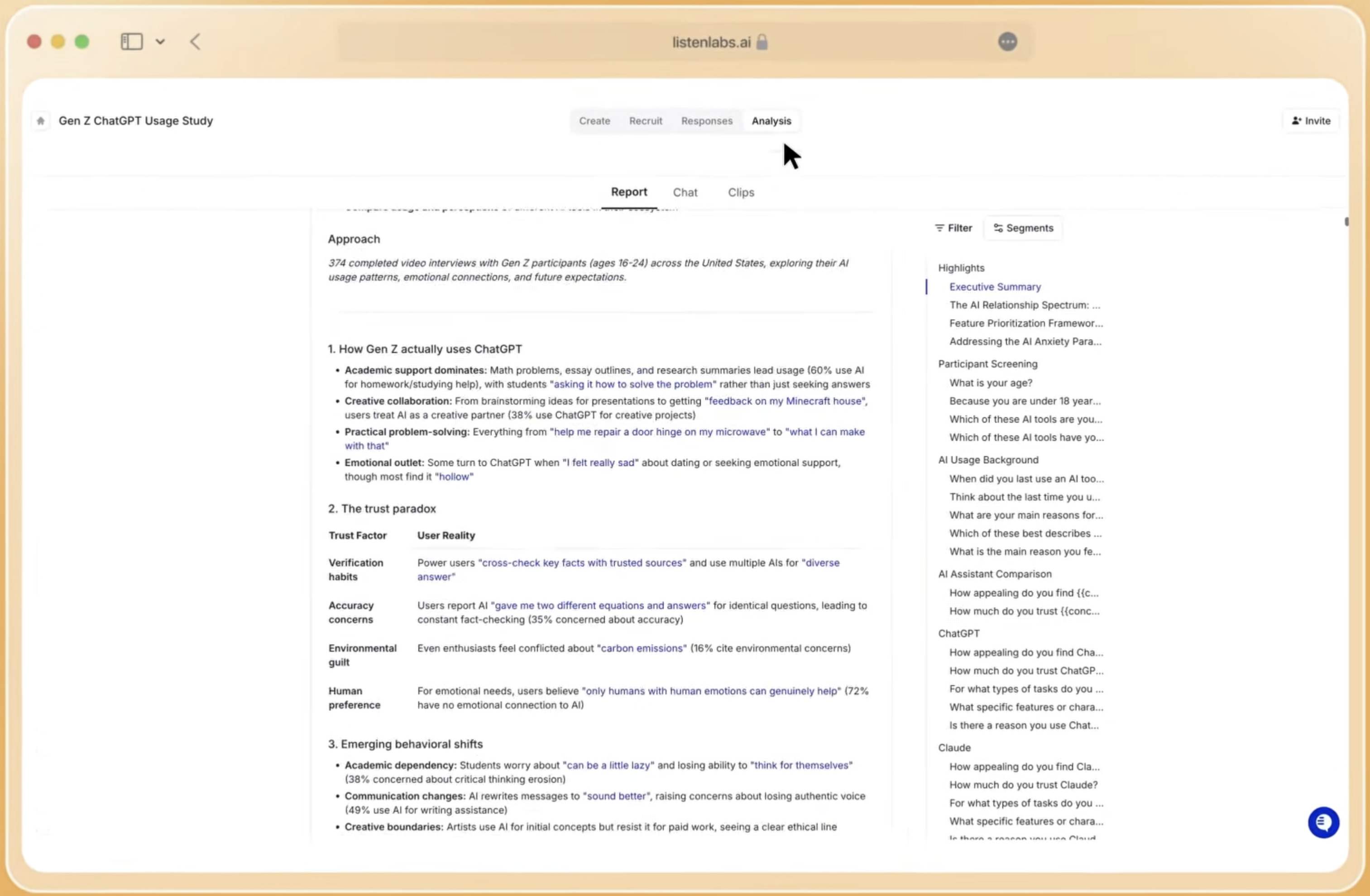
Quality Guard technology and dedicated recruitment operations support a zero-fraud guarantee while reaching audiences below 1% incidence. This mix of scale, quality, and specialization creates durable advantages that point solutions struggle to match.
After seeing these benchmarks, many leaders need a clear way to decide whether and how to scale AI-powered qualitative research. The following framework highlights the key criteria and risks.
Decision Framework and Risks for Scaling Qualitative Research
Enterprise teams should evaluate AI research platforms against concrete operational needs. Key factors include research volume and frequency, audience complexity, integration requirements, security standards, and total cost of ownership across training and implementation.
Listen Labs fits organizations with research backlogs, urgent pricing or concept tests, or goals to democratize research across product teams. Enterprise-grade security certifications (SOC2, GDPR, ISO 27001) and a track record with Fortune 500 customers reduce implementation risk.
Primary risks include over-reliance on AI without human oversight for strategic interpretation and potential quality issues when recruiting extremely niche audiences. Teams should run pilot studies before full rollout and maintain internal research expertise for study design and synthesis.
Evaluate Listen Labs against your requirements in a personalized demo session.
Conclusion: Scaling Insight with Listen Labs
The 2026 AI customer research landscape lets enterprises scale qualitative insight while cutting costs and timelines. Traditional agency models cannot compete with AI platforms that deliver comparable quality at one-third the cost in under 24 hours.
Listen Labs combines global participant recruitment, AI moderation, emotional intelligence capture, and automated analysis in one platform. Proven results with Microsoft, P&G, Skims, and other Fortune 500 companies show that the platform meets enterprise standards for scale and quality.
Transform your organization’s insight capabilities with a personalized platform walkthrough.
FAQ: AI Customer Research Pricing Answered
How much does AI customer research cost per month?
AI customer research platforms typically offer subscription tiers ranging from $5-49 per month, with additional credits for participant recruitment and study execution. Enterprise plans often use custom pricing based on research volume and feature needs. Total monthly cost depends on study frequency, audience complexity, and capabilities beyond basic AI moderation.
What are Listen Labs’ pricing details?
Listen Labs uses a hybrid subscription plus credits model built for enterprise scale. Organizations pay for platform access, including study design tools, AI moderation, and analysis features, then consume credits for participant recruitment based on audience difficulty. General population studies require fewer credits than specialized B2B segments or niche demographics. Enterprise customers with more than 100 employees go through a demo and pilot process to define the right pricing structure. Start that demo and pilot process to scope your plan.
What’s the ROI of end-to-end vs. fragmented tools?
End-to-end platforms like Listen Labs deliver stronger ROI by reducing vendor management overhead, speeding time-to-insight, and removing data handoff risks between recruitment, moderation, and analysis tools. Organizations typically see about 3x cost reduction and 5x speed improvement compared with traditional workflows, while maintaining or improving insight quality through consistent AI moderation and automated analysis.
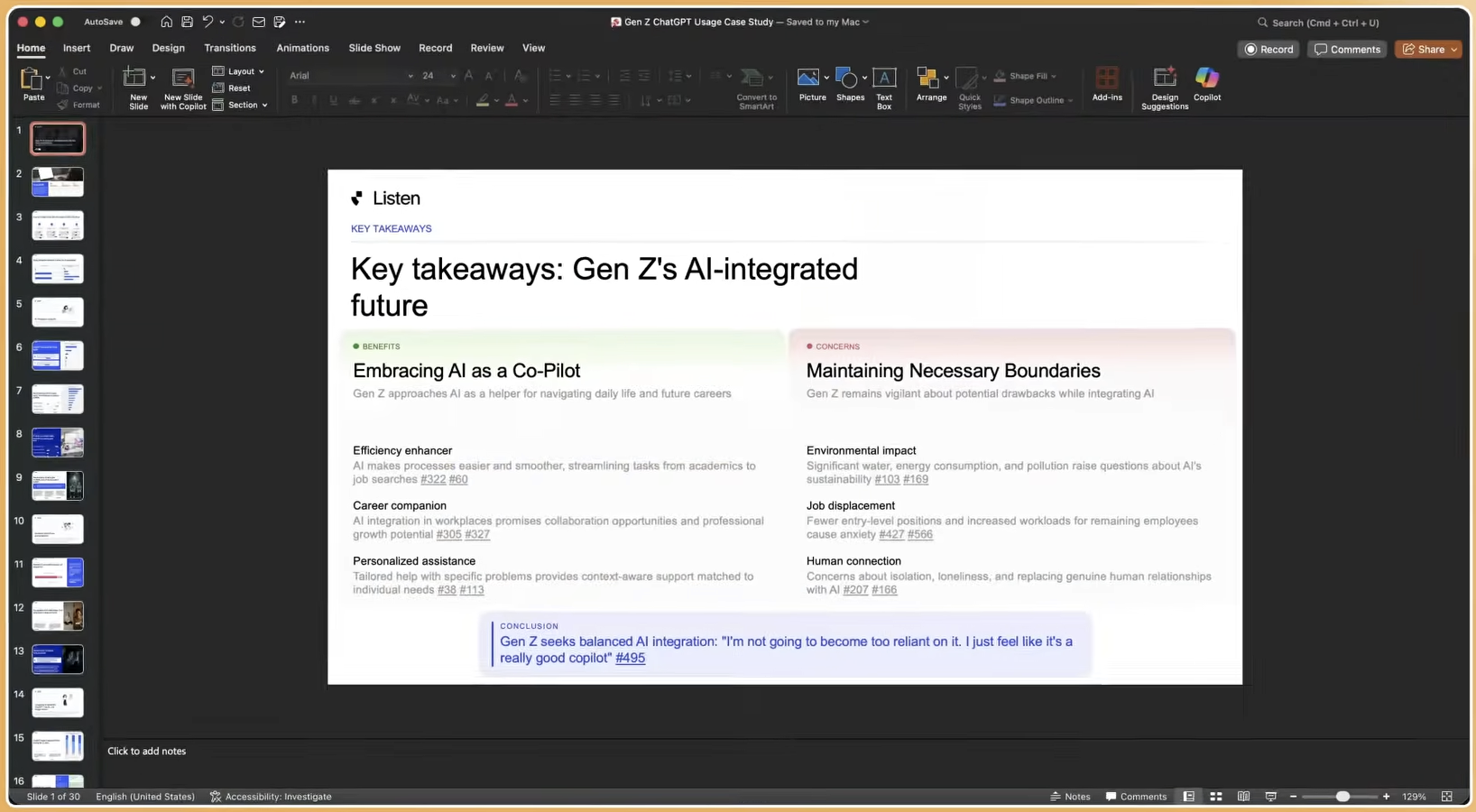
How does pricing change for niche audiences?
Niche audience pricing often doubles or triples base rates because of recruitment complexity and verification needs. Enterprise decision-makers, healthcare professionals, engineers, and consumers below 1% incidence require specialized sourcing networks and longer recruitment timelines. AI platforms still offer strong savings over traditional agencies, which may charge $25,000+ for specialized studies that AI platforms complete for $2,000-5,000.
Are there hidden costs in AI customer research pricing?
Transparent AI platforms include core features in quoted pricing, such as participant recruitment, AI moderation, transcription, basic analysis, and standard reporting. Additional costs may cover premium audiences, extended data retention, custom integrations, or advanced security features. Teams should compare total cost of ownership, including training, implementation, and ongoing platform management, when evaluating options.